Start With the Branch Line Layout
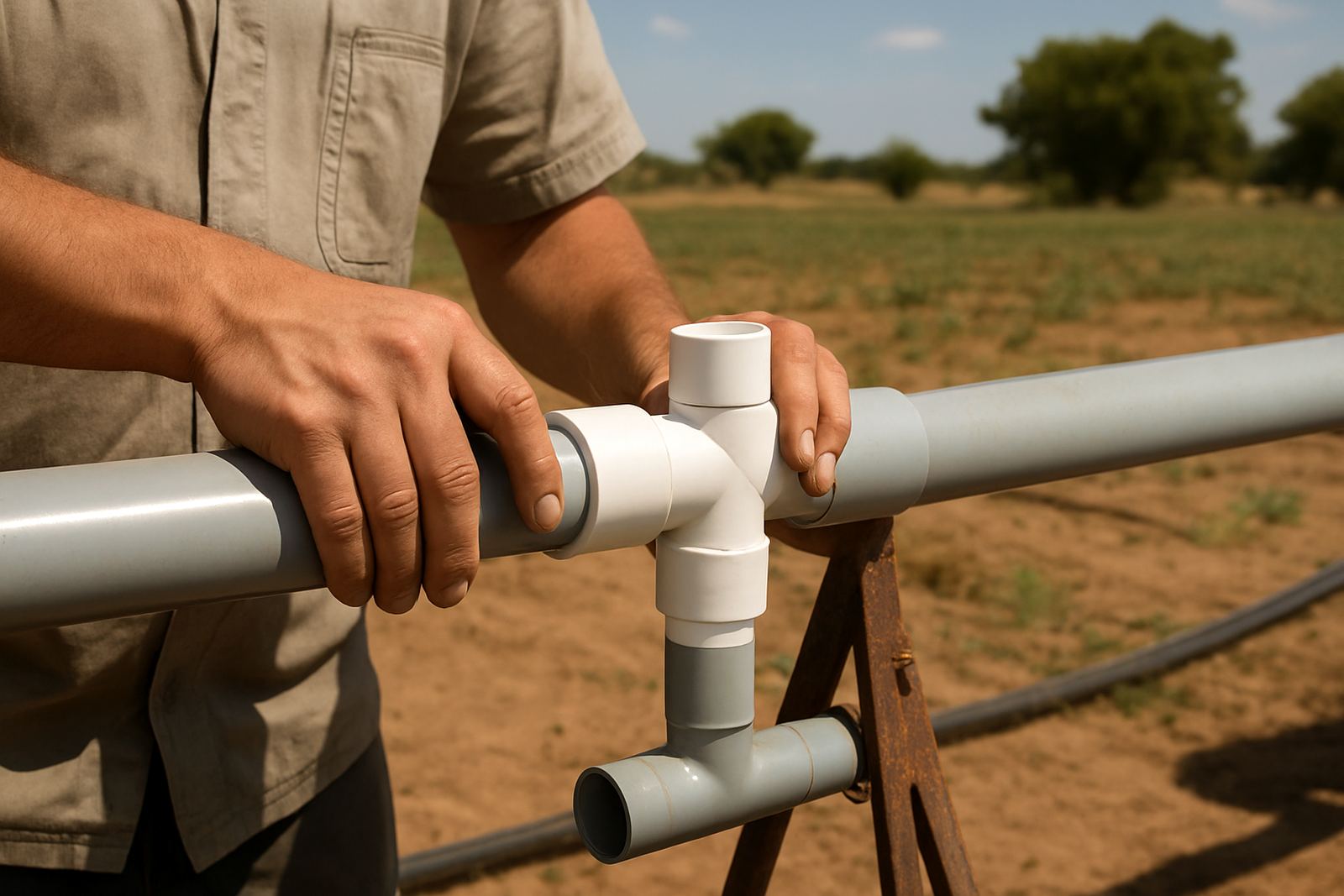
Before you pick a tee, decide what the branch line must do. An equal tee sends the same pipe size in three directions, while a reducing tee changes size on one outlet so the branch can be smaller than the main line. That simple choice affects pressure drop, water distribution and the amount of fittings you need on site.
On farms and landscaped areas around Polokwane, many problems come from fitting the tee before checking the full run. Take time to note the pipe diameter, line length, number of outlets and the expected flow at each point. If the main line is carrying a long run with several branches, the tee size and position must match the system plan, not just the pipe offcut in your hand.
- Measure the main line and branch pipe before ordering.
- Check whether the branch must carry full flow or a reduced flow.
- Confirm the pipe material and solvent-weld fitting size.
- Mark tee positions on the trench layout before cutting pipe.
When an Equal Tee Is the Right Choice
An equal tee is used where the main line and branch line need the same size connection. This is common on balanced irrigation layouts, short distribution runs, and sections where pressure needs to be shared more evenly. It is also useful when the line may be extended later and you want consistent fittings throughout.
Equal tees suit branches feeding similar zones, such as a row of micro-sprayers, a nursery bench line or a set of beds with similar demand. If all outlets draw roughly the same amount of water, the equal tee keeps the pipework simple and reduces the need for unnecessary size changes.
- Use equal tees on same-size branch connections.
- Choose them for short runs with similar outlet demand.
- Keep the tee orientation straight so the branch does not twist under pressure.
- Allow enough straight pipe for a proper solvent weld joint.
When a Reducing Tee Makes More Sense
A reducing tee is used when the branch pipe must be smaller than the main line. This helps maintain higher flow in the main run while still feeding a smaller branch line. In practical terms, it is often the better choice for longer main lines with multiple off takes, or where a small section only needs a modest water supply.
For example, a larger feeder line may carry water across a block, then branch off to a smaller irrigation line at each section. Using a reducing tee at the branch point can save material and help the system stay better balanced. The key is not to reduce too early. If the branch still needs high flow, an undersized tee will choke the line and cause uneven watering.
- Use reducing tees where the branch line is intentionally smaller.
- Check the flow demand before reducing pipe size.
- Place the reduction after the main line has been sized correctly.
- Keep the branch as short and direct as practical.
How to Fit Solvent-Weld Tees Properly
Clean cuts matter. Square the pipe, dry fit the tee and make sure the socket depth is correct before applying solvent. On dusty sites around Limpopo, wipe the pipe ends and fitting sockets carefully so grit does not weaken the joint. A rough joint may hold at first but it can fail later when the line is under pressure.
Apply the solvent evenly, insert the pipe fully and hold it in place for a few seconds so it does not creep out of the socket. Wipe away excess and leave the joint to cure before pressurising the line. In hot weather the set time can be shorter, while cooler conditions need more patience. If the pipe is under strain, support it properly before the glue cures, otherwise the joint may sit crooked.
- Cut pipe clean and square.
- Dry fit the tee before gluing.
- Use the correct solvent for the pipe type.
- Hold the joint still until it sets.
- Leave proper curing time before testing the system.
Avoid These Common Tee Mistakes
Most tee failures are not about the fitting itself, but about poor selection or poor installation. The most common mistake is matching the fitting to the offcut instead of the system plan. Another is using a reducing tee where an equal tee is needed, or the other way round. Both can cause uneven watering and pressure loss.
Also watch out for misaligned branches, incomplete solvent coverage and buried tees with no inspection point. In coastal or humid conditions, trapped moisture and soil movement can make any weak point show up faster. On busy contractor jobs, it is worth spending an extra minute checking each branch before backfilling. That small delay can save a return trip later.
- Do not reduce pipe size without checking flow needs.
- Do not glue on dirty or wet pipe ends.
- Do not backfill before the joint has cured.
- Do not leave a branch line unsupported at the tee.
Quick Checklist Before You Order or Install
Before placing an order or starting a fitting run, work through a simple checklist. This helps farmers, landscapers and contractors avoid stock shortages and get the right tee on site the first time. It also makes repeat ordering easier when the same system is expanded later.
- Main line size confirmed
- Branch line size confirmed
- Equal or reducing tee selected
- Quantity counted with spares added
- Solvent, primer and cutting tools ready
- Jointing and curing time planned
- System pressure checked before testing
For larger jobs, it helps to split the order by area, especially where deliveries go to Polokwane, Mokopane, Tzaneen, Hoedspruit, Lephalale or Thohoyandou. That keeps the right fittings with the right sections and reduces confusion on site. If you are planning a farm run or a contractor job, reserve stock early so the tee sizes match the full layout, not just the first trench.