
Match the cement to the fitting and pipe size
For irrigation work, start by matching the solvent cement to the pipe material, fitting size and the job conditions. The joint has to suit the pipe wall thickness, the water pressure in the line and the way the system will be used, whether that is a short orchard run, a long field main or a poly-to-PVC transition on a farm pump line. If the joint is being made in hot sun, near dust or in a windy yard the cement needs to be workable long enough for proper assembly, yet still set cleanly.
Ask what size pipe you are working with, how many joints you need, and whether the line will carry clean water, fertiliser mix or water with grit. In Limpopo, where heat and dust are common, a cement that flashes off too fast can make the job harder and can leave weak joints if the fitter is rushed. On coastal or humid routes, curing time may be longer, so allow extra time before pressure testing.
Check the job conditions before you open the tin
Good joints begin before the first brush stroke. Clean, dry pipe ends are essential, and the work area should be free of loose soil, grease and standing water. If the pipe is damp from rain or washing, wipe it dry and wait a few minutes if needed. Dust and grit are a common reason for leaks, especially on irrigation lines that run through fields, around boreholes or along fence lines.
- Confirm the pipe and fitting sizes are the same standard.
- Check that the pipe end is round, clean and cut square.
- Make sure you have primer if the product line requires it.
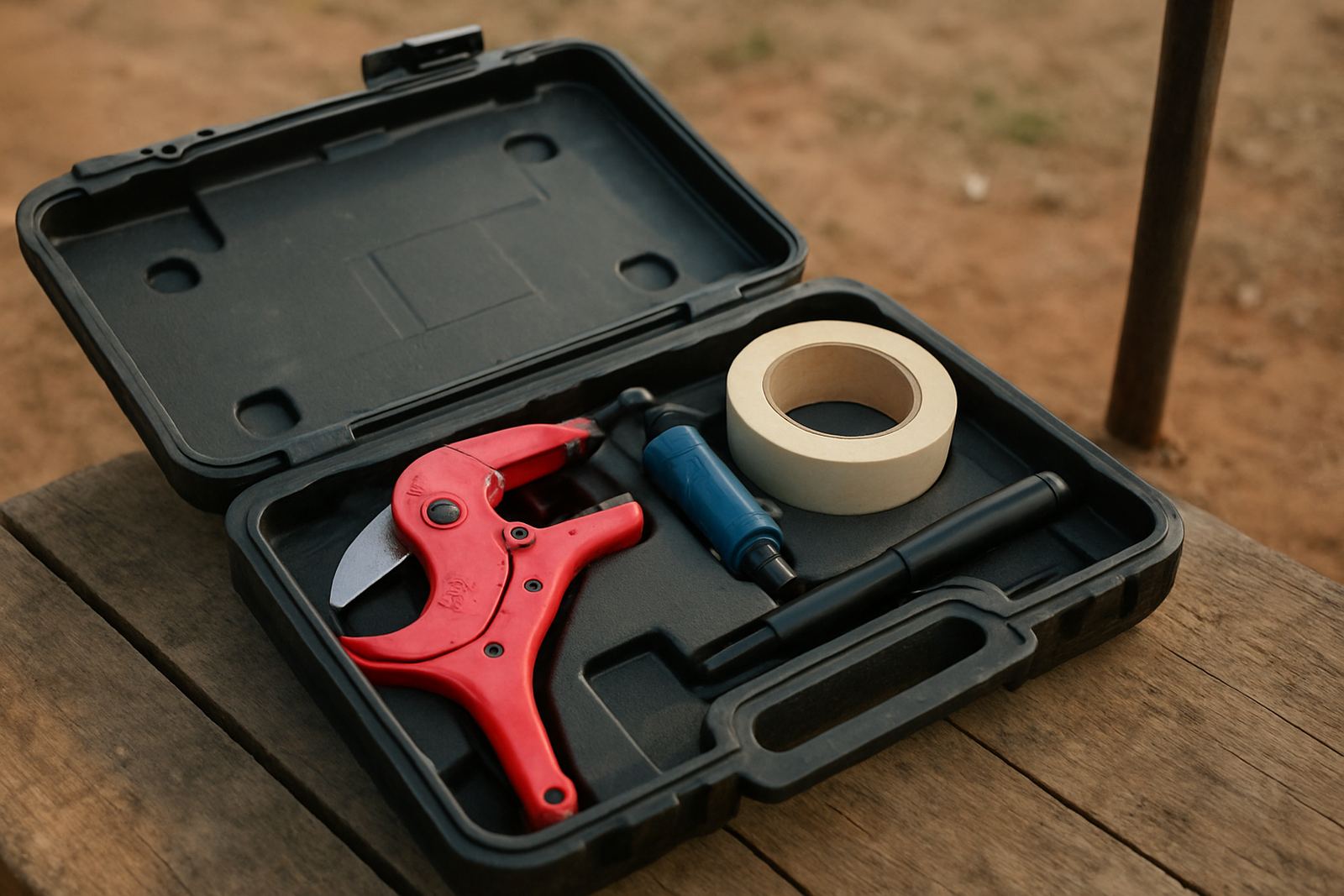
- Keep a clean cloth, deburring tool and applicator brush close by.
- Plan the order of joints so you do not trap yourself during assembly.
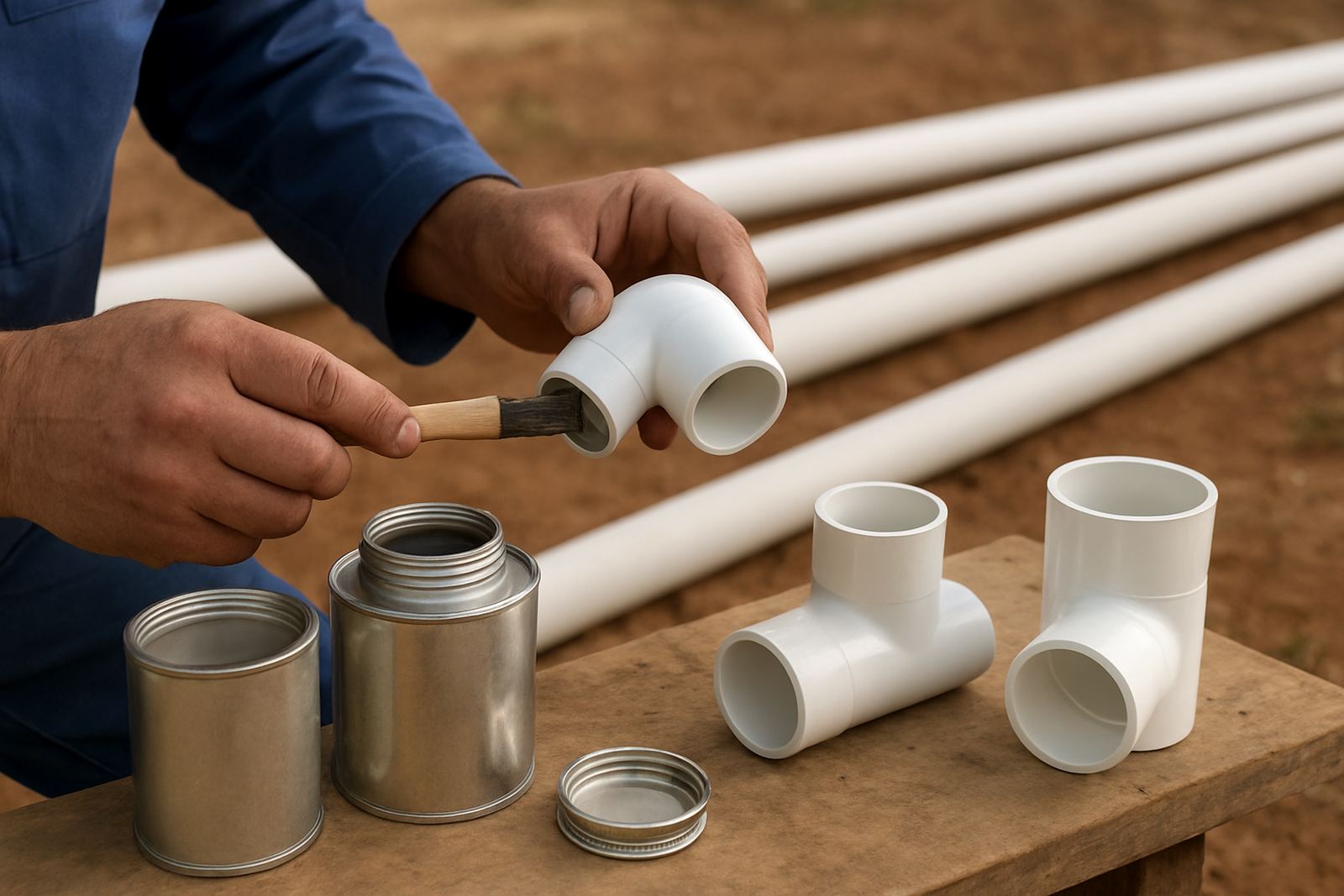
It helps to lay out all fittings first. That way you can see whether you have enough elbows, couplers, tees or reducers before the cement tin is opened. On bigger contractor jobs, quantity checks save time and cut down on wasted fittings and repeated trips.
How to apply solvent cement for a sound irrigation joint
When applying solvent cement, work quickly but do not rush. Dry-fit the parts first so you know the alignment, then separate them and apply a thin, even coat to the pipe and the inside of the fitting where the product instructions call for it. For larger diameters, use a slightly fuller coat because the joint area is bigger and needs complete coverage.
Push the fitting home in one smooth movement and twist slightly if the method suits the fitting type. Hold the joint in place for a few seconds so it does not spring back. Wipe off excess cement immediately, but do not clean the joint so much that you remove the seal. If the line is being assembled in the sun, work section by section because the cement can skin over faster than expected.
For irrigation systems that will be pressurised soon after installation, allow proper set time before testing. A joint that looks dry on the outside may still be soft inside. In field conditions, especially where load-shedding delays pump testing or crews are working between irrigation windows, patience with curing time avoids callbacks and repairs later on.
Curing time, pressure testing and first start-up checks
The cure time depends on pipe size, temperature, humidity and how heavily the line will be loaded. A small repair on a low-pressure line may be ready sooner than a mainline feeding several zones. In hot dry weather, the outside of the joint can feel set quite fast, but do not confuse that with full cure. If the system is tested too early, a joint can shift or seep under pressure.
- Allow longer cure times on larger pipe diameters.
- Wait longer in cool mornings or humid conditions.
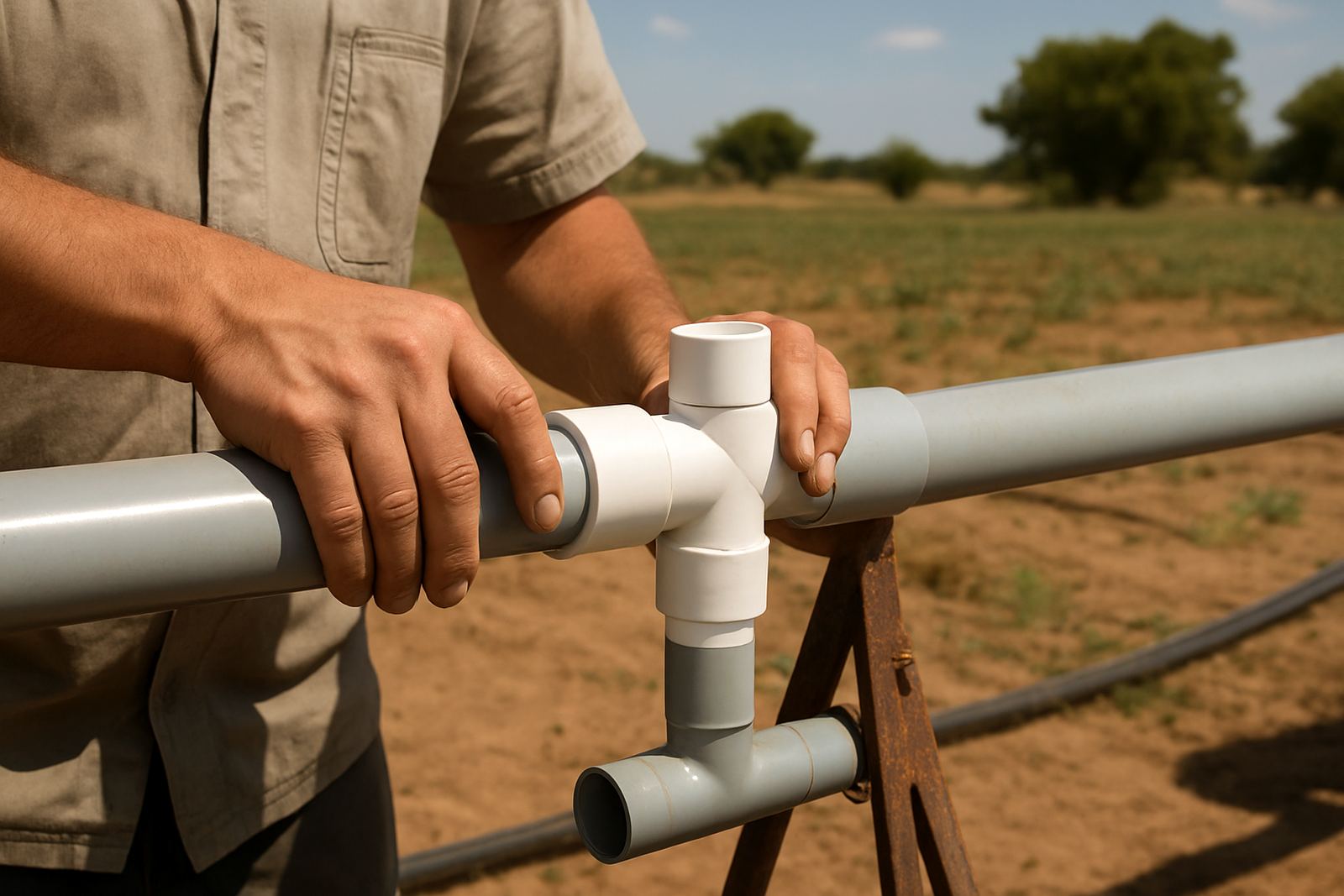
- Keep the line supported so fresh joints are not strained.
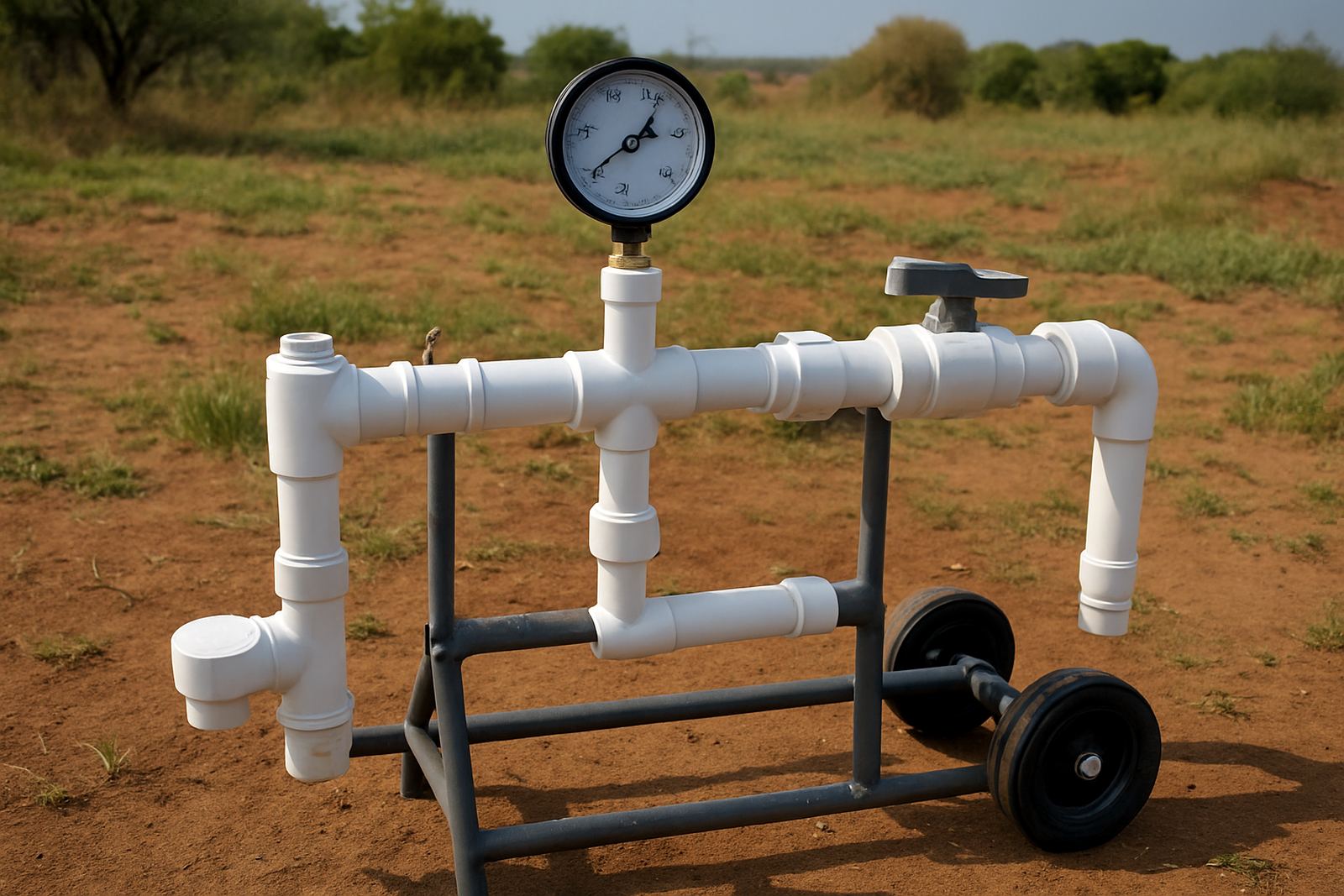
- Bring pressure up slowly for the first test.
- Inspect every joint for weeping before leaving the site.
For contractors, it is worth recording the time of assembly and the test time on the job card. That makes repeat work easier to track and helps when a farmer needs follow-up support after the first run. If a line is scheduled for a same-day start-up, plan the assembly earlier in the day so there is enough curing time before the pump is switched on.
Storage and handling in farm and contractor yards
Solvent cement should be stored closed, upright and away from direct sun. Keep the lid tight after every use, because air exposure thickens the product and shortens working life. On busy yards, the tin should be kept where it will not be knocked over by tools, fertiliser bags or spare fittings. It is also worth keeping it away from open flames, welding sparks and enclosed spaces with poor ventilation.
In South African conditions, heat can affect both the cement and the applicator brushes. A tin left in a bakkie cab all afternoon can become difficult to use, while one stored in a cool shaded area stays more consistent. If the product thickens or goes stringy, replace it rather than trying to force it through a joint. A bad tin can waste fittings and time on site, and nobody wants to strip out a line twice.
Common mistakes that cause leaks and repair calls
Most leaks come from avoidable errors. The pipe may have been cut badly, the joint may have been dirty, or the fitter may have used too little cement. Sometimes the problem is poor alignment, especially where a long line is being pulled into place and the fittings are under strain. A joint that is twisted too far, or moved before it has grabbed, can fail later even if it looked fine on day one.
- Do not use cement on wet or muddy pipe ends.
- Do not mix up pipe systems with different standards.
- Do not test before the joint has cured properly.
- Do not leave the lid off the tin while working.
- Do not force a joint that is obviously misaligned.
For farm managers and irrigation contractors, a simple checklist before start-up saves time in the long run. Check the cut, the clean, the fit, the cure and the pressure. That five-point habit prevents many call backs and keeps the system running when water availability is tight.
Choosing support for larger orders and field work
On bigger irrigation jobs, the right cement is only part of the job. You also need the correct fittings, jointing advice and enough stock on hand so the crew can keep moving. PVC Welders supports farmers, landscapers and contractors from Ladanna in Polokwane, with irrigation stock trucked across Limpopo and couriered nationwide. That helps when a project stretches from Mokopane to Tzaneen, or when a contractor in Hoedspruit needs a repeat order without losing a day to travel.
For order planning, it helps to confirm quantities, sizes and delivery timing before the first trench is closed. If you are matching fittings for a new line or replacing worn parts on an existing system, our team can help with product selection, stock reserving, quantity checks and after sales support. When the right cement is matched to the right fitting and handled properly, the system is far less likely to give trouble after installation.