Start With the Route, Not the Fitting
Before you pick an elbow, trace the route of the line from pump or header to the last outlet. If the pipe needs to turn around a boundary wall, slip past a tank stand or follow a trench with fixed corners, the fitting should suit the route rather than force it. A clean layout helps with flow and makes future repairs simpler when you need to isolate a section quickly.
On farms and landscaped sites around Ladanna, Mokopane and Tzaneen, a good route often saves more time than any single fitting choice. Take note of trench depth, existing sleeves under paving and where the line may need to cross compacted soil. If there is room to sweep the pipe through a gentler change in direction, a 45 degree elbow often gives a neater result.
When a 45 Degree Elbow Makes Sense
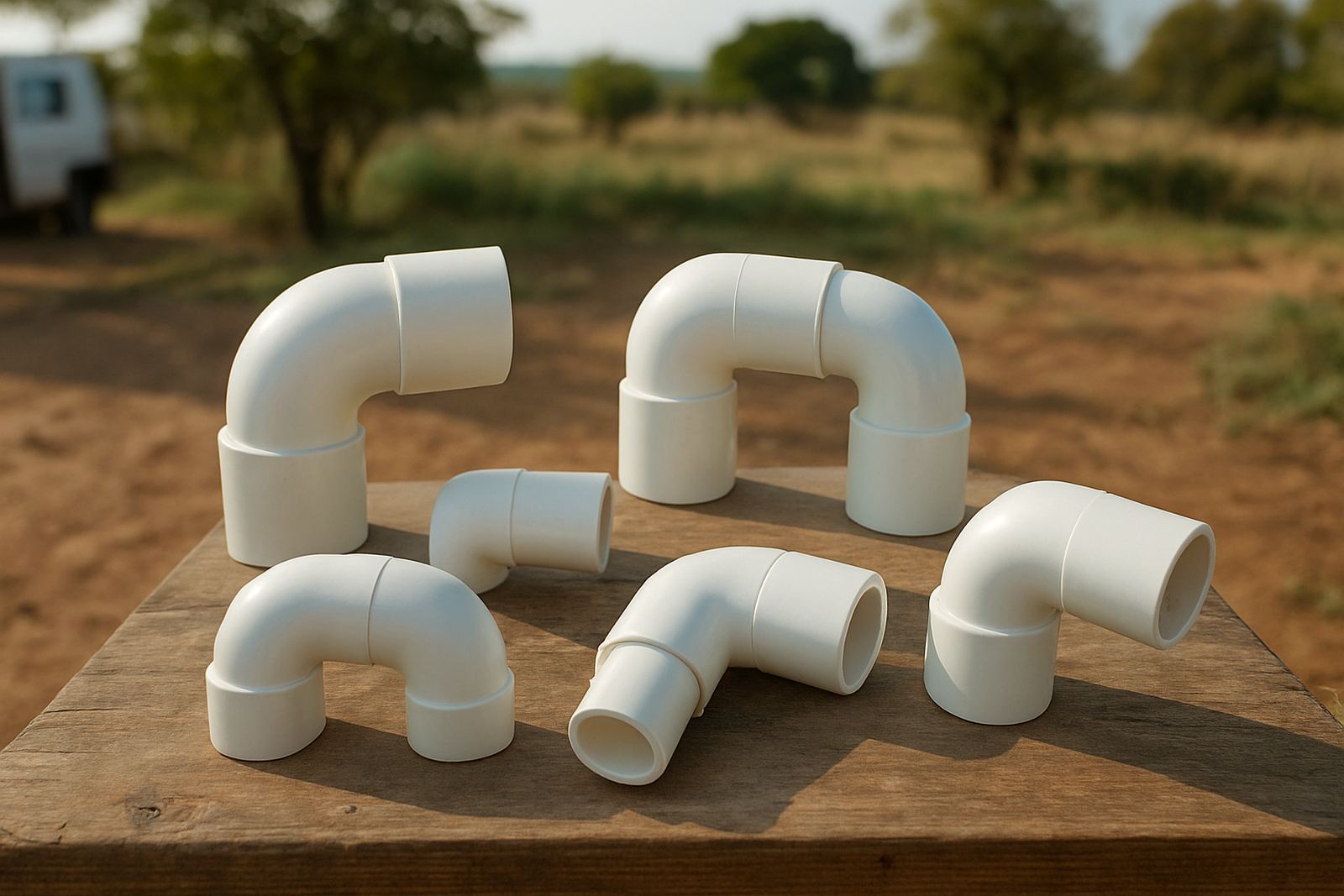
A 45 degree elbow is useful when the line needs to change direction without making a hard corner. It is a sensible choice where the pipe run is long, the system carries steady pressure, or you want to reduce turbulence in the line. Many contractors use two 45 degree elbows back to back to form a gradual offset when a line must move slightly left or right to avoid an obstacle.
For irrigation networks in hot inland conditions, a gentler bend can also be easier on fittings over time, especially where pipe expands during the day and contracts at night. That matters on exposed runs near pump sheds, greenhouses and boundary lines. It can also help where repairs are needed later because the run is less cramped and easier to open up.
- Use 45 degree elbows for gradual direction changes
- Choose them where space allows a wider bend
- Good for long lines where flow should stay steady
- Helpful for offsetting around posts, trees or shallow services
When a 90 Degree Elbow Is the Better Fit
A 90 degree elbow is the practical choice when the line must turn sharply in a small space. You see this often at wall entries, pump sets, manifold corners and tight plant room layouts. If a trench turns a right angle at the edge of a bed or runs into a fixed structure, a 90 degree fitting keeps the installation tidy and easy to read.
Use 90 degree elbows with care on longer runs because a sharp turn can add resistance to the line. That does not mean they should be avoided, only placed where they are truly needed. In irrigation work, neatness and service access matter just as much as flow, especially when a contractor returns for maintenance or when a farmer needs to inspect a blocked section quickly.
- Use 90 degree elbows for tight corners and short turns
- Ideal at equipment connections and wall entries
- Best where trench space is limited
- Place them deliberately, not just for convenience
A Simple Decision Check Before You Order
When you are matching fittings to a job, a quick check can prevent costly rework. Measure the available space, confirm the pipe size and look at the pressure expected in the line. The same fitting can behave very differently on a low-pressure garden zone compared with a high-demand farm line. If you are unsure, it helps to sketch the route and mark each direction change before you start buying stock.
For contractor accounts and repeat farm orders, a clear parts list reduces delays on site. It also helps when stock has to move from Ladanna to surrounding areas or couriered farther afield. A small mistake in elbow selection can mean extra joints, more labour and a line that is harder to service later. Better to check once and fit once.
- Confirm the pipe diameter and joining method
- Check whether the turn is tight or gradual
- Look for access needs during future maintenance
- Match fittings to pressure and exposure conditions
- Allow for movement in hot sun and cooler nights
Installation Notes That Save Trouble Later
Good solvent-weld work starts with clean cuts, square ends and a dry fit before glue is applied. On dusty Limpopo sites, wipe off grit and check that the socket depth is correct before joining. If the line will run outdoors, keep the layout supported properly and avoid leaving weight hanging off a corner fitting. A corner under strain is more likely to crack after repeated use.
In coastal or humid regions, keep fittings stored out of direct weather until needed, and do not leave open containers or prepared joints exposed longer than necessary. After installation, run a pressure check and inspect each elbow for seepage. If a joint looks stressed, it is better to correct it immediately than wait for a breakdown during peak irrigation time.
Where municipal or estate rules apply, especially on visible boundary work, keep pipe runs neat and aligned. That makes inspections easier and helps the whole system look orderly from the start.
Quick Checklist for Farmers, Landscapers and Contractors
Use this checklist before you finalise the elbow count for a project. It keeps ordering simple and helps you avoid shortfalls once the trench is open. If the job covers more than one zone, separate the count by line so that the right fittings go to the right section.
- Map every turn in the line
- Decide whether the turn is sharp or gradual
- Count 45 degree and 90 degree elbows separately
- Allow a few extra pieces for adjustments on site
- Check compatibility with the pipe size and solvent method
- Set aside enough fittings for repairs and repeat orders
If you are planning a larger project, it helps to reserve stock early and confirm delivery to your area. Our team supports irrigation order planning across Polokwane, Mokopane, Tzaneen, Hoedspruit, Lephalale, Thohoyandou and nationwide via courier, so the right fittings arrive where they are needed.