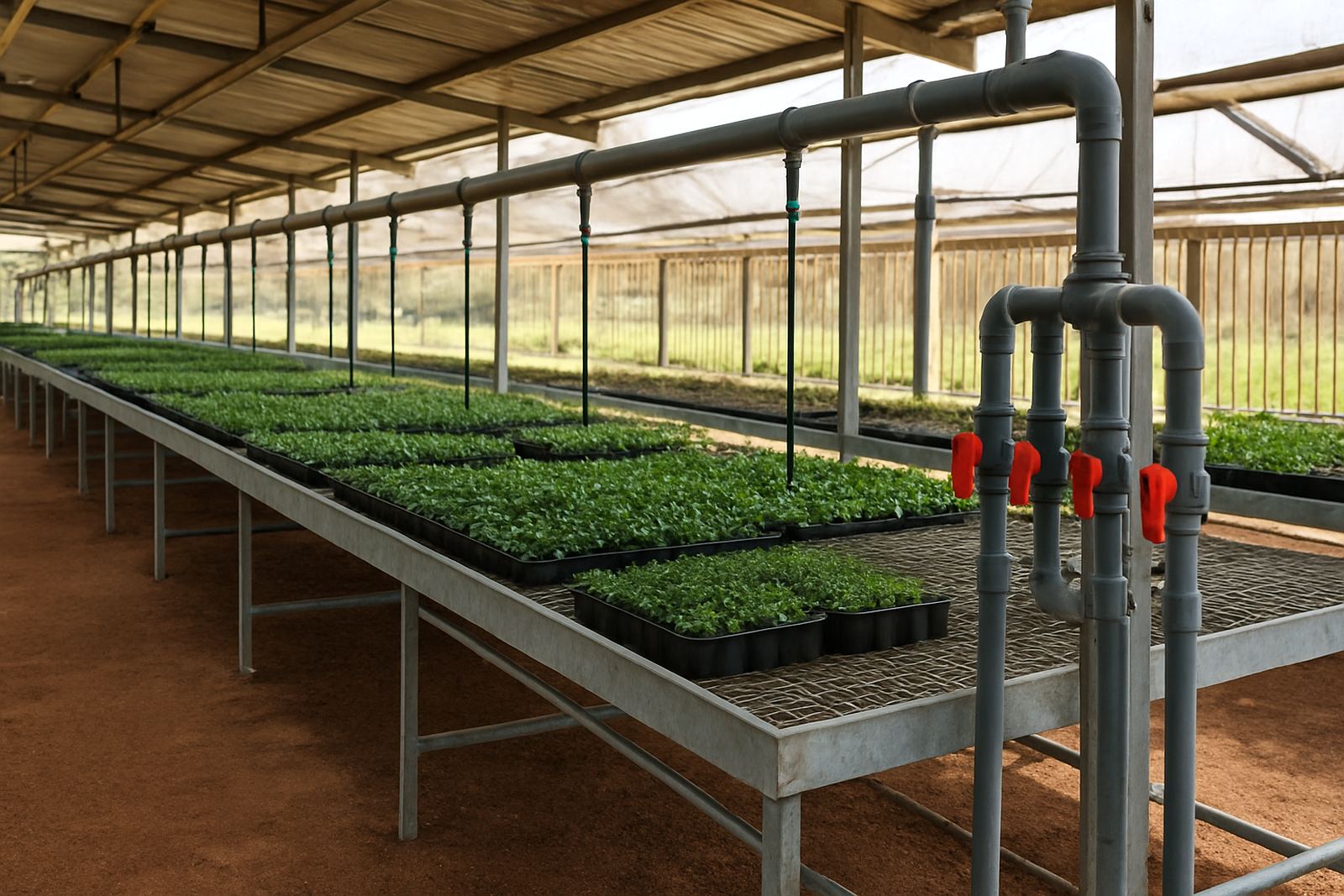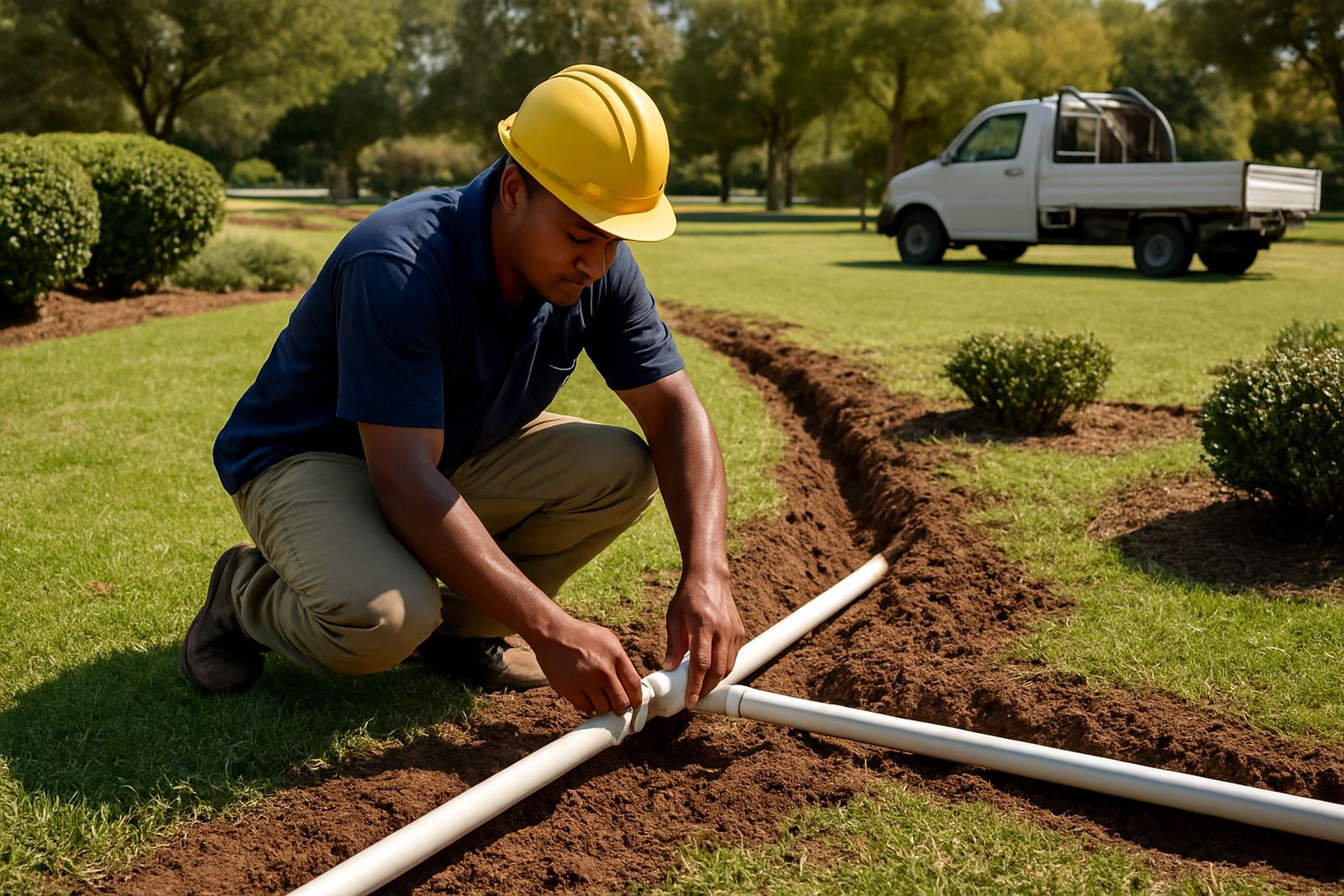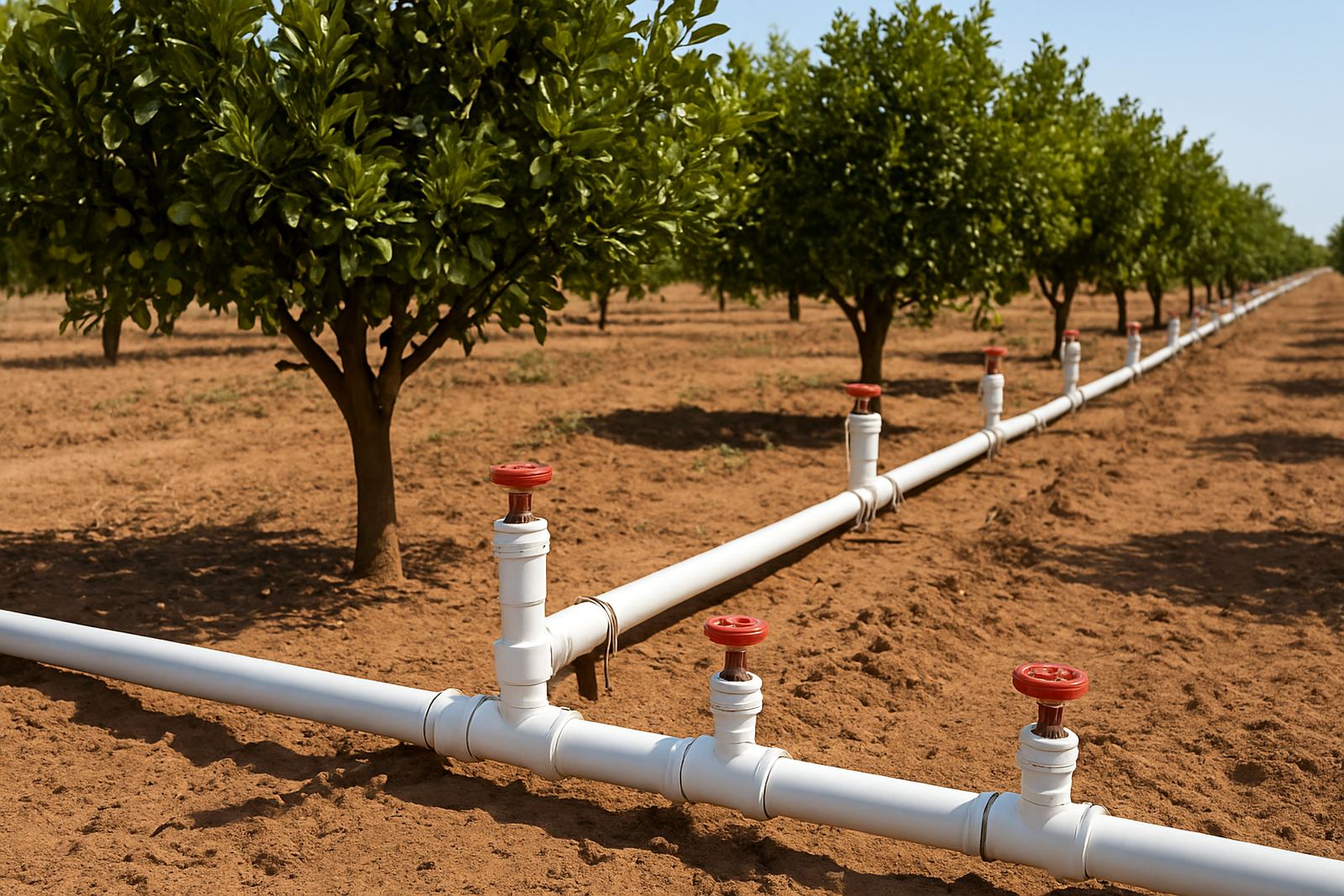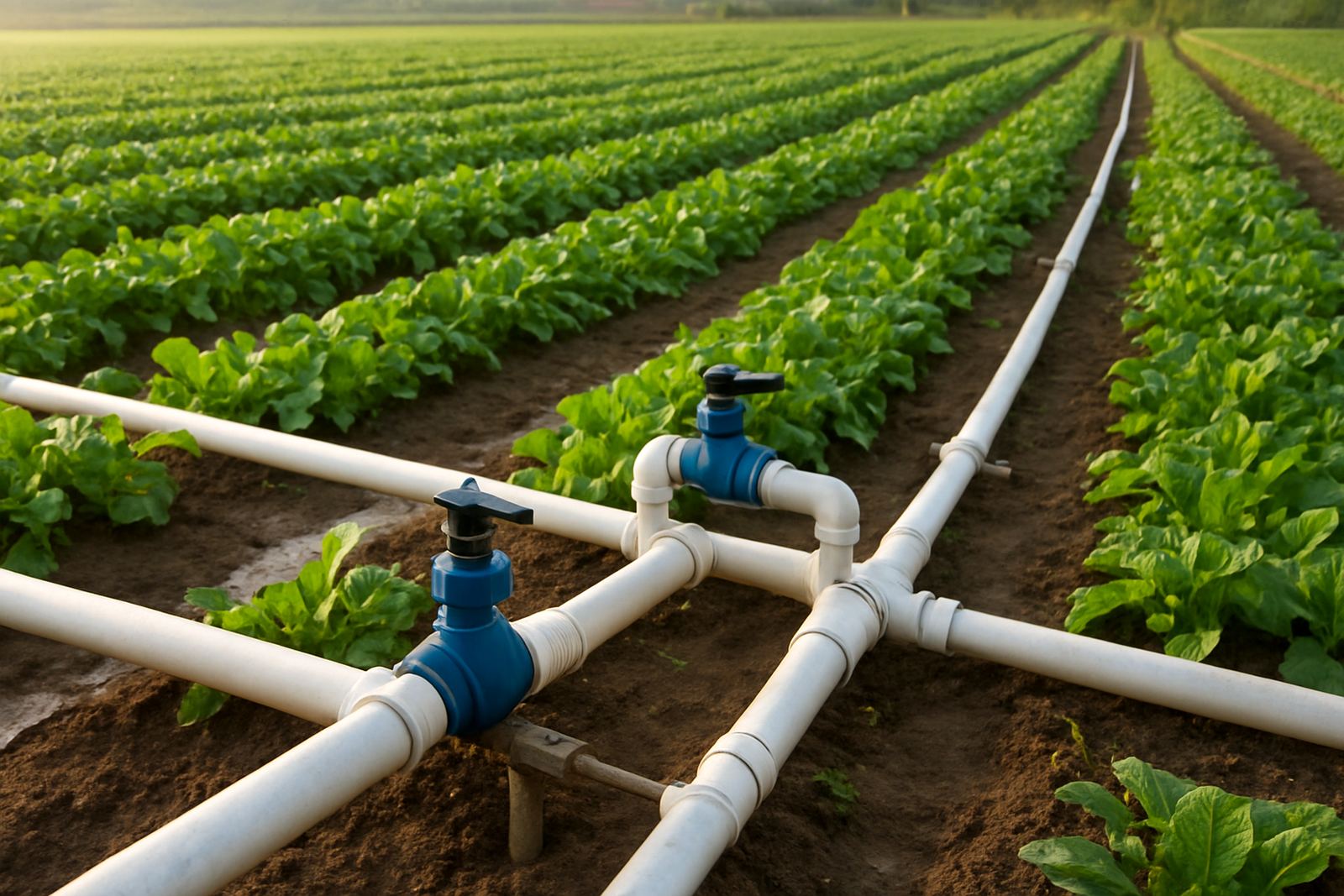
When Vegetable Blocks Need Reliable Water Every Day
Vegetable production does not forgive weak pipework. Whether you are running lettuce, spinach, cabbages, tomatoes, onions, or mixed open-field crops, the system has to cope with repeated watering cycles and regular movement around the block. Lines get bumped by tractors, lifted for cultivation, and exposed to heat, UV, dust, and field spray. In Limpopo, that also means hot days, cool nights, and long runs where pressure loss can show up fast if the pipe layout is poorly planned.
For most vegetable lands, the aim is simple: get water to each section evenly, keep joints tight, and make maintenance quick when a block needs isolation. A good setup saves labour because workers spend less time fighting leaks and blocked lines, and more time keeping the crop on schedule.
Typical Pipe, Fittings, And Tools For Vegetable Irrigation
The exact set depends on the block size, water source, pump pressure, and whether you are feeding sprinklers, micro-irrigation, or a mix of both. In most vegetable lands, the practical starting point is solvent-weld PVC pipe, matching fittings, valves, and the correct hand tools for clean cutting and jointing. For larger farms, it is normal to separate mainlines, sub-main lines, and smaller distribution lines so each section can be controlled without shutting down the whole farm.
- PVC pressure pipe in the correct diameter for the run length and flow rate
- Solvent-weld bends, tees, sockets, reducers, and end caps
- Valves for block isolation and line control
- Unions and adapters where removable sections are needed
- Cutters, deburring tools, measuring gear, and jointing supplies
- Support fittings for anchor points, risers, and take-offs
For farms that rework lines often, it pays to choose fittings that make reconfiguration easier. A small cost difference at purchase time can save a lot of time during planting changes or seasonal crop rotations.
Planning The Layout Before You Buy Stock
Good planning starts with the crop layout and the water source. Measure the block lengths, mark out the valve positions, note elevation changes, and work out where the water needs to split. In flat land, the challenge is usually even distribution. On sloping ground, the challenge is pressure variation and run-off at the lower end. It helps to plan the line so you can isolate smaller zones, especially when a crop section is being harvested or replanted.
Farmers often ask for help with system matching because the wrong pipe size can cause weak flow at the far end of the block. Another common issue is overcomplicating the line with too many turns and unnecessary joints. Fewer joints normally means fewer leak points, and that matters when the block is running every day during the growing period.
- Keep the main line as direct as possible
- Place isolation points where teams can reach them quickly
- Allow for future expansion if the vegetable area may grow
- Match pipe size to the number of outlets and the pumping capacity
- Use proper supports where lines cross tracks or rough ground
Common Mistakes On Open-Field Vegetable Systems
One of the most common mistakes is buying fittings before checking the full layout. That often leads to mismatched diameters, missing adapters, and extra trips to source the right parts. Another problem is using the same approach for every block when the crops, soil type, and watering schedule are not the same. A lettuce block with frequent light watering is not treated the same as a heavier watering cycle for cabbages or potatoes.
Another area where farms lose time is poor joint preparation. Solvent-weld work needs clean cuts, proper alignment, and enough drying time before pressure is applied. If the line is rushed into service too soon, it can show up as seepage at the joints or a fitting that loosens under pressure. Coastal humidity can also affect storage conditions, so it is worth keeping adhesives and smaller components in a dry place with stock rotated properly.
Load-shedding can affect pumping schedules too, so many growers prefer to plan irrigation in blocks that can be switched on and off without disturbing the whole system. That makes the farm easier to manage when power is not consistent.
Budget Ranges For Vegetable Farm Irrigation Parts
Budget depends on block size, pipe diameter, number of zones, and whether you are building a fresh line or replacing only damaged sections. For small vegetable plots and starter blocks, a basic set of solvent-weld fittings, pipe sections, and tools can start from around R2,500 to R8,000. Mid-sized open-field operations often sit between R10,000 and R35,000 when several zones, valves, and distribution points are included.
Larger farms with longer runs, more control points, and ongoing replacement stock can move beyond R40,000 quite quickly, especially where farm order planning includes spare fittings and repeat stock for repairs during the season. If the system is spread across several areas, it is often better to stage purchases by block rather than try to fit the whole farm in one order. That keeps the budget manageable and reduces the risk of overbuying parts that never get used.
How PVC Welders Supports Vegetable Growers Across Limpopo
From Ladanna in Polokwane, PVC Welders supports vegetable producers across Limpopo with stock reserved, quantity checked, and matched to the job at hand. That includes deliveries to Mokopane, Tzaneen, Hoedspruit, Lephalale, and Thohoyandou, plus courier dispatch nationwide for growers and contractors working outside the province. If a farm needs repeat orders or a contractor needs a consistent parts list for several sites, the team can help keep the specifications aligned.
Practical support matters on vegetable lands because the job is rarely just about one fitting. It is about the full line, the spacing between blocks, the pressure at the far end, and what can be repaired quickly when the season is busy. Mpho Sekgobela and the team work with growers who want direct answers, not guesswork, so the system fits the crop and the ground conditions from the start.
For orders, questions, or stock support, clients use the enquiry form on the contact page and the team comes back with the right next step. That keeps the process clear, especially when the block needs to keep running while parts are being organised.