What citrus growers usually need from the irrigation line
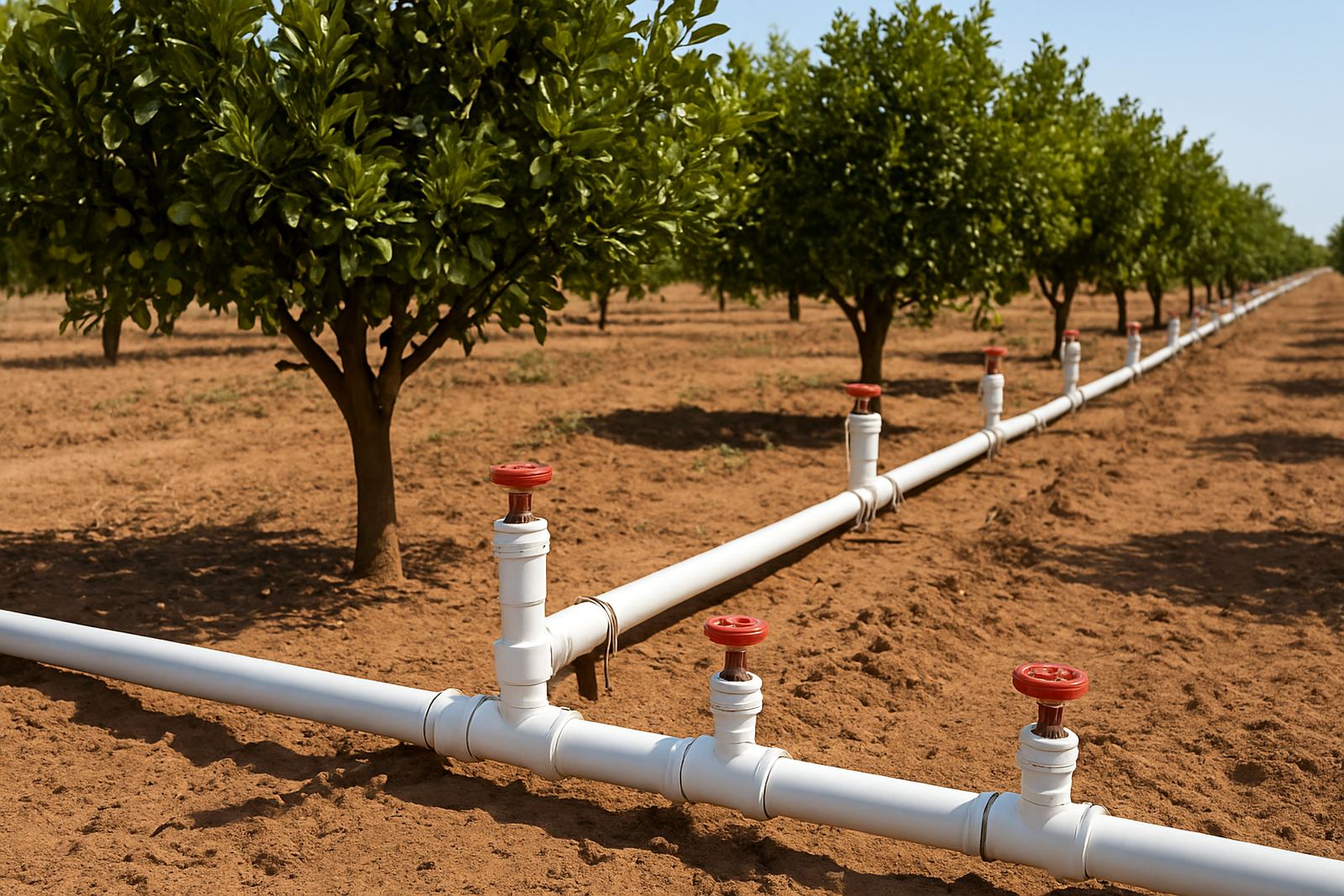
Citrus orchards place steady demands on fittings. Lines often run for many metres along rows, branches and turns, with pumps switching on and off through the day. That means joints must stay true, seal properly and cope with vibration, pressure surges and UV exposure. In hot inland conditions, and especially where blocks are far from the pump house, small failures can become costly fast.
For young orchards, the aim is often a simple, clean layout that can be expanded later. For mature blocks, growers usually want dependable repairs, replacement parts and enough stock on hand to keep maintenance moving. Our fittings and tools are selected for irrigation work, not general plumbing, so they suit the kind of outdoor use citrus farms deal with every season.
We assist farmers, contractors and landscapers with product selection, stock reserving and quantity checks. If you are planning a new block or repairing a section after damage from tractors, rodents or weather, it helps to match the fitting size and jointing method before work starts.
- Solvent-weld fittings for irrigation lines and risers
- Cutting and prep tools for clean, accurate installation
- Support for repeat orders and farm order planning
A typical citrus irrigation equipment set
A citrus orchard setup usually includes mainlines, submains, take-offs, end caps, tees, elbows, couplers and transition fittings where pipe sizes change. Many growers also need valves, repair sections, unions and joining consumables. The exact mix depends on the block size, slope, water quality and whether the orchard uses drip lines, micro irrigation or overhead application in certain areas.
When we help with system matching, we look at the pipe diameter, pressure rating, the number of rows and the distance from the water source. That way, the fittings are chosen for the actual layout instead of guesswork. It is also worth keeping spare parts for the most common break points. A small reserve can save a whole morning when a line goes down during peak watering time.
- Solvent-weld tees, elbows, reducers and caps
- Repair couplers and joiners for field fixes
- Cutters, markers and jointing tools for neat installation
- Spare fittings for high-wear sections and future expansion
For farms with several blocks, we often suggest separating stock by zone. That makes it easier to issue parts to a contractor or farm team without mixing up sizes. It also helps when deliveries are going to Mokopane, Tzaneen, Hoedspruit, Lephalale or Thohoyandou, where different sites may need different pack lists.
How to plan orchard rows, pressure and access points
Good planning starts with the row length and the position of the water source. Long lines need careful pressure management so the far end of the block still performs properly. On sloping ground, you also need to think about air locks, drain points and where the system can be isolated for maintenance. A well laid out orchard line should be simple to service without digging up half the block.
We suggest checking the layout before ordering. Note the pipe sizes, the count of take-offs, the number of end points and any sections that need stepping down to a different diameter. If a contractor is handling the job, it is worth agreeing on one parts list from the start. That avoids shortages and costly return trips.
In citrus areas where dust, heat and strong sun are a factor, fittings should be stored out of direct exposure until fitting time. Where the site is coastal or humid, careful prep matters even more because contamination on the pipe ends can weaken the joint. Clean cuts, dry surfaces and correct curing time all make a difference.
- Check every row length before ordering fittings
- Mark access points for future repairs and flushing
- Keep isolation valves where blocks can be shut off quickly
- Allow for expansion if the orchard is being planted in phases
Common mistakes we see on orchard jobs
One of the biggest mistakes is mixing fittings and pipe sizes without checking the full run. A reducer left out early in the job can slow everything down later. Another common issue is using the wrong jointing method for the pressure or for the part of the system being installed. Orchard lines need consistency, otherwise one weak joint becomes the point that fails first.
We also see poor stock control on larger farms. Parts get used from different boxes, labels go missing and no one is sure what remains on site. That makes repairs harder, especially when irrigation work is urgent and load-shedding has already pushed the schedule back. A simple stock count after each install helps a lot.
For citrus blocks, do not ignore the value of proper cutting and alignment. If the pipe ends are rough or the run is strained, the joint may look fine at first but start leaking later. It is a small detail, yet it can affect the whole line. A bit of patience now is cheaper than redoing a section in summer heat.
- Using the wrong size fitting at a transition point
- Leaving pipe ends dirty or uneven before solvent welding
- Installing without enough spare parts for field repairs
- Skipping pressure checks after the line is completed
Budget ranges for citrus orchard fittings and tools
Budgets vary by orchard size, but it helps to plan in stages. Small repair kits and basic tools can start from a few hundred Rand, while a more complete set for a block installation will usually run into the low thousands. For a young orchard with several rows, it is common to budget separately for fittings, tools and reserve stock so nothing gets missed.
A sensible approach is to cost the project by section. For example, one budget for mainline repairs, one for row connections and one for emergency spares. That makes it easier to compare quotes and to see where the money is going. If you are managing multiple blocks, it is also wise to allow a little extra for replacement fittings and unforeseen changes on site.
We can help with quantity checks before you place an order, which is especially useful when parts are being sent to different farms or couriered nationwide. For local work in Polokwane and the wider Limpopo area, stock can also be arranged for regional delivery or collection planning. The aim is simple: enough material on hand to keep the orchard irrigated without overspending.
- Basic repair and tool packs: from a few hundred Rand
- Section-based orchard orders: often in the low thousands
- Reserve stock is best allowed for in every farm budget
Getting the right parts to the right block on time
Citrus work often happens around watering windows, so timing matters as much as product quality. Our team can help with stock reserving, repeat order support and contractor accounts, which is useful when the same parts are needed across more than one farm. If a job is happening near Ladanna, Polokwane or out on a delivery route, we can help plan the order so it arrives with the correct quantities.
We support farm order planning from the first list through to final dispatch. That includes checking the fittings, making sure the sizes match the line design and advising on jointing and troubleshooting where needed. It keeps the job moving and helps avoid the usual delays that happen when one fitting type was overlooked.
For citrus orchards, the best results usually come from straightforward parts, careful planning and a supplier who understands outdoor irrigation. If you are working on a new block, repairing a mature one or stocking up for the season, we can help you choose what fits the line and the budget.
- Regional delivery across Limpopo
- Nationwide courier dispatch available
- Support for repeat orchard orders and contractor work