
What sports fields need from an irrigation system
A sports field is not a normal garden layout. The pipework has to support regular watering over a wide area, with enough pressure control to keep coverage even from one side of the pitch to the other. If the layout is wrong, you get dry patches, soggy spots, extra mowing trouble and more call-outs for repairs.
For schools, municipalities, clubs and private estates in and around Polokwane, the main concern is practicality. Pipes must be buried at a sensible depth, valves must be easy to find, and any jointing work must hold up through traffic from maintenance vehicles, mowers and foot traffic. In hotter months and during load-shedding periods, irrigation windows can become tighter, so the system needs to be simple enough for staff to manage without wasting water or time.
Our sports field clients usually want hardware that is neat, durable and straightforward to service. That means the fitting selection matters just as much as the pipe size.
Typical PVC fittings and tools for turf installations
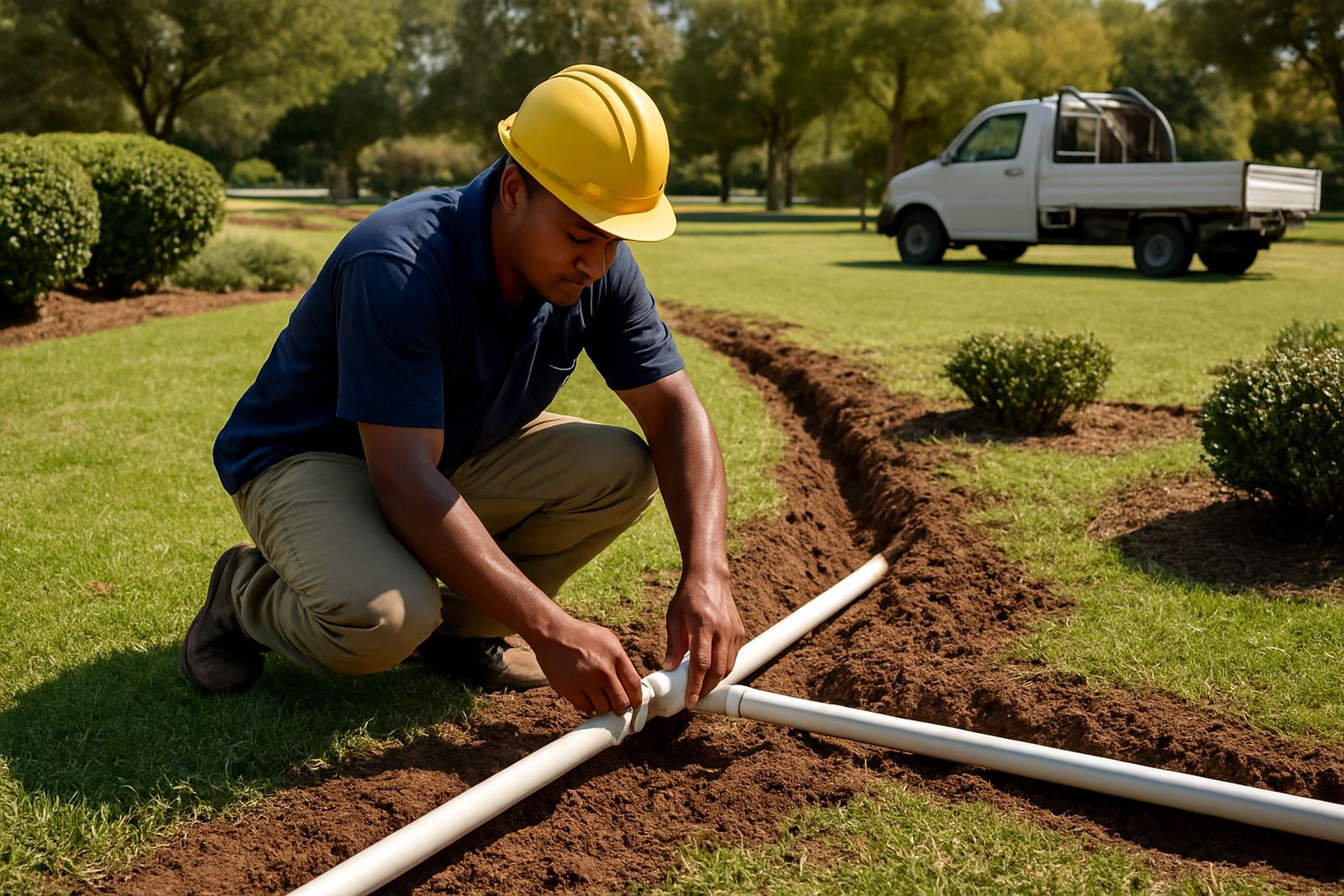
A sports field install normally uses a mix of solvent-weld fittings, adapters and support tools to keep the network organised. The exact selection depends on whether the field is a single pitch, a training area, or a larger complex with multiple zones and control points.
- Solvent-weld elbows, tees and couplers for mainline changes and branch runs
- Reducers and adaptors for tying in valves, filters and distribution lines
- End caps and unions for testing, isolating and future expansion
- Pipe cutters, deburring tools and marking tools for clean prep before jointing
- Cleaning and solvent-weld consumables for reliable sealed joints
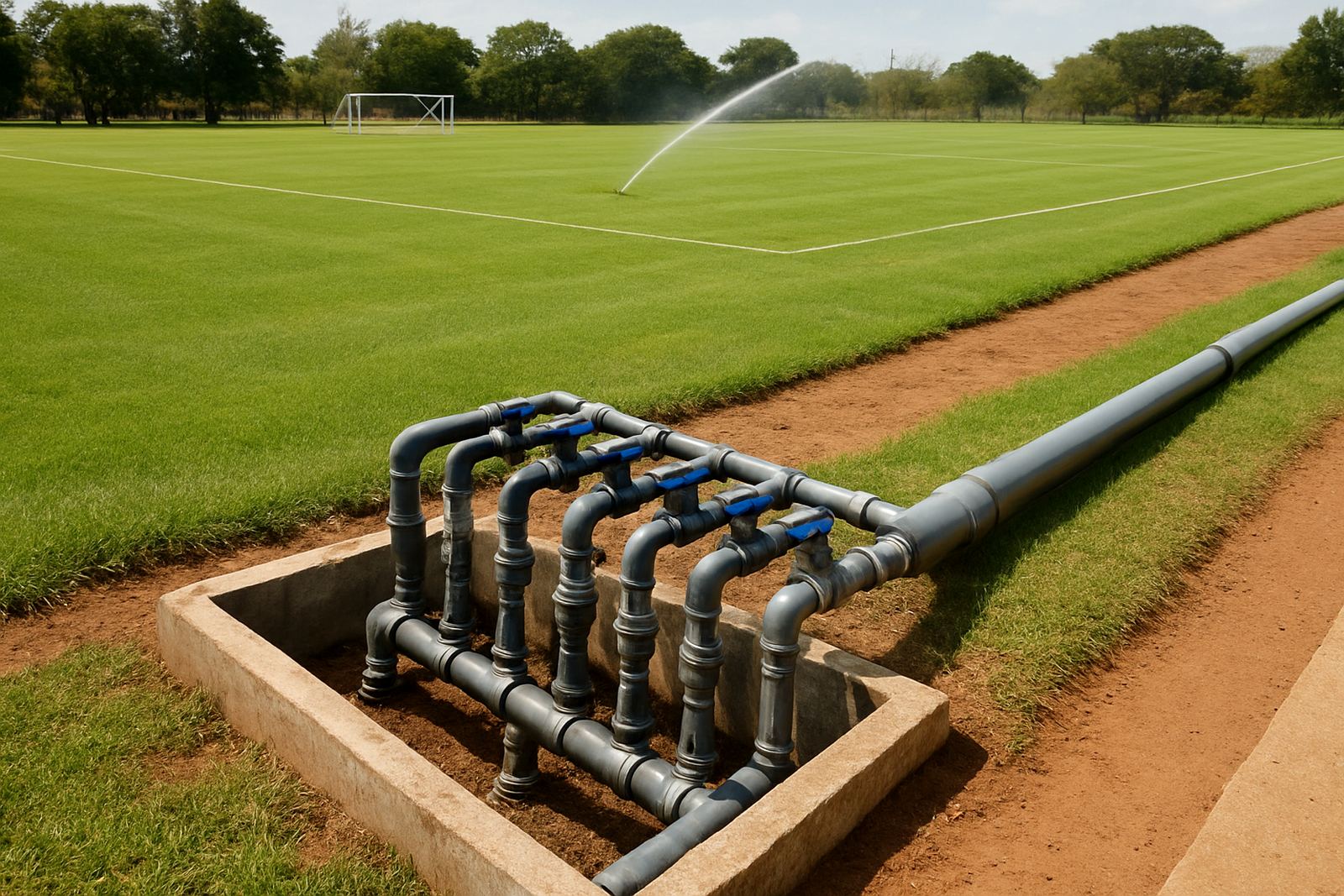
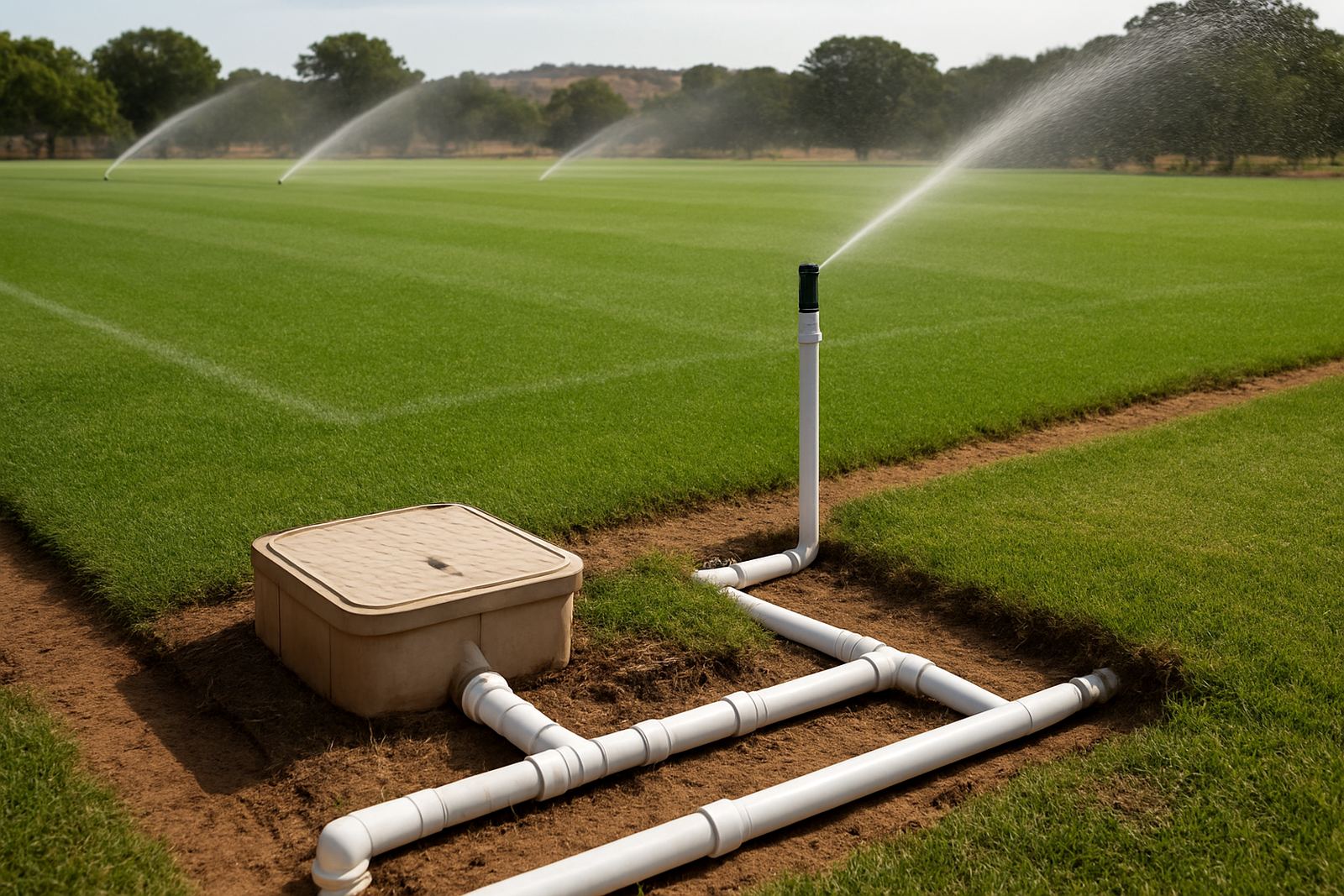
- Support items for valve chambers, access points and tidy maintenance work
Where fields need more than one watering zone, the pipework often needs careful grouping so the maintenance team can isolate sections without digging up half the line. That is why we keep stock for both the install phase and the follow-up work that comes after the first season, when adjustments are usually needed.
Planning the layout so maintenance stays manageable
Good sports field planning starts with access. If a valve box, isolation point or joint is buried where nobody can reach it, repairs become expensive and slow. The best layouts leave enough space for staff to inspect the system, flush lines and handle small faults before they turn into bigger ones.
On larger turf areas, it helps to break the field into manageable irrigation zones. That makes watering more controlled, and it also reduces the risk of uneven pressure across the pitch. In Limpopo conditions, where heat can rise quickly and winds can shift spray patterns, careful spacing and a tidy pipe route are essential.
We often advise contractors to plan for future servicing from day one. Leave practical access points, allow for pipe movement in soil, and keep records of where the main joints sit. A few extra metres of thoughtful routing can save a lot of trouble later. It also helps when the grounds team needs to find an issue fast after a busy weekend or a sudden pressure drop.
Common mistakes that cost time and water
Sports field irrigation usually fails in predictable ways. The biggest problems are not always the expensive parts, but the small choices made during installation.
- Using the wrong fitting size for the flow required
- Skipping proper pipe preparation before solvent welding
- Placing key joints where maintenance access is poor
- Running long sections without enough support or control points
- Ignoring pressure variation across different parts of the field
- Leaving no clear plan for future repairs or expansion
Another common issue is poor protection during construction. Heavy equipment and loose trench backfill can damage pipework before the field is even opened. In coastal humidity or dusty inland conditions, exposed materials should be stored properly too, otherwise fittings and tools can be affected before use.
We see many repeat problems where the contractor tried to save a bit on fittings and ended up spending more on rework. That is why quantity checks and proper product matching are worth doing before the first trench is closed.
Budget ranges for sports field irrigation hardware
Budget depends on field size, number of zones, pipe diameters and how much supporting hardware is required. For a smaller training field or school oval, fittings and tools for the pipework portion may start from around R8 000 to R20 000. Mid-sized sports fields with more zones, valve chambers and longer mainlines often sit between R20 000 and R65 000. Larger facilities can move well above that, especially when there are multiple pitches, reserve areas and future expansion points.
It is wise to budget separately for the core pipework, joinery tools, spare fittings and any regional delivery. If you are ordering for a farm, club or municipality and need stock moved into Polokwane, Mokopane, Tzaneen or further afield, transport timing can matter almost as much as price. We help clients plan quantities so they do not stop halfway through an install because a coupler or adaptor was left out.
For contractors handling several fields at once, repeat order support and contractor accounts can make stock planning easier. That is useful when the project is split into phases, or when only part of the system is being upgraded at first.
How we support field projects across Limpopo and beyond
PVC Welders works from Ladanna, Polokwane and supports sports field projects across Limpopo, with courier dispatch nationwide. For clients in Lephalale, Thohoyandou, Hoedspruit and Tzaneen, the advantage is getting the right fittings and tools to site without dragging a crew back to source missing items.
Our team assists with product selection, system matching, stock reserving and jointing advice. If you are planning a new turf install, we can help check quantities, talk through the layout and support the order from first list to final delivery. For after-sales help, we also assist with troubleshooting and repeat orders when a field needs extra pieces after the first working season.
The aim is simple: keep the irrigation build practical, orderly and ready for service. On a sports field, that saves water, reduces downtime and keeps the grounds team focused on the turf instead of the pipework.