
Why Shade Net Layouts Need Careful Pipework
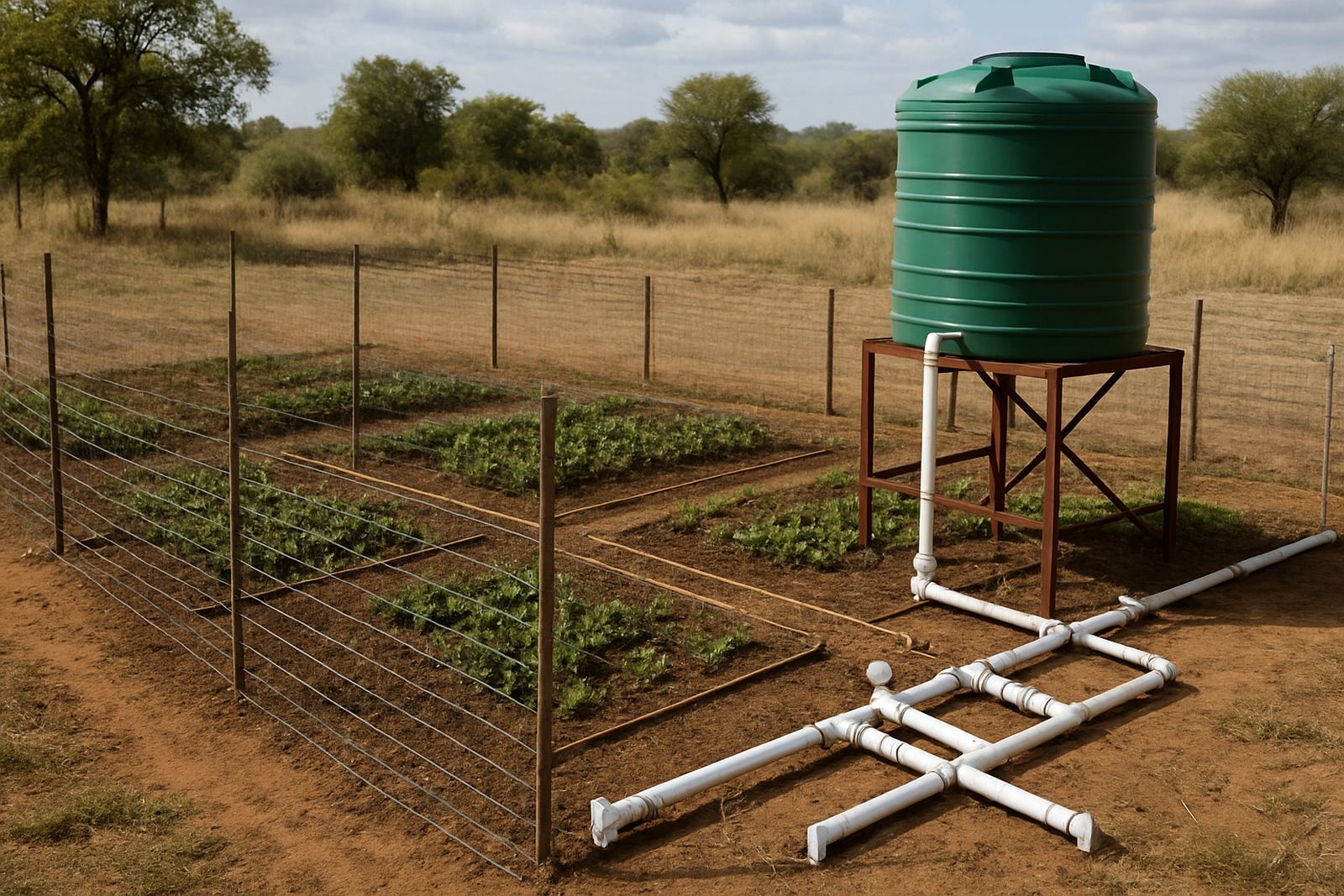
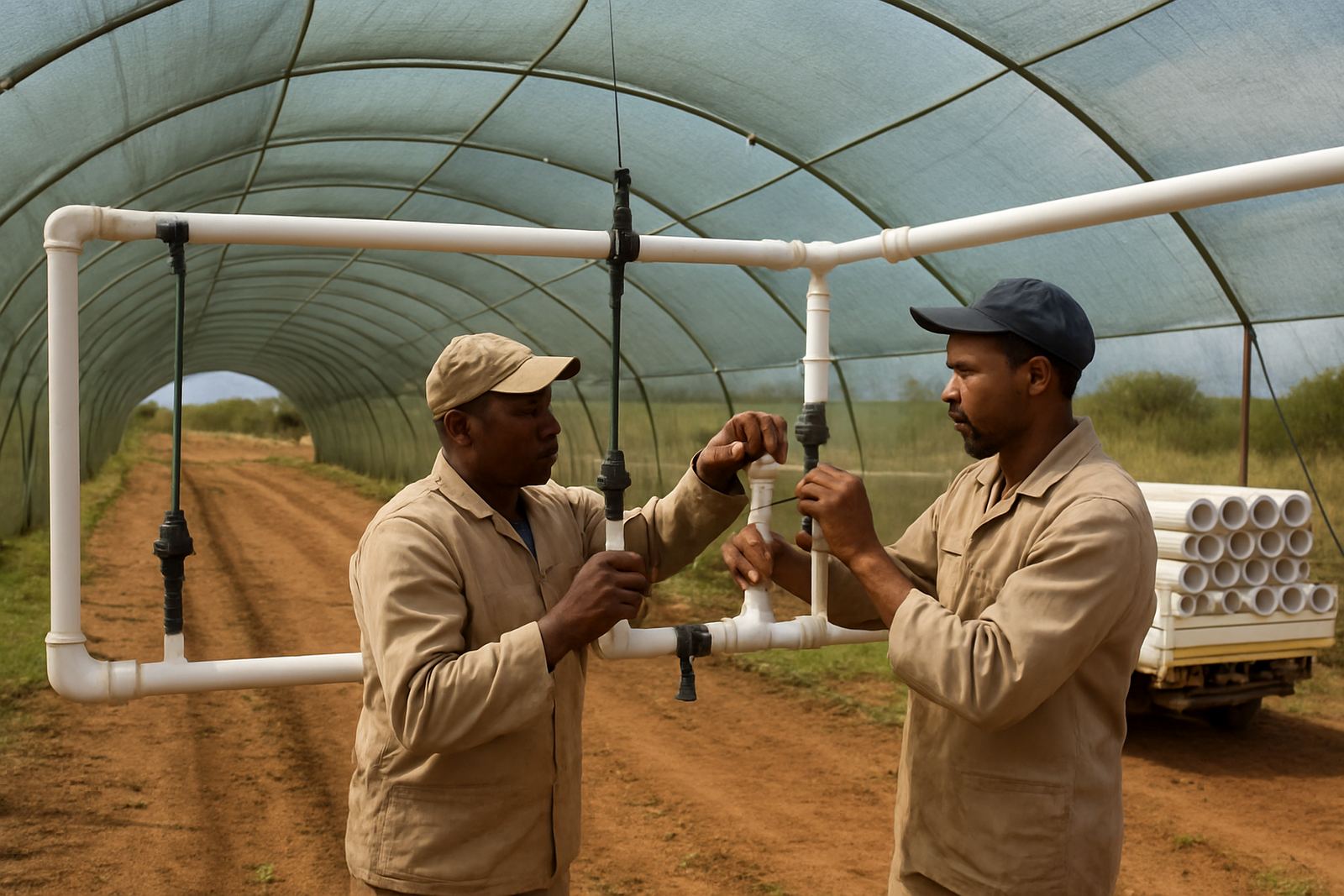
In a shade net farm, every line usually has a purpose. Rows are tighter than open-field work, access is more controlled, and irrigation points must stay neat so staff can move between blocks without snagging pipes or wasting time on repairs. That is why solvent-weld PVC fittings suit these sites well, because they give a fixed connection that holds up under daily use and repeated watering cycles.
Farmers in Polokwane, Tzaneen and Hoedspruit often ask for systems that can be laid out in straight runs with clean junctions, especially where tunnel spacing, walkways, and crop rotation change from one block to the next. The main goal is simple: less fiddling, fewer leak points, and easier shut-off when a section needs attention.
- Clean pipe runs between shade net bays
- Simple branching to beds, drippers or sprinklers
- Easy isolation for repairs and block changes
- Better control when water pressure varies on long runs
Typical Equipment Used In Covered Growing Areas
A shade net farm usually needs more than just pipe and glue. The right set-up includes fittings for main lines, take-offs, valves, unions, reducers and the tools needed to cut, prepare and joint pipe properly. Where water comes from a borehole, dam, tank or municipal point, the fittings need to match the pressure and the actual flow on site, not just the drawing on paper.
We help clients match product sizes to the block layout and the pump output. That matters a lot on farms where the system is expanded in stages, because the wrong fitting size can waste pressure or force a rework later. In many cases, a contractor will want stock for 25 mm, 32 mm, 40 mm and 50 mm lines, with larger lines used where the main feed runs a longer distance across the property.
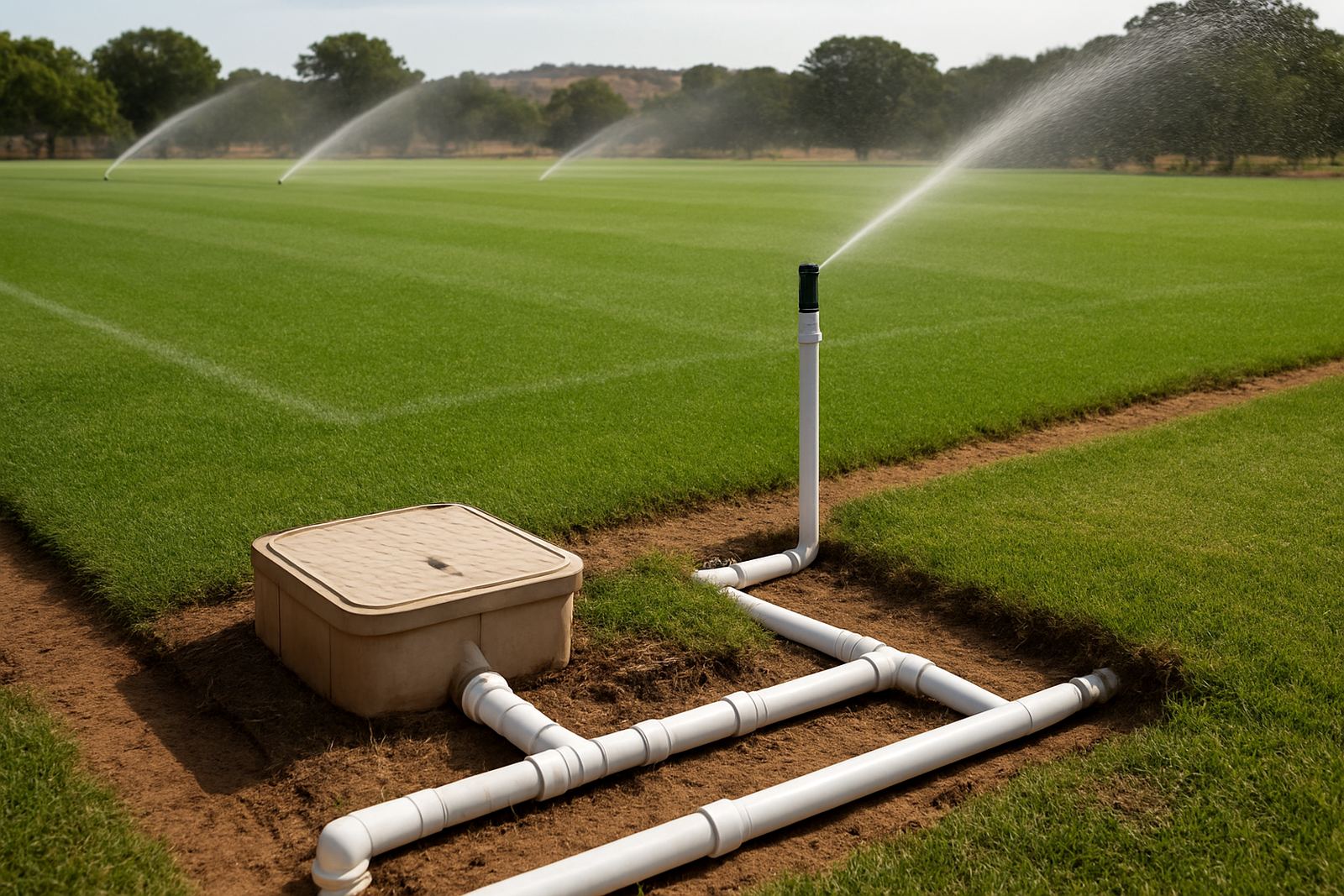
- Solvent-weld couplers, elbows, tees and reducers
- End caps, adaptors and threaded connectors
- Pipe cutter, deburring tool and cleaning materials
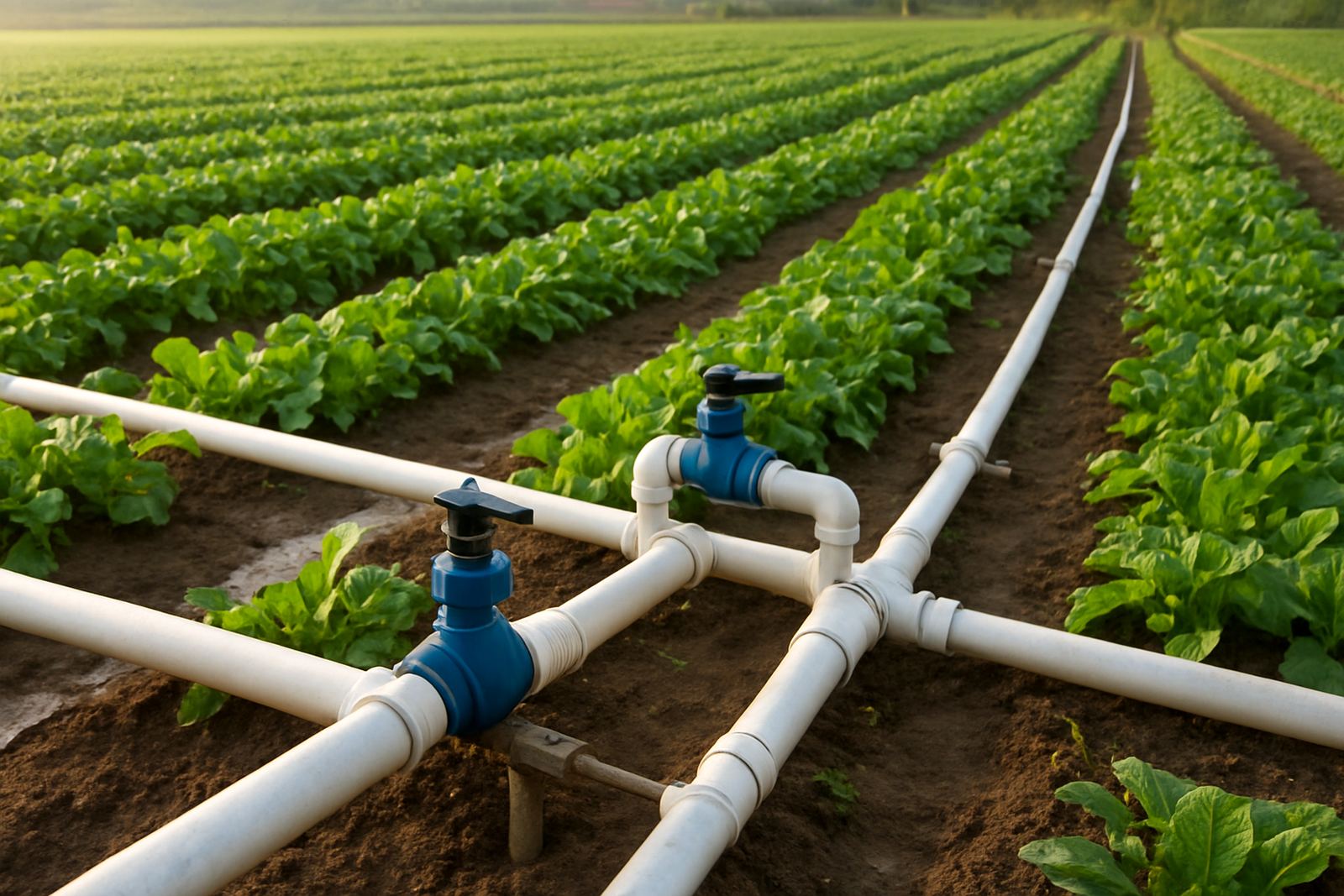
- Valves for block control and maintenance shut-off
- Jointing supplies for secure, clean installation
For shade net structures near the coast or in high-humidity areas, people often ask about fittings that can handle outdoor exposure and regular handling. Good storage on site also matters, because sunlight, dust and rough transport can damage stock before it is ever installed.
Planning The Layout Before You Start Gluing
The best time to solve irrigation problems is before the first cut is made. On shade net farms, the layout should be checked against the crop rows, gate positions, tank location, pump house and where workers need access during spraying or harvesting. A tidy layout saves time every week, and it also makes fault-finding much quicker when a block loses pressure.
We often suggest planning the main line first, then the branch lines, then the control points. That order helps avoid awkward bends and unnecessary joins. It also leaves room for future blocks if the farm expands. In Polokwane and surrounding areas, many growers add new bays in phases, so it is worth leaving a few practical tie-in points for later use. It’s a small step that saves a lot of cutting later.
- Measure each bay and mark the turning points before ordering
- Keep valves and unions where they can be reached without climbing over beds
- Allow for pump pressure drop on long lines
- Use consistent pipe sizes where possible to reduce fittings count
Common Mistakes On Shade Net Farms
A lot of irrigation trouble starts with rushed installation. The most common mistake is using the wrong fitting size or forcing a join that does not match the pipe wall properly. Another issue is poor surface preparation before solvent welding, which can lead to weak joints and leaks after the line has been under pressure for a few days.
Other mistakes include putting too many bends into a line, burying valves where nobody can reach them, and not checking the full water route before the system is switched on. In the hot Limpopo sun, a line that is left sitting while the crew takes lunch can also become difficult to work with if the pipe has shifted or picked up dirt. It sounds basic, but these are the faults that cost money.
- Choosing fittings without checking pipe size and wall thickness
- Leaving no access for repairs or flushing
- Using short cuts on cleaning and jointing
- Ignoring pressure changes between the pump and the far end of the block
Budget Ranges For Farm-Grade Irrigation Fittings
Budgets vary depending on the size of the shade net area, the pipe diameter, and whether the order is for a single block or a full farm fit-out. For a small shaded growing area, basic fittings and tools may start from around R1 500 to R4 000. Mid-sized sections with more control points, larger pipe and extra joiners can run from about R5 000 to R15 000. Larger farm orders with multiple blocks, reserve stock and contractor quantities often move from R20 000 upwards.
Those figures are only a guide, because transport, quantity and the type of jointing work all affect final cost. For growers in Mokopane, Tzaneen, Lephalale and Thohoyandou, it is often worth ordering a little extra stock for repairs, especially where long-distance delivery or courier dispatch is involved. A few spare elbows, couplers and valves can prevent a shutdown if a line gets damaged during peak season.
We also help with repeat order support and stock reserving, which is useful when a contractor is building in stages or when a farm wants to keep emergency parts on hand. That way, the next repair does not have to wait for a full resupply run.
How To Order The Right Parts For Your Farm
Clients contact us through the enquiry form on our contact page, then we work through the farm layout, water source, pipe sizes and the quantity needed for each section. If the order is for a shade net farm with several blocks, we can assist with product selection, system matching and quantity checks so the list is right the first time.
Our base in Ladanna, Polokwane supports local supply and irrigation stock trucked across Limpopo, with couriers nationwide for farms further afield. That is helpful when a site is outside town, or when a contractor needs parts quickly to keep a job moving. The focus is practical support, not guesswork.
- Product selection based on pipe size and pressure needs
- Jointing advice for solvent-weld fittings
- Troubleshooting help for leaks, blockages and pressure loss
- After sales support for repeat buys and future expansion
Whether the site is a compact tunnel block or a larger commercial shade net farm, the right fittings and tools make the whole system easier to run day after day.