What avocado estates need from PVC fittings
Avocado growers usually work with longer runs, uneven ground and zones that must keep pressure steady from one block to the next. That means the pipework cannot be treated like a small garden line, because every join, elbow and valve point affects the flow to the whole block. The right PVC fittings help keep the system tidy, easy to service and less likely to fail during the hottest months.
On estates in and around Polokwane, Tzaneen, Hoedspruit and the Lowveld, UV exposure and dust are constant. In wetter or more humid areas, stored fittings and tools also need to stay in good condition between jobs. We supply irrigation fittings for solvent-weld assembly, so the system can be built to suit the block spacing, pump position and water source on site.
- Solvent-weld elbows, tees, couplers and reducers
- End caps, adaptors and threaded fittings for valves and filters
- Pipe cutting and jointing tools for clean site work
- Items suited to new installations, repairs and block extensions
Typical equipment set for a tree block layout
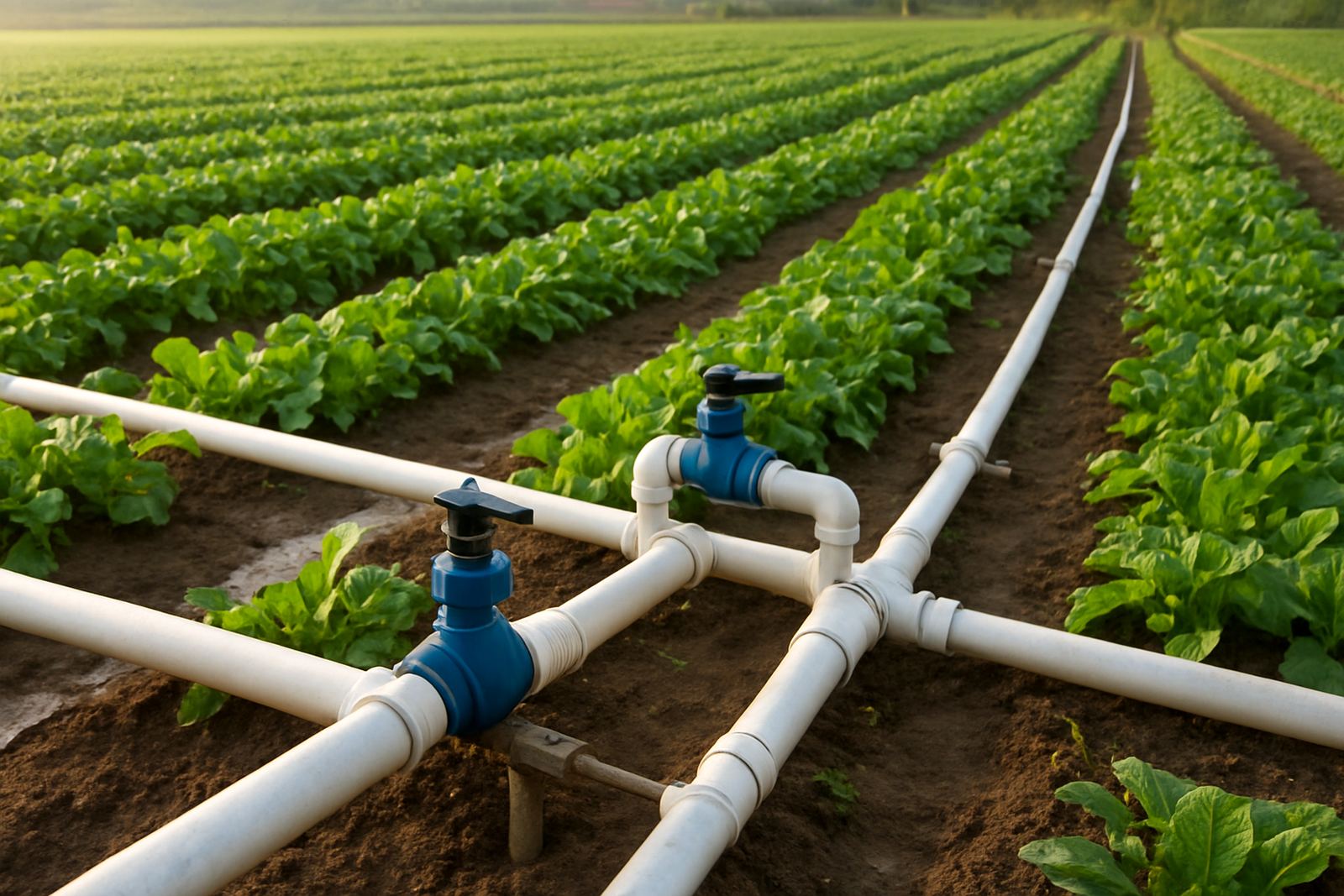
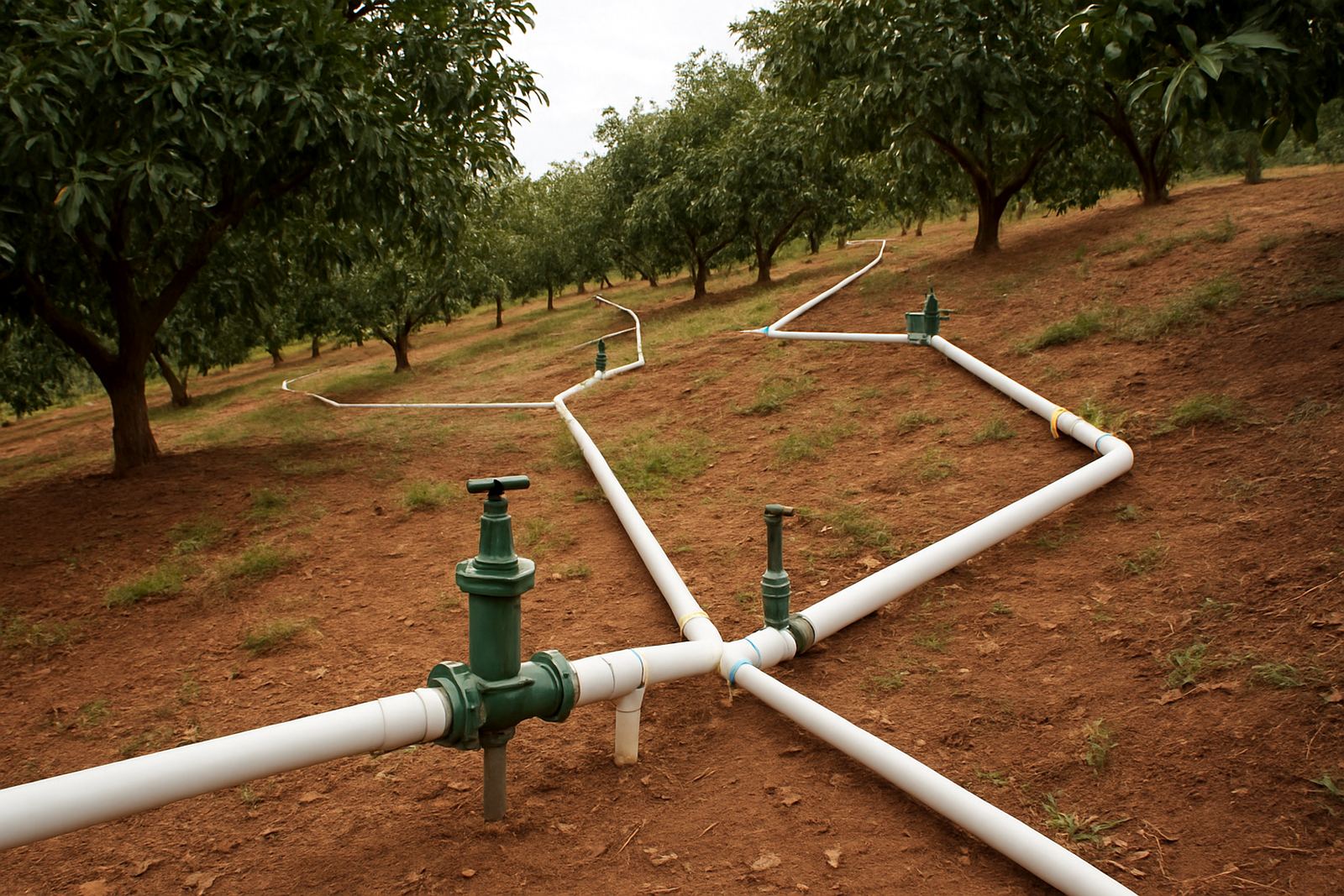
An avocado estate usually needs more than just straight pipe and a few bends. The common setup includes mainlines from the pump, submains along the rows, take-offs to each block and fittings around filters, pressure control points and flushing ends. On sloping land, careful use of reducers and control points helps keep pressure more even from the top of the block to the bottom.
For contractors and farm managers, a practical kit often includes solvent cement, cleaner, measuring tools, pipe cutters and a mixed fitting list based on the actual map of the farm. If the estate is divided into different soil types or tree ages, each zone may need its own pipe size and jointing plan. That saves time later when a section needs repair or expansion.
- Mainline and submain fittings matched to the pipe size on site
- Valve connections, union points and threaded adaptors
- Flush ends and repair couplers for maintenance work
- Spare fittings for quick fixes during busy irrigation periods
Planning for slope, distance and water pressure
Avocado orchards often stretch over long distances and mixed terrain, so planning starts with the farm layout rather than the parts list. The first step is to check the water source, pump output, pipe lengths and elevation changes. From there, the system can be split into manageable zones so pressure does not drop too far at the far end of the line.
We usually advise clients to map the blocks before buying in bulk, especially where there are contour lines, rocky patches or older plantings mixed with new blocks. A clean layout makes maintenance easier and reduces the chance of unnecessary bends or too many joins. Fewer joins generally means fewer leak points, which matters on estates where water is already being managed carefully because of power cuts or municipal limits.
For regional work in Limpopo, it also helps to plan around delivery timing. Some farms need stock reserved before planting or before a repair crew arrives, while others prefer courier dispatch direct to the site. If the order is large, we can help with quantity checks so the right fittings arrive in one consignment and the crew does not lose time waiting on missing parts.
Common mistakes on orchard irrigation jobs
One common mistake is choosing fittings only by price and not by the actual pipe size, pressure requirement or the number of blocks being fed. Another is using too many reducers or short cuts in the pipe run, which can disturb flow and make the system harder to service later. On a working avocado estate, quick repairs matter, but so does making sure the repair lasts through wind, heat and regular tractor movement.
We also see issues where joints are rushed. Solvent-weld work needs clean surfaces, the right amount of adhesive and enough curing time before pressure is applied. In dusty conditions, especially on farms with open ground and vehicle movement, a poor joint can fail earlier than expected. That usually costs more than doing the job properly the first time.
- Ordering fittings before checking the pipe specification
- Mixing parts from different sizes or pressure classes
- Skipping layout checks on sloping land
- Applying pressure too soon after jointing
- Leaving no spare parts for breakages during harvest or maintenance
Budget ranges for avocado block installations
Budget depends on block size, pipe diameter, the number of zones and whether the job is a full installation or a repair upgrade. For smaller orchard sections, a fittings order may start from a few hundred Rand for basic repair items and joiners. Mid-sized block work, with multiple valves, reducers and a more complete jointing pack, often sits in the low thousands.
For larger estates, especially where stock is needed for several blocks at once, the budget can move into the tens of thousands Rand once you add mainline fittings, spares and enough material for future repairs. The best way to control cost is to plan the full requirement up front, then reserve stock in one batch rather than buying bits and pieces after the job has already started.
Contractors working on several farms sometimes open repeat order support or contractor accounts so they can keep a standard list for common pipe sizes. That makes farm order planning simpler and helps with quantity checks before dispatch.
How we support avocado growers in Limpopo and beyond
Our base in Ladanna, Polokwane supports clients across the Polokwane supply area, Mokopane, Tzaneen, Hoedspruit, Lephalale and Thohoyandou, with courier delivery available nationwide. For avocado estates, that means the order can be matched to the block plan, reserved, checked and sent without the farm team having to chase parts from place to place. We also handle troubleshooting help and after sales support if a crew needs help identifying the next fitting or jointing step.
Where possible, we work with the people who are actually on site, whether that is the farm owner, irrigation manager or contractor foreman. Mpho Sekgobela leads the business, with Annelie van Zyl on sales, Thabo Mashaba on technical advice, Lerato Mokoena on branch coordination, Johan Smit on logistics and Nokuthula Dlamini on customer support. That team approach helps keep orders clear, practical and ready for the field.
- Product selection based on the orchard layout
- System matching for pipe sizes and fittings
- Stock reserving for scheduled installs and repairs
- Regional delivery and courier dispatch