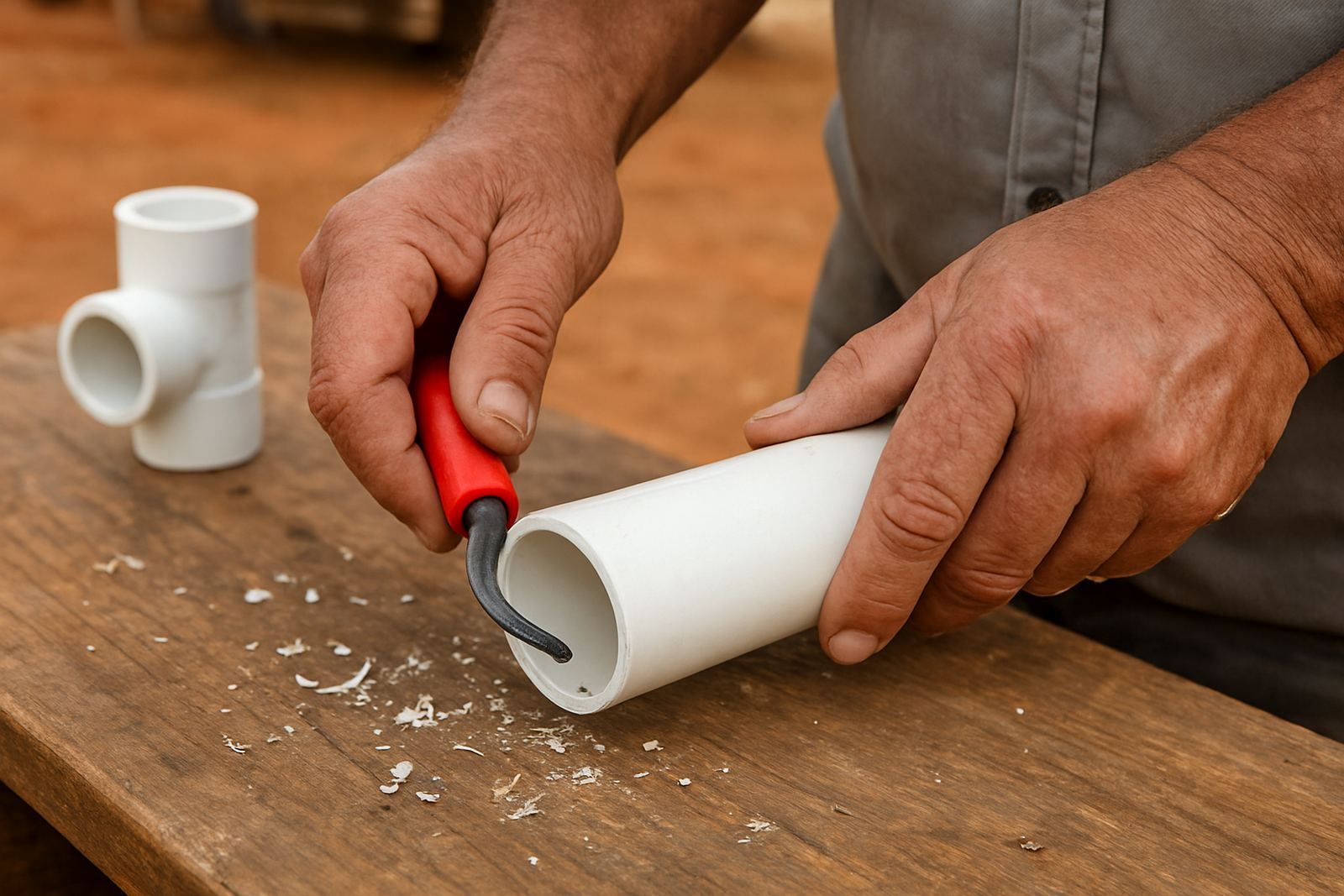
What a burr does to a PVC joint
When pipe is cut, the edge is rarely perfect. A burr is the thin lip or rough edge left behind inside or outside the pipe, and it can catch on the fitting as you push it in. That small ridge may seem harmless, but it can stop the pipe from entering fully and leave the joint sitting under stress.
In irrigation work that matters more than most people think. Pressure changes, heat from the sun and movement in the trench all work on the joint. If the pipe is not seated properly because the edge was left rough, the fitting has less contact area and the bond is less even. On a farm line or a landscaped garden, that can mean leaks that show up later, often after the job has already been handed over.
Why cleaner insertion gives better solvent-weld results
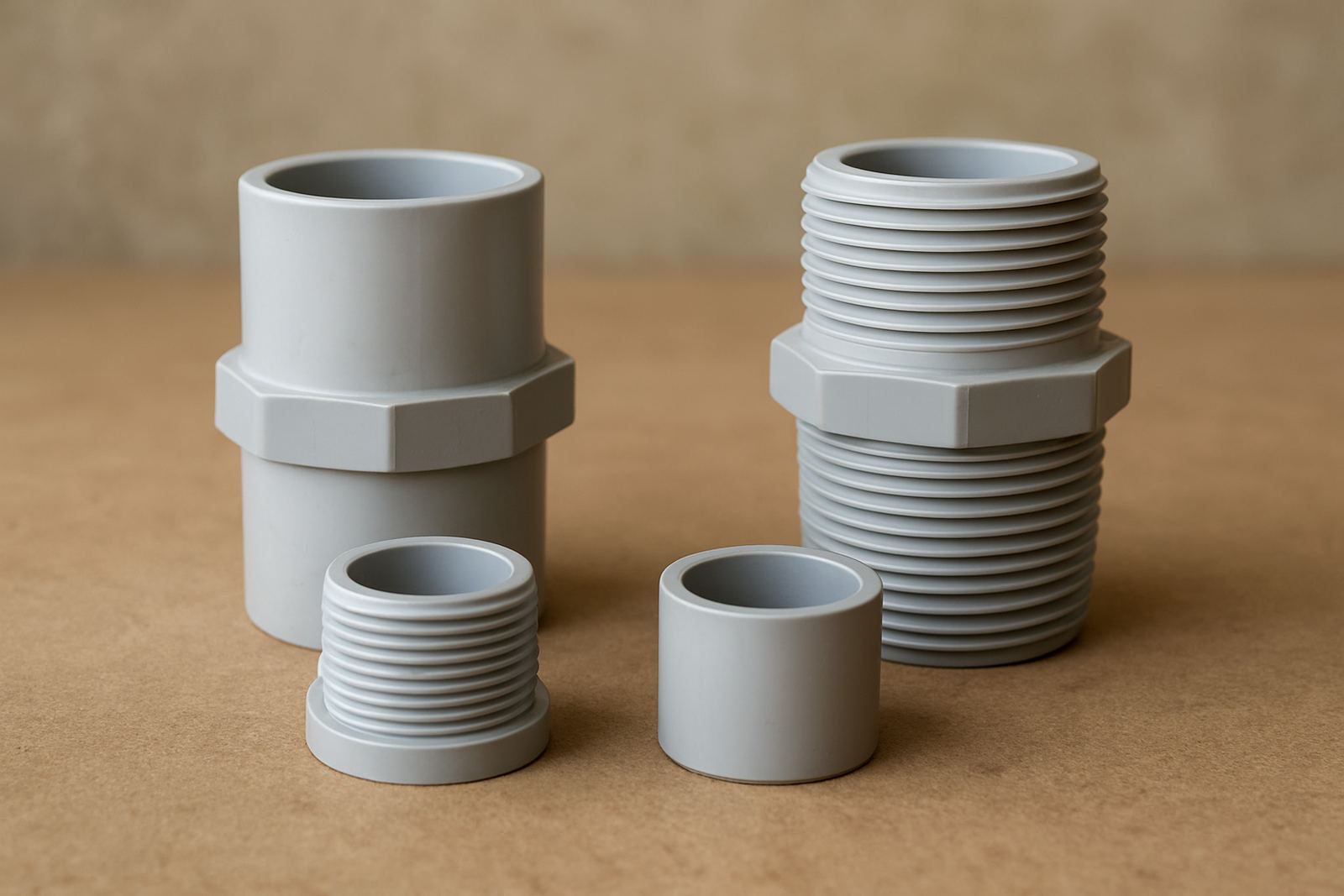
Solvent-weld fittings rely on close contact between the pipe and the socket. The cleaner and straighter the pipe end, the easier it is to insert the pipe to the full depth. That helps the solvent spread evenly over the bonding surface instead of being scraped off by rough edges.
Deburring also helps with marking and alignment. Once the edge is smooth, the pipe slides in with less force and gives the installer better control over the final position. This is especially useful on larger diameters where a rough cut can fight the fitting and waste time on site.
- Less resistance when pushing pipe into the fitting
- Better contact between the socket and pipe wall
- Cleaner solvent spread across the join
- Reduced chance of shaving fragments ending up inside the line
The hidden problem with loose shavings in irrigation lines
Plastic shavings are easy to ignore at the cutting stage, but they can cause trouble once water starts moving through the system. Loose bits can lodge in nozzles, block small outlets or collect in low spots where they reduce flow. In drip and micro irrigation work, even tiny debris can lead to uneven watering and unhappy clients.
Shavings can also show up again later during maintenance. If the system is opened for repairs and the pipe ends were never cleaned properly, the leftover fragments can end up back in circulation. In a dusty area like Polokwane or on a windy site out towards Mokopane, it pays to keep the pipe end tidy before the fitting goes on.
- Protects small outlets and emitters from blockage
- Helps prevent debris from moving through the line
- Makes system flushing easier after installation
- Supports cleaner long term maintenance
Deburring is especially important in hot and dusty conditions
South African irrigation systems work hard. Pipes sit in strong sun, move through dry soil and often get installed under time pressure. In these conditions a rushed cut can leave a rough edge that does not look serious at first but creates problems later. Heat can make pipe ends a little softer and more prone to smearing, while dust can stick to the fresh surface before the joint is made.
That is why a simple deburring step should be part of every install. Whether the job is on a citrus farm near Tzaneen or a smallholding in Lephalale, taking a few seconds to clean the edge saves time on callbacks. It is one of those habits that pays for itself quietly, job after job.
What to do before you glue
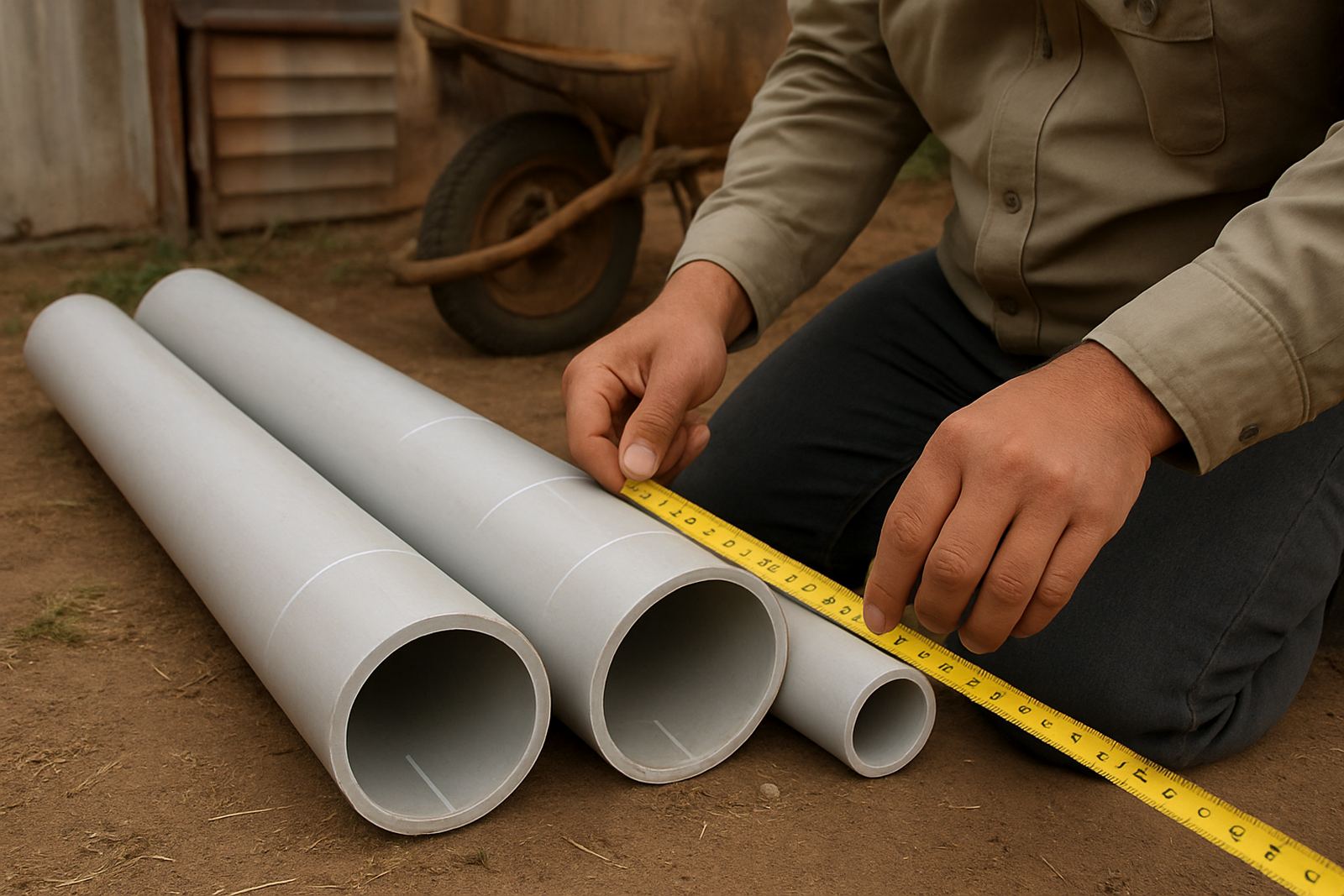
A clean, square cut is only the start. Before solvent is applied, the pipe end should be checked, cleaned and measured again so the fitting goes on without force. The goal is not to remove too much material, only to take off the sharp edge and any loose fragments left by the saw or cutter.
For teams working across farms, estates and commercial sites, a short pre-join routine keeps standards consistent. It also makes training easier for new hands on the job because the steps are simple and repeatable.
- Cut pipe square and check for cracks
- Remove the inside and outside burr
- Wipe away dust and loose shavings
- Dry fit the pipe to confirm depth and alignment
- Only then apply solvent and complete the joint
A local example from a Polokwane irrigation run
On a recent irrigation supply run out of Ladanna, a contractor called for fittings and tools for a block of new lateral lines. The crew had been cutting pipe quickly to keep ahead of the trench, but some of the ends were leaving a rough lip. Before the joints were made, the team stopped to deburr each pipe and clear the shavings from the work area.
The result was immediate. The fittings seated easier, fewer pipe ends needed to be re-cut and the final flush of the line came through cleaner. It saved time on site and reduced the chance of a problem showing up after the line was buried. That is the point of deburring: small effort, better result.
Simple tools and habits that keep the job neat
Deburring does not need complicated kit. A basic hand tool or a suitable edge-finishing tool is often enough for most irrigation pipe sizes, as long as it is used regularly and kept sharp enough to do the job properly. The main thing is consistency. If every cut gets checked, every joint starts from a better position.
For contractors, farmers and landscapers ordering across Limpopo or through nationwide courier, it also helps to keep a small fitting kit with the cutting tools. That way the crew can clean the pipe immediately after cutting, before dust and grit settle on the end.
- Keep a deburring tool with the pipe cutters
- Train staff to check both pipe edges every time
- Clean pipe ends before the fitting area gets dusty
- Replace worn tools before they start leaving ragged edges
It is a small habit but it makes a proper difference. A clean edge means a cleaner joint, and a cleaner joint means fewer problems later on.