Why long pipe needs careful handling before installation
Long solvent-weld PVC pipe is light compared with metal, but that does not mean it travels well without care. A pipe can look fine from the outside and still end up bent, scored or ovalled after a rough trip on a bakkie, flatbed or truck. Once that happens, joints become harder to make up properly and the installer starts fighting the material before the job has even begun.
For irrigation work, the goal is simple: keep the pipe straight, clean and protected from impact. On a farm road around Polokwane or on a courier run to a remote holding, the same rule applies. The pipe must be supported along its length so it does not sag between tie points, and it must not rub against hard edges during the trip.
UV exposure, dust and heat also matter. In Limpopo, a pipe left on the tray in full sun can soften slightly and shift under straps. Coastal humidity is less of a concern inland, but dust and grit still cause trouble when pipe ends are left open. A small crack at the end can spread once the line is pressurised.
How to load pipes for bakkies, trucks and trailers
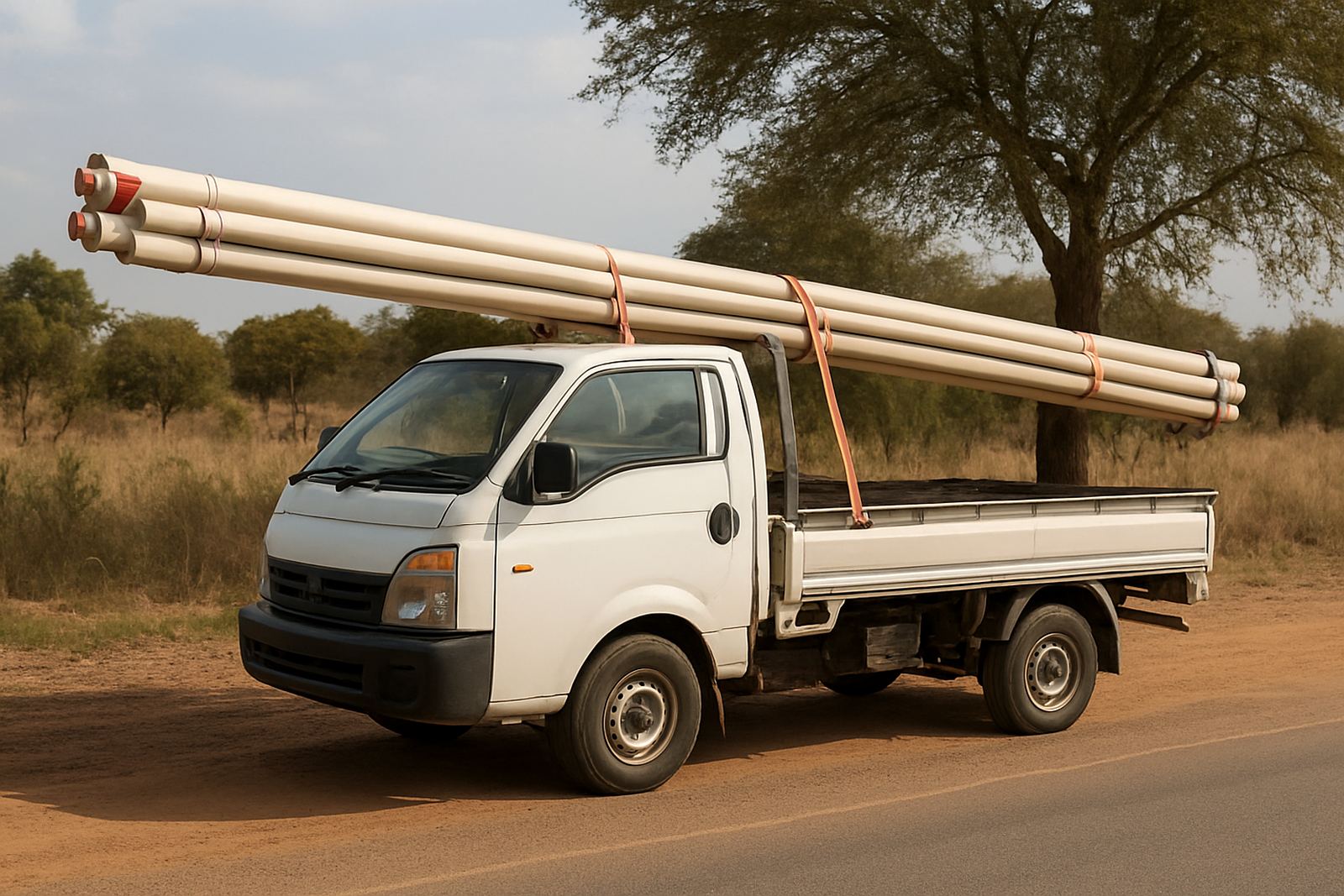
When pipe lengths are moved by bakkie or trailer, the load should be kept flat and evenly supported. If the pipe is hanging off the back or resting on one middle point only, it will flex and take a set. That is when you get a permanent bend that makes alignment difficult during installation.
Use a level load bed where possible and place soft support points under the pipe. Straps should hold the bundle down, but not crush it. Overtightening is a common mistake, especially with lighter wall sections. If the strap bites into the pipe, the end can oval and the fitting may not seat properly later.
- Keep pipe lengths within the vehicle or trailer where possible.
- Support the pipe at several points instead of one central point.
- Use padding between the pipe and hard metal edges.
- Check that the ends are protected from knocks when loading and offloading.
For longer runs, a proper rack or side support is worth it. It reduces movement on corrugated roads and helps the driver avoid repeated checks every few kilometres. That saves fuel and keeps the cargo in better shape.
Protecting fittings, ends and solvent-weld surfaces in transit
Pipe is only one part of the load. Solvent-weld fittings, end caps and accessories need their own care, because a box of fittings thrown in with pipe sections can be damaged quickly. Threads can chip, sockets can deform and sealing surfaces can collect grit. Once dust gets into the jointing area, the installer has to clean everything before work starts.
Keep fittings in closed containers or sealed bags where possible. If you are transporting pipe and fittings together, separate the small stock from the long sections so they do not knock against each other. An open bin of fittings on a rough road is asking for lost stock and damaged edges.
- Store fittings away from loose stones, tools and sharp offcuts.
- Keep solvent, cleaner and primer upright and secure.
- Protect pipe ends with caps or clean wrapping for longer trips.
- Do not pack heavy items on top of long pipe bundles.
It also helps to plan the order of the load. Put the items you need first near the top or near the side that opens easiest. That way, the offloading process is quicker and there is less chance of dragging other stock across the pipe. A small bit of planning on loading day can prevent expensive damage later.
Road conditions in Limpopo and what they do to long stock
Transporting irrigation stock across Limpopo means dealing with a mix of tar roads, gravel routes and uneven access roads to farms and new developments. Between Ladanna, Mokopane, Tzaneen, Hoedspruit and Lephalale, road conditions change quickly. A load that is secure on the main road can still shift when the vehicle hits potholes, loose gravel or a sharp turn into a farm gate.
That is why long pipe should be checked after the first few kilometres, not only before departure. If the straps have relaxed or the bundle has started to creep, the driver should stop and reset it. This small check is especially important on long courier collections and regional delivery runs where the vehicle may spend hours on the road.
Heat is another factor in Limpopo. A pipe bundle left standing in the sun on a depot floor can become more flexible than expected, and flexible stock moves more easily during travel. On the other hand, early morning loading can make the material slightly stiffer, so rough handling at that stage can cause cracking at the ends. Timing matters more than many people think.
What contractors should ask before collecting stock
Good transport starts before the vehicle arrives. Contractors and farm managers should know the pipe lengths required, the number of pieces, and the route the stock will take. If a delivery has to go from Polokwane to a site near Thohoyandou or out toward Hoedspruit, the loading method may need to change depending on the pipe length and the road access at the other end.
It helps to ask a few practical questions before collection:
- Will the pipe fit safely on the vehicle without overhang issues?
- Are separate fittings, tools and adhesives packed away from the long lengths?
- Is there a clear offloading point at the farm or site?
- Will the load need extra support because of a rough route?
When the answers are clear, the driver can plan tie-down points and offloading order properly. It also reduces wasted trips. A contractor who arrives with the wrong vehicle for 6 metre lengths will lose time, and the stock may still end up damaged by the attempt. Better to sort the transport plan first than try to fix it on the roadside.
A practical Polokwane example from the loading yard
Picture a mixed irrigation order leaving Ladanna for a citrus block outside Tzaneen. The load includes long pipe sections, several boxes of fittings, and a few tools for jointing on site. If the pipe is laid flat with support at several points, and the boxes are kept separate, the delivery can reach the site ready for installation. If the same load is stacked carelessly on one side, the pipes start to bow and the boxes shift into the ends.
In that kind of delivery, the difference between a clean installation and a difficult one often comes down to the first 20 minutes on the loading yard. The team that checks support points, strap tension and access for offloading usually saves itself an hour or more later in the day. And when the site is far from town, that hour matters.
For irrigation work in particular, the stock must arrive ready to be joined, not straightened out. That is why sensible transport is not a small detail. It is part of getting the system built right the first time. A pipe that travels well is far less likely to cause join failures, off-centre fittings or wasted labour on site.
The safest habit is to treat pipe like finished stock
Long PVC pipe is not scrap material. It is a finished product meant to be installed as it arrives, and it should be handled that way from the moment it leaves the yard until it is laid in the trench. Good transport habits do not need complicated equipment, just attention to support, spacing, clean handling and proper tie-downs.
For farms, landscapers and contractors across South Africa, the same principles apply whether the stock is moving across Polokwane or going out nationwide by courier. If the pipe stays straight, the fittings stay clean, and the load stays stable, the installation team starts with a far better chance of success. That is real savings, not just neat transport.
When stock is planned properly and loaded with care, the whole job runs smoother from the first delivery through to final jointing. It keeps water systems moving and reduces the kind of damage that usually shows up only after the vehicle has gone.