Why the cut matters more than most teams think
On irrigation work, a pipe cut is not just the start of the joint, it is the part that decides how well the system holds together. If the cut is skew, burred or crushed, the fitting has to work harder to seal and that can lead to seepage, loose joints, or repeated rework after the line is pressurised.
That matters on farms around Polokwane, Ladanna and the wider Limpopo routes where crews often move fast between blocks. When the cutting is consistent, the rest of the installation goes quicker too, because every end fits the same way and the installer spends less time correcting small faults.
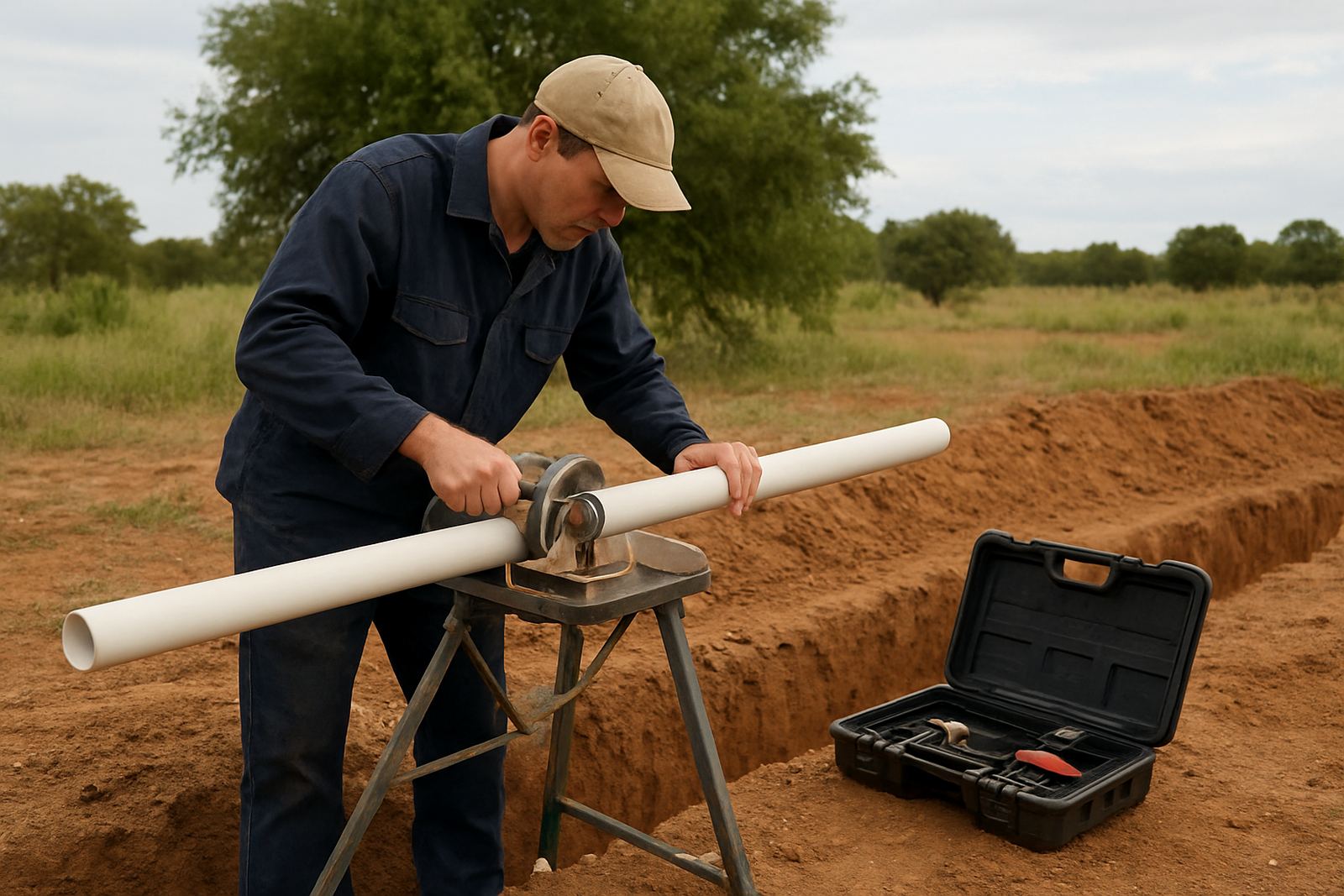
Set up a simple cutting station at the vehicle or trench edge
A neat field setup does not need to be fancy. It just needs to keep the pipe steady, the blade sharp, and the cut line easy to see. Many contractors lose time because they cut on uneven ground, or use a loose bench that lets the pipe roll while they are trying to mark it.
Keep the station close to the work area but out of the mud and standing water. In summer heat, PVC can soften slightly, so it helps to store lengths in shade before cutting. On cold mornings, the pipe can feel harder and more brittle, so a firm support point and slow, controlled pressure matter even more.
- Use a flat board, stand, or other steady support so the pipe does not move.
- Mark the cut line clearly with a fine marker or grease pencil.
- Keep a cloth nearby to wipe dust, moisture, and grit from the pipe end.
- Separate good offcuts from damaged ones so they do not get reused by mistake.
Choose the right tool for the pipe size and site conditions
Different pipe sizes need different handling, and field conditions can change the best choice for the day. Smaller irrigation lines can usually be cut quickly with a hand tool, while larger diameters may need a stronger cutting method to keep the end square. If the tool is dull, it will squeeze the pipe before it cuts, leaving a lip that slows down the fit.
For outdoor work, it also helps to think about dust and grit. A cutting edge that picks up soil from the trench will mark the pipe and can drag debris into the joint. That is why teams doing repeated installs around Hoedspruit, Tzaneen or Lephalale often keep one tool for clean prep and another for rough trench work.
- Check that the blade or cutting edge is clean before each shift.
- Match the tool to the pipe size instead of forcing one tool to do every job.
- Replace worn blades before they start crushing the pipe wall.
- If the pipe is large, support both sides so the cut stays true.
Keep the cut square, then clean the edge before joining
A square cut gives the solvent weld a better chance to seat evenly. If one side is longer than the other, the fitting may go on crooked and the joint line will not be even. On irrigation runs, that small problem can become a bigger one when pressure comes up and the line starts shifting under load.
After the cut, clear the burrs and loose shavings before assembly. A quick check on the inside and outside edge takes seconds, but it can save a call-back later. It is also worth wiping away dust, because fine soil from an open trench can sit in the socket and weaken the bond.
In a busy area like Ladanna or on supply runs out to the smaller plots around Polokwane, this is often where the speed of the job is won. The crew that trims properly and keeps the ends clean usually finishes faster than the crew that has to redo joints in the afternoon.
Use field discipline to avoid wasted lengths and repeat cuts
Field cutting is not only about the blade, it is also about planning the lengths. Before a single cut is made, check the run, the valve position, and where fittings will sit. A little planning can prevent short pieces that are too small to use and help the team avoid extra trips back to the truck.
When a site has uneven ground, tree roots or old irrigation lines in the way, the planned length may change. Rather than rushing the cut, measure again and confirm the allowance for insertion depth. That keeps the join true and prevents a line that is too tight or too short when the trench is backfilled.
- Measure twice before cutting on a long run.
- Allow for fitting insertion depth and any bends in the route.
- Keep offcuts sorted by size for smaller repairs and patch work.
- Record repeat lengths on regular farm blocks so future orders are easier to plan.
A practical Limpopo example from a working irrigation crew
A contractor working a vegetable block outside Polokwane might be laying several lines in one day, with trenching in the morning and assembly before the afternoon wind picks up. If the cutting is done on the back of a bakkie or on uneven soil, the first few ends may be fine but the rest start to drift out of square. That leads to slow fittings, more seal issues, and extra time at each join.
With a simple station beside the trench, a clean marker line and a steady cutting method, the same crew can keep the pipe ends consistent across the whole block. In practice, that means fewer delays when the sun is high, less waste from bad cuts, and a neater result when the system is pressurised. On outdoor jobs, those small gains add up quickly.
Store and transport cut pipe so the next install starts right
Good cutting habits do not end when the pipe comes off the tool. Cut lengths should be kept straight, clear of dust, and stacked so they do not get kinked in transit. If they are tossed into the vehicle bed with heavy fittings on top, the ends can ovalise before the team even reaches the next site.
For crews moving across Limpopo or sending orders by courier nationwide, a bit of care at packing stage protects the work already done. It also helps with repeat order support, because the next delivery can be planned around the actual lengths and quantities used on the last job.
For farm work, municipal installs, and landscape irrigation alike, the aim is the same: make the first cut count, then keep the line clean from there to the final joint.