
Why small irrigation parcels need extra care
Smaller orders are often the easiest to overlook because they do not look bulky or expensive, but they can contain the parts that stop a job. A few solvent-weld fittings, primer, valves, clip supports or a small set of tools may only weigh a few kilograms, yet if they move around in transit they can rub, crack or go missing before the box reaches the farm gate or the yard in town.
For irrigation work, the contents matter more than the parcel size. One missing reducer or joint can hold up a line, a pump connection or a repair that was meant to be done before the heat picks up. That is why careful couriering is not just about wrapping a box, it is about making sure the right parts arrive together, clean and counted.
In Limpopo, where orders may travel from Ladanna to a farm near Polokwane, or on to Tzaneen and Hoedspruit, parcels are handled more than once. Roads can be rough, deliveries can be stacked, and sudden rain or dust can affect the outer packaging. Small orders need to be packed as if they will be handled by several people on the way, because often they are.
How fittings are packed to travel well
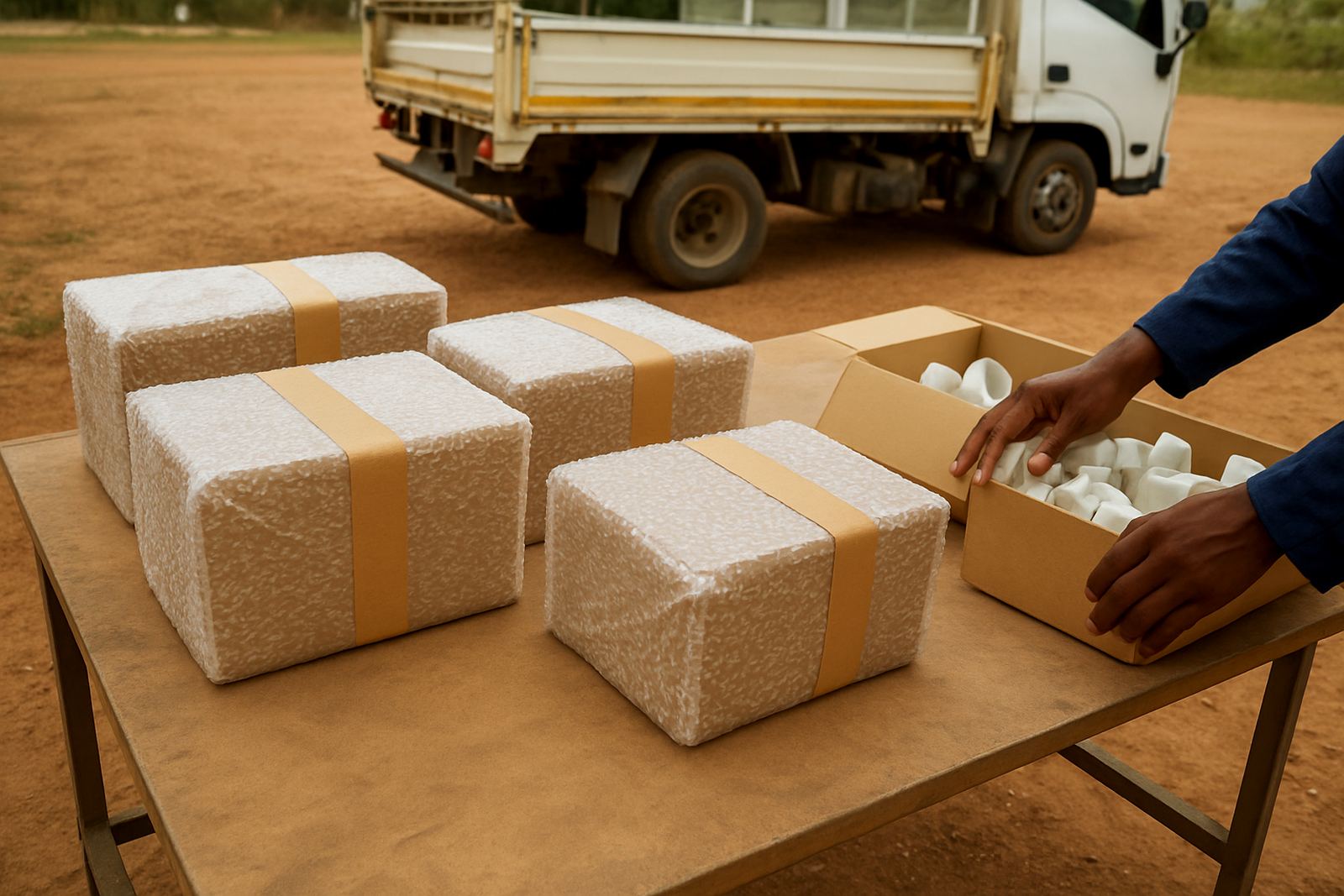
Solvent-weld fittings are best packed by size and use, with each group kept together so the order can be checked quickly on arrival. Smaller fittings should not be loose inside a large carton. They need inner wrapping or smaller divided packs so they do not slide into one corner and take a knock when the parcel is moved.
Where possible, heavier items should sit at the bottom and lighter items on top. Sharp edges, threaded ends and tool handles must be protected so they do not pierce the carton or damage softer items. Clear labelling also helps the receiving side know what is inside before the box is opened, which is handy when a contractor is working between two sites and only has a few minutes to sort stock.
- Use a strong outer carton with enough space for padding, not a box that bulges closed.
- Separate fittings by size so elbows, couplers and reducers stay counted.
- Protect threaded or pointed parts with wrap or caps where needed.
- Fill voids so items cannot shift during courier handling.
- Mark fragile or top-load parcels clearly when the contents need extra care.
A well packed small order should open neatly, with everything still where it was placed. That saves time, especially when a site team is working before load-shedding starts or racing to finish before the heat of the day builds up.
The best way to prepare a courier order from Limpopo
For customers in Polokwane, Mokopane, Thohoyandou or the wider province, the most useful habit is to confirm the order before it leaves. A quick quantity check catches the small mistakes that are easiest to miss, such as one coupling short, the wrong size connector, or a seal that should have been added for a pump tie-in. It is better to correct that before dispatch than to wait for a return trip.
Local conditions also matter. Dust, summer rain and long travel times can all affect packaging. A parcel going by courier to a remote address in Limpopo may sit in a depot or be transferred more than once, so the outside needs to be neat and the inside needs to be tight. If the order contains items for farm maintenance, it should also be packed so the customer can identify it quickly among other deliveries on site.
At Ladanna Base, small orders are often prepared with the route in mind. A courier parcel for a contractor in Tzaneen may need a different packing approach to a stock box going out with a truck run to a farm outside Lephalale. The goal stays the same though: protect the fittings, keep the count correct and make receiving easy.
When to reserve stock instead of waiting until the last minute
Small orders often become urgent orders. A landscaper may only need a few parts to finish a job, while a farmer might need a handful of fittings to repair a blocked line before the next irrigation cycle. In those cases, stock reserving helps avoid delays and reduces the risk of sending a parcel before all the right items are together.
It is worth reserving stock when:
- The order is tied to a fixed installation date.
- The site is far from town and returns would cost time and fuel.
- The job needs matching fittings across more than one line or zone.
- The customer wants courier dispatch rather than collecting in person.
- The order must be repeated later, so the first pack should be recorded clearly.
Repeat order support also helps here. Once the right combination has been supplied, the next order can be checked against the previous one to make sure the sizes and quantities still line up. That is useful for contractors managing several sites at once, or for farms that order the same items each month.
Couriering small orders across towns and rural routes
Nationwide couriering works best when the parcel is simple to handle and the paperwork is clear. For South African customers, that means the order should be packed with the destination in mind, whether it is heading to a business address in Polokwane, a farm outside Hoedspruit, or a delivery point further afield. The parcel should also be small enough to move without damage, but not so tight that the contents are under pressure.
For rural routes, the delivery point is often only part of the story. There may be access gates, gravel roads or handover points where the parcel changes hands. In those cases, compact packing helps keep the contents together until the final person signs for it. If the order includes tools as well as fittings, the tools should be secured separately so they do not rattle against the PVC parts.
Clients can use the enquiry form on the contact page to ask about delivery options, stock checks or a courier quote. That is often the quickest way to match the order to the right branch area and avoid sending the wrong size or quantity out on the road.
What customers notice when the packing is done properly
People rarely comment when a small order arrives well packed, because everything is exactly where it should be. That is the point. The fittings are clean, the count is correct, and the parcel can be opened without sorting through loose pieces on the floor. For irrigation work, that saves time and avoids mistakes during installation.
Customers also notice when the packing reflects the job. A farmer buying parts for maintenance wants practical packing that can go straight into the bakkie or store room. A contractor wants an order that can be checked quickly against the site list. A landscaper wants the fittings kept tidy so the job can move on without a second trip. Those small details matter, especially when schedules are tight and weather can change the plan fast.
Packing small orders properly is not a small detail. It is part of the supply process, and it helps every order arrive ready for use, whether it is going across Polokwane or by courier to another province.