
Start With Pressure, Wet Spots And Sudden Water Loss
When an irrigation line starts to lose pressure, do not rush straight to new parts. First look for the simple signs: damp soil along the pipe route, a patch of greener grass, puddling near a join, or one section that seems to empty faster than the rest. On farms around Polokwane and Ladanna, that first walk along the line often points to the problem area within a few metres.
It helps to switch the system on for a short test and watch the line from end to end. If the pressure drop happens only after one zone opens, the leak may be in that branch. If the whole line loses pressure, check the main supply line, the pump side, and the fittings closest to the tank or header first.
Check Joints Before You Blame The Pipe
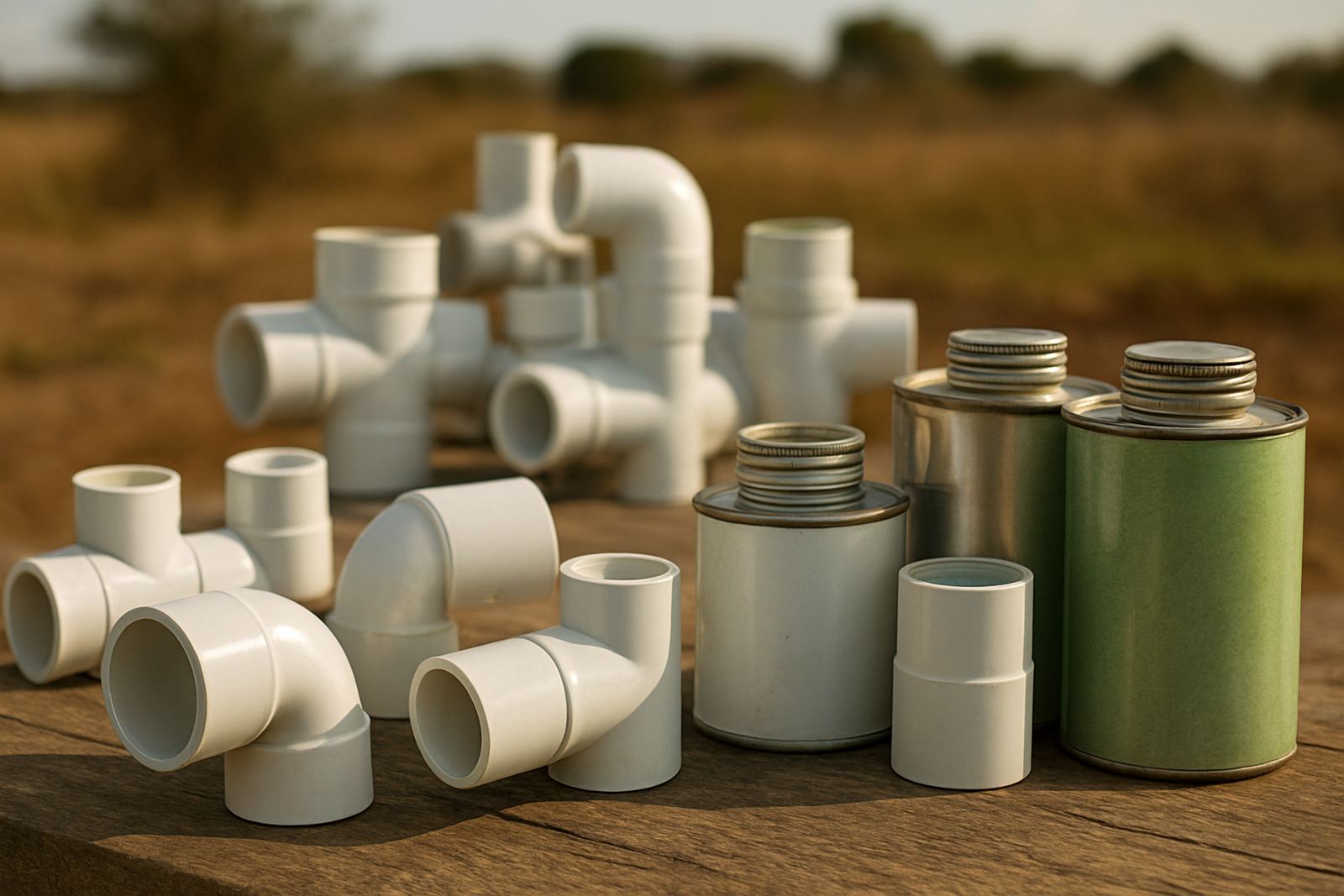
Most basic leaks are found at the joint, not in the middle of a sound pipe. A solvent welded fitting that was not cleaned properly, or was moved before it set, can seep under pressure. In hot weather and dusty conditions, that sort of fault shows up quicker than many people expect.
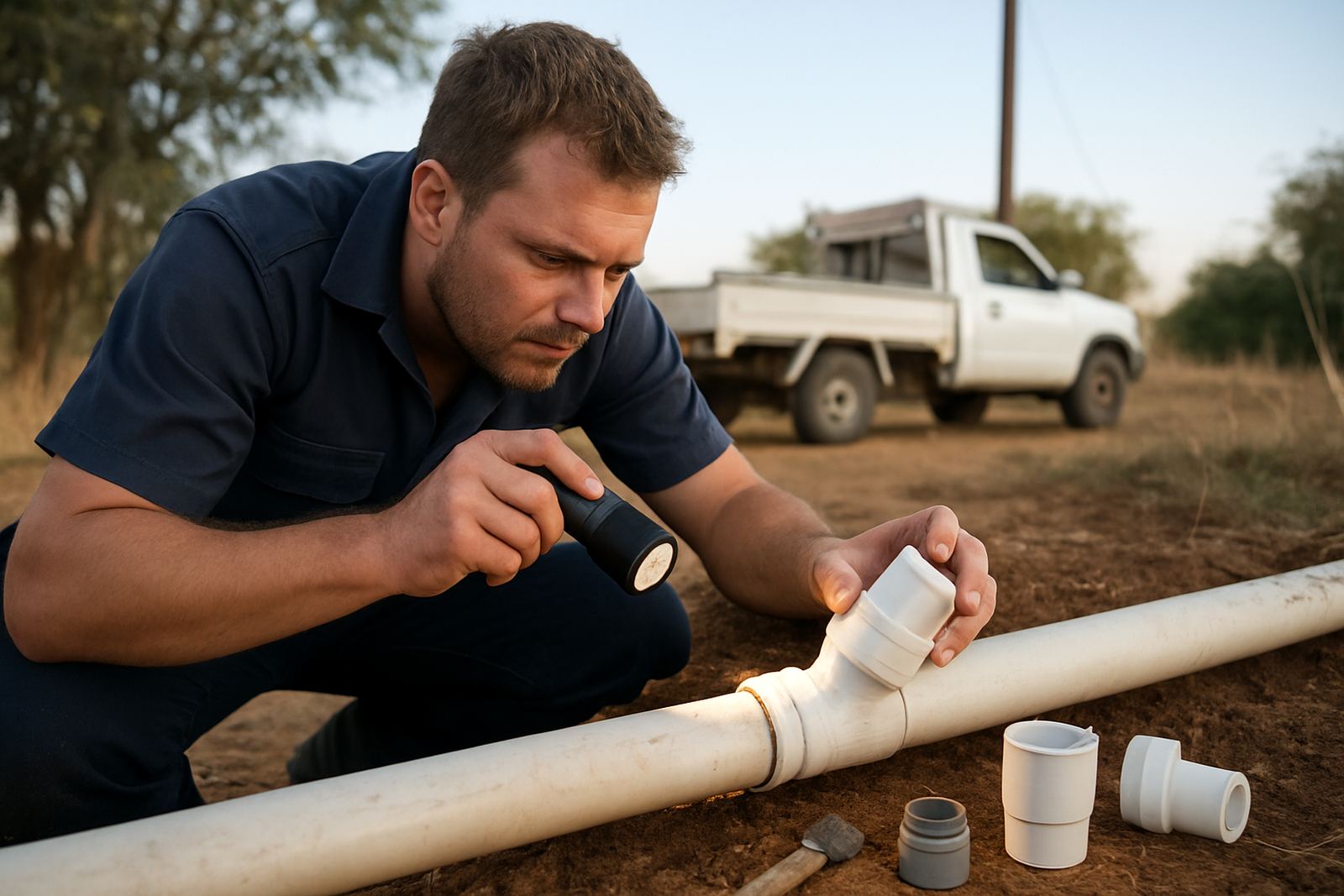
Look closely at each join for drips, white staining, soil sticking to a damp edge, or a line of moisture after the system has been off for a while. If the joint is exposed to sun or mechanical movement, that is often where the first weakness appears.
- Inspect couplers, elbows, tees and reducers one by one
- Feel for dampness around the socket edge
- Check for movement where the pipe enters the fitting
- Look for cracked pipe ends near the joint
Use A Simple Isolation Method On Long Runs
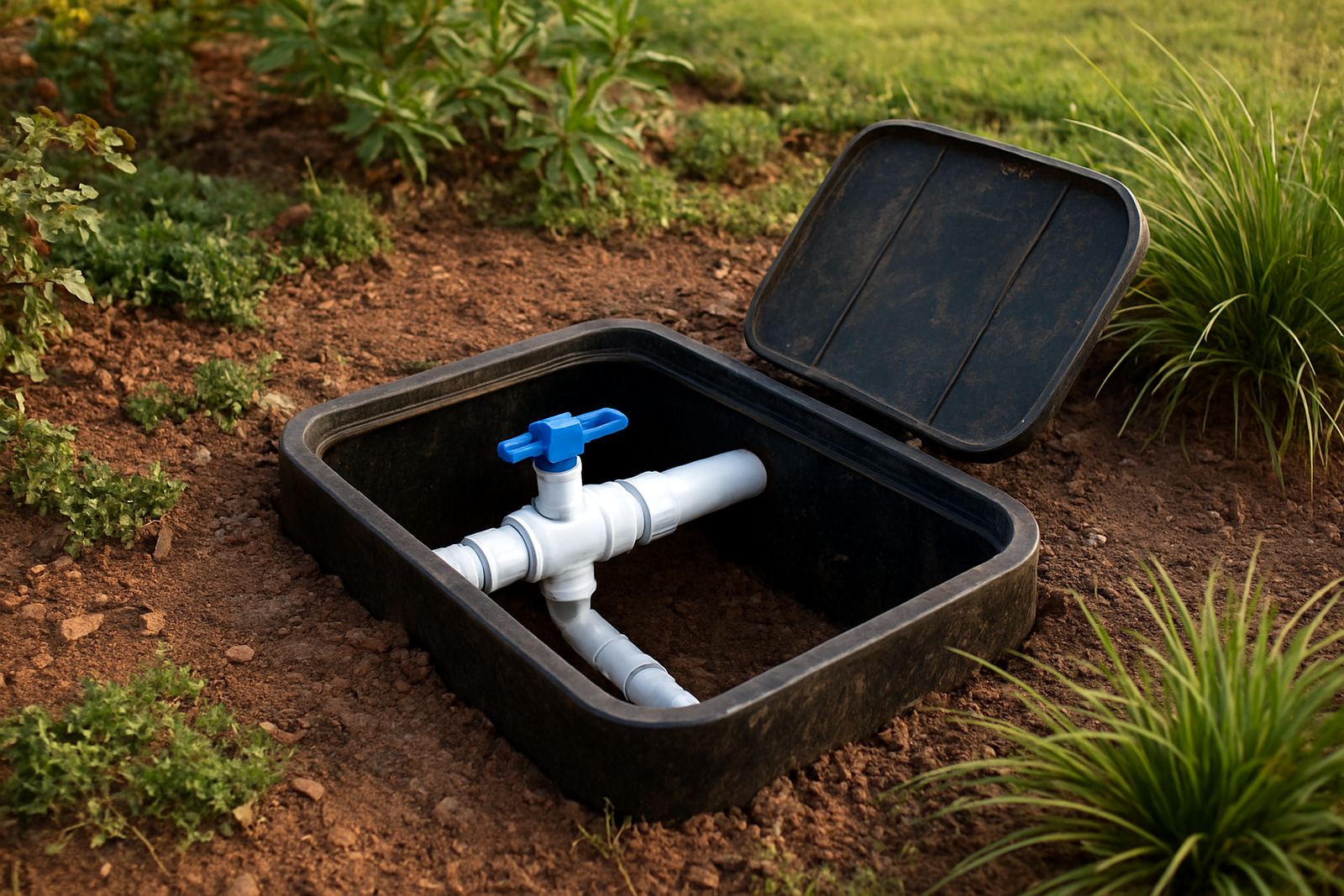
On a long irrigation line, especially where water is trucked to several blocks or different fields, it saves time to isolate sections. Close off one branch at a time and test the remaining run. This narrows the search and avoids pulling apart good fittings.
If the leak disappears when one section is shut down, you have likely found the problem area. If not, move to the next branch. This method works well on orchards, vegetable blocks and smaller contractor jobs where the pipe layout is spread out and not every line is easy to reach.
- Test the main line first
- Split the system into smaller sections
- Open and close one zone at a time
- Mark suspect areas with tape or chalk
Look For Damage From Heat, Sun And Movement
Outdoor PVC work takes a beating from South African conditions. Strong sun can dry and age exposed pipe, while ground movement after rain may pull at fittings. In coastal humidity the issue can be a slow seep that stays hidden, while inland dust and heat may dry the outside of the joint and make the damage harder to spot.
Check where pipe crosses open ground, goes over a bund, or runs near gates and machinery. A line that vibrates, rubs against a post, or sits under strain will often leak at the weakest point. One of the most common faults is a small crack close to the fitting, not the fitting itself.
Listen, Feel And Watch The System Under Load
Basic leak finding is not only about looking. When the system is running, listen for hissing, watch for a fine spray, and feel for vibration where it should be steady. In larger systems, even a small leak can be heard near a quiet pump room or tank stand if you stand still long enough.
During load shedding, many farms and landscaping crews test at different times of day. That can help because pressure and flow may change when the pump restarts after an outage. If a line holds at low demand but fails under full demand, the fault may only show when the system is under real working pressure.
Know When To Replace A Fitting And When To Stop Digging
If a joint is clearly split, deformed or badly glued, replacement is usually the better choice than trying to patch it. But if the leak is tiny and you have not confirmed the point properly, keep testing before cutting out more pipe than needed. Unnecessary cuts can create extra joints and extra risk.
For contractors and farmers who want to keep stock moving and jobs on schedule, careful diagnosis saves time and money. A good check now can avoid a bigger repair later and keeps the line working with less downtime.
For a practical example, a Tzaneen grower may notice one avocado block losing pressure while the rest of the line runs fine. After isolating the branch, the fault might be found at a sun exposed elbow near a support post, with a fine seep only visible after the system has run for ten minutes. That kind of simple check can point straight to the repair spot without replacing half the line.