
Why straight joints matter on working irrigation lines
Misaligned joints often start with small shortcuts. A pipe that is cut a few millimetres off square, a socket that is forced into place, or a trench that leaves the line sitting under tension can all create stress at the joint. Over time that stress shows up as seepage, cracks, loose fittings or joints that fail after a season of heat and pressure changes.
In irrigation, the joint is not just there to connect two pieces. It has to hold pressure, cope with vibration from pumps, movement in the ground and exposure to sun and wind. In places like Polokwane and the surrounding farm areas, lines also face dusty conditions, sudden temperature shifts and heavy handling during installation. Good alignment lowers the chance of damage and helps the full system last longer.
Start with a proper cut and a clean pipe end
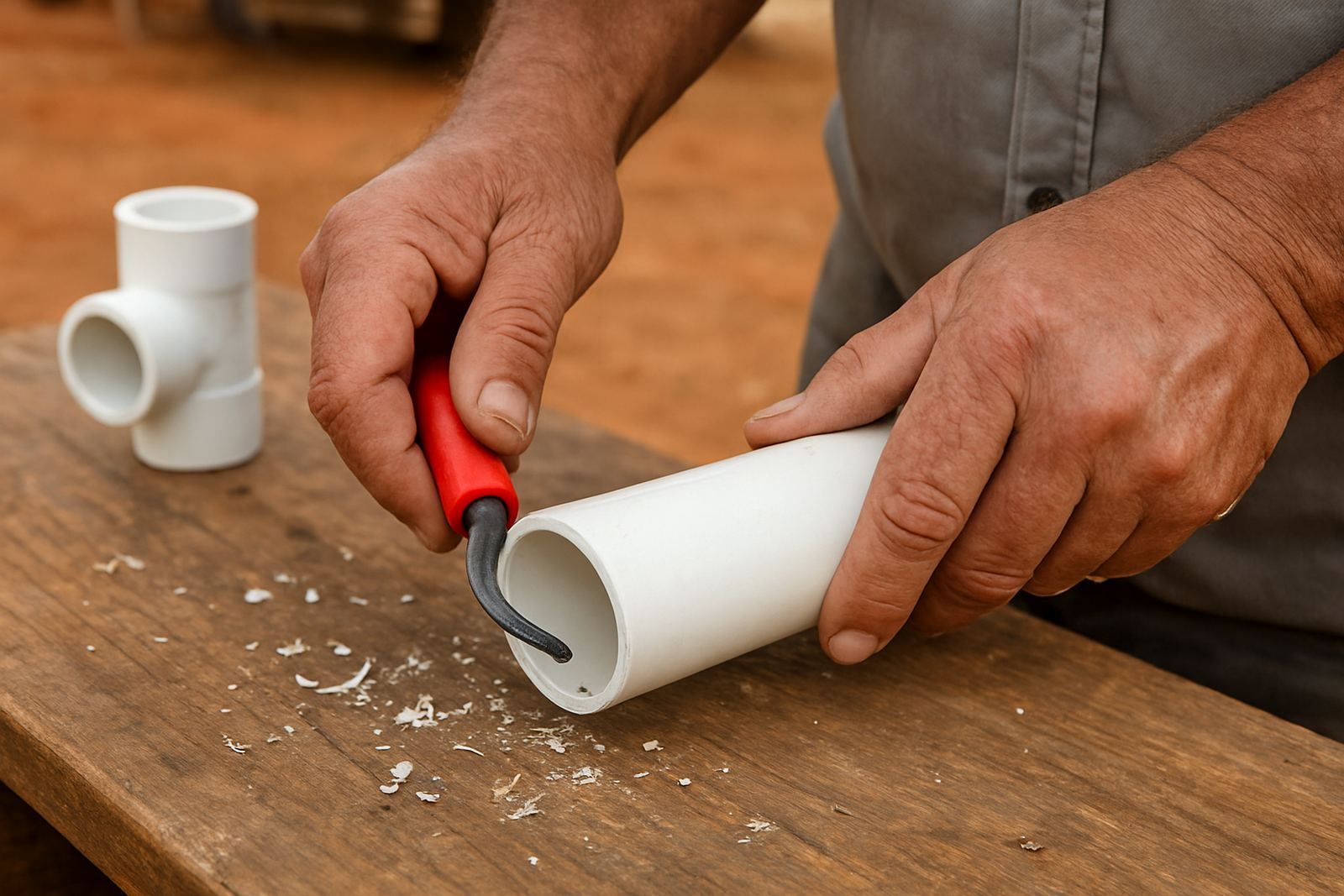
Most alignment problems begin before the fitting goes on. A clean square cut lets the pipe seat fully and evenly into the socket. If the cut is crooked, the pipe will press harder on one side of the joint than the other. That uneven pressure may not show immediately, but it weakens the bond and can make the fitting look slightly twisted from the outside.
Before joining, check the pipe end for burrs, dust and moisture. Wipe both surfaces clean and make sure the pipe is dry enough for the solvent work to do its job. On dusty sites, or where wind keeps blowing grit into the trench, it helps to keep parts covered until the exact moment you assemble them. A little care here saves a lot of trouble later.
- Cut the pipe square, not on an angle.
- Remove burrs from both inside and outside edges.
- Dry fit the pieces before solvent application.
- Keep soil and grit away from the joint area.
Use layout marks so the line stays true
One of the simplest ways to avoid misaligned joints is to mark the pipe before assembly. A visible line helps you see whether the fitting is being pushed in straight and fully. It also makes it easier to spot a twist before the solvent starts to grab.
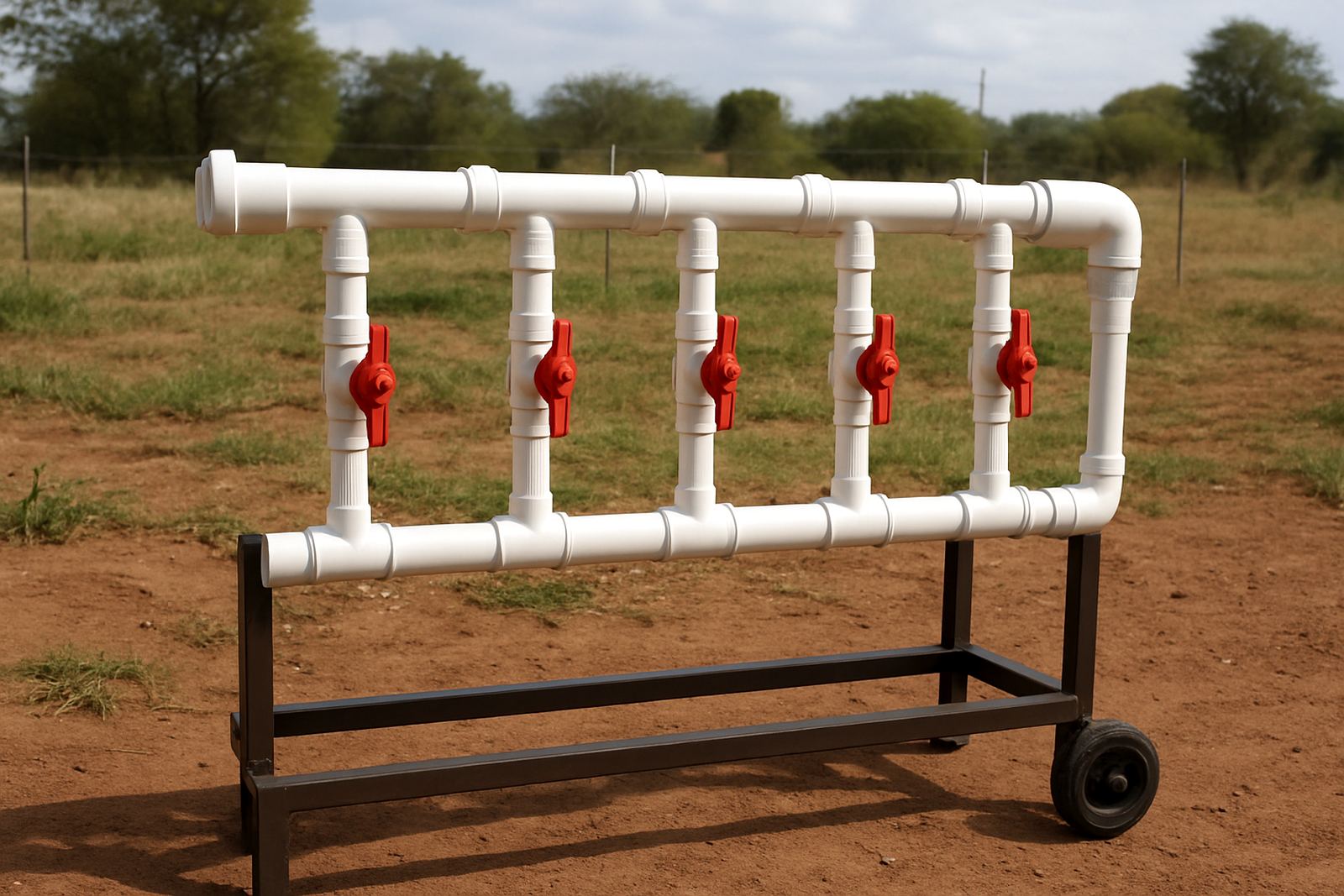
For longer runs, line up the full section on level ground first if possible. This is especially useful on farm projects where the pipe may run through rows, under a road crossing or along a fence line. If the line starts out straight on the ground, it is easier to keep it straight in the trench. A good layout also helps when you need to match several fittings in a row, such as tees, elbows and couplers.
- Mark insertion depth with a pencil or marker.
- Check the direction of tees and elbows before bonding.
- Support long lengths so they do not sag during assembly.
- Confirm that each section lines up with the next before the solvent sets.
Do not force a fitting to make the route work
A fitting that must be pushed, bent or twisted into place is already under strain. That strain sits on the socket and often becomes worse when the system is pressurised. It is better to adjust the route, use the correct fitting shape or add a support point than to force the pipe to meet where it should not.
This comes up often on installations where the trench has drifted off line or where the route needs to pass around an obstacle. In those cases, contractors should stop and reset the run instead of pulling the pipe across to make it fit. A small change in layout is quicker than repairing a split joint later. Even on quick repair jobs, it pays to keep the line relaxed and in natural position.
Where a line must turn sharply, use the right fitting rather than asking a standard joint to carry the bend. That simple choice reduces stress and helps the system stay serviceable for longer.
Match the jointing method to the working conditions
Not every site gives the same working window. Heat, wind and dust can all change how a joint behaves during installation. In hot Limpopo conditions, solvent can flash off quickly, so there is less margin for delay once the pieces are prepared. In cooler or damp conditions, the issue may be slower cure and the risk of movement before the bond has settled properly.
That is why it helps to plan the job around the site and the season. If the area has strong sun, lay out shaded prep space where possible. If load-shedding affects pump testing, keep the assembly work organised so you are not leaving half-finished joints open for long periods while waiting for power. The goal is always the same: clean preparation, straight fit and controlled handling.
- Work in manageable sections rather than rushing the whole line.
- Allow enough time for the joint to set before moving the pipe.
- Avoid assembling on wet or muddy ground.
- Keep pipe supports close enough to prevent sagging.
Check for stress points before you backfill
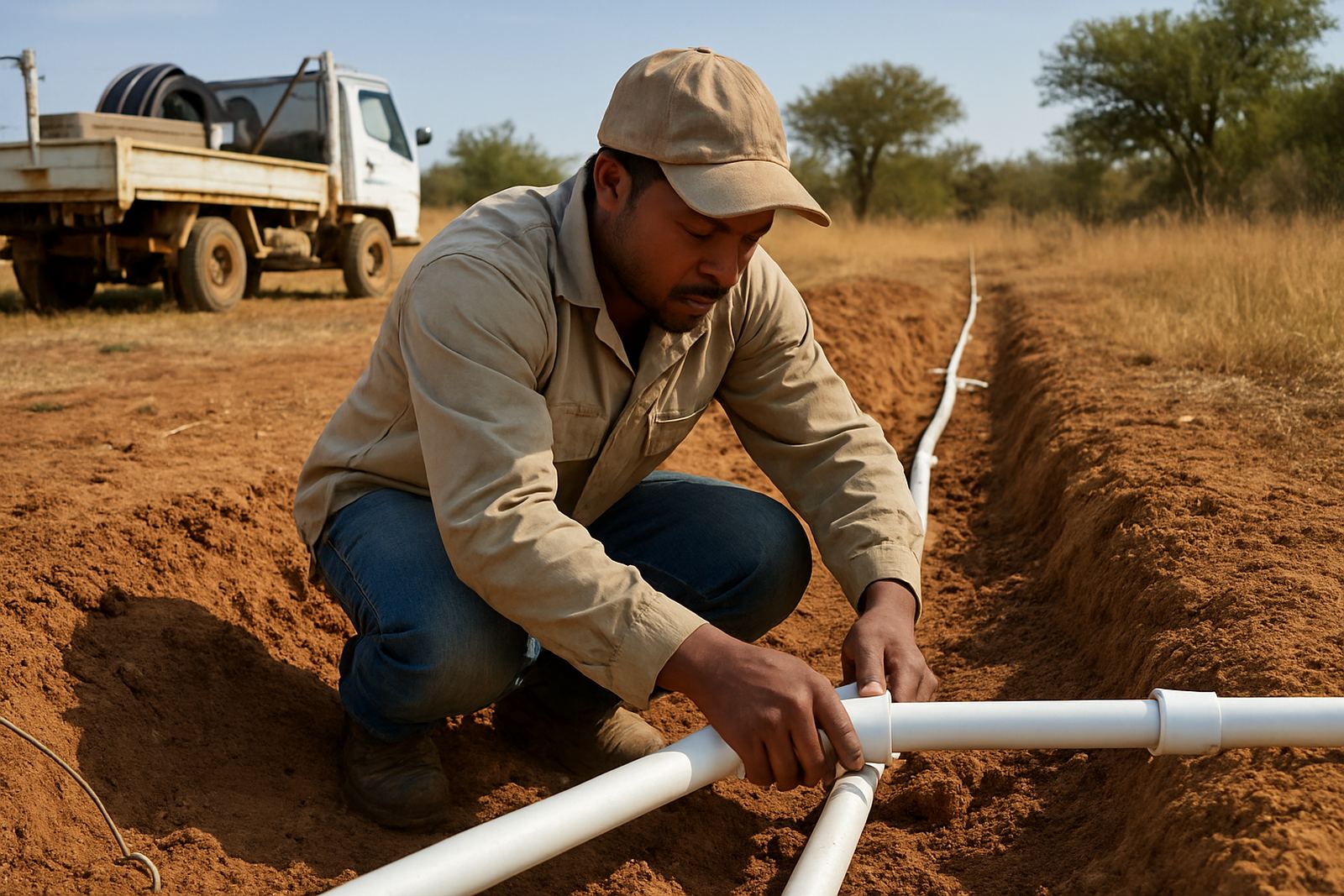
Before covering a line, inspect each joint for signs of twist, offset or visible strain. If a fitting looks slightly pulled to one side, fix it now. Once the trench is backfilled, the pressure on that joint is harder to see and harder to correct. A few minutes spent checking can prevent repeated call-outs later in the season.
A practical test is to look along the run from more than one angle. A straight line should stay visually true from end to end, with fittings sitting naturally rather than leaning. If you spot a small mismatch, release the section and realign it before compacting the soil. On larger projects, this is one of the best habits a contractor can build because it reduces warranty issues and keeps the job moving.
A Polokwane example from the field
On a mixed crop farm near Polokwane, a contractor recently had repeated seepage on a short irrigation branch feeding several rows. The problem was not the fittings themselves, but the way the line had been forced around a minor trench deviation. The joints looked fine at first glance, yet each socket was carrying a little side stress. After the section was lifted, re-cut and laid in a straighter path, the seepage stopped and the branch ran normally again.
That kind of fix is common. The lesson is simple: joints last longer when the pipe is allowed to sit in its natural line. Whether the delivery is going out to Mokopane, Tzaneen or Hoedspruit, the same rule applies. Straight fit, proper support and careful preparation give the system a much better chance of holding up under real working conditions.
For farmers, landscapers and contractors, avoiding misaligned joints is less about perfection and more about discipline. Keep the cuts clean, respect the socket, and do not let the route dictate a bad fit. That way the line works the way it should, and the fittings are not doing extra work they were never meant to carry.