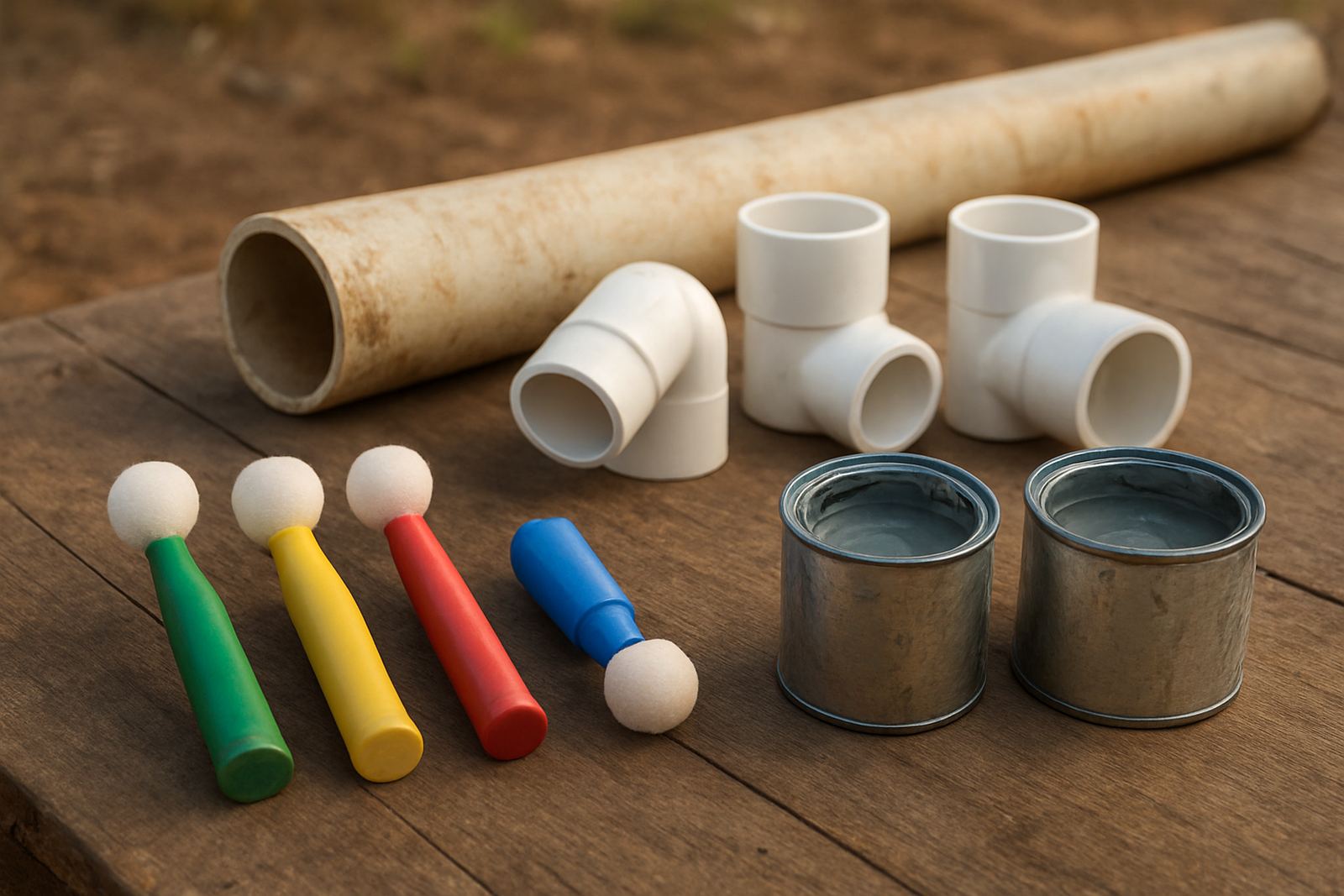
What a solvent dauber does on site
A solvent dauber is a small applicator used when joining PVC pipe and fittings with solvent cement. It lets you spread adhesive evenly inside the socket, or onto the pipe spigot, without overloading the joint. That matters on irrigation work because excess cement can be messy, waste material and sometimes soften the joint more than needed. For smaller fittings the dauber gives better control than a larger brush and helps keep the work neat when you are moving fast on a farm or landscaping job.
On site, the dauber is usually used with solvent weld fittings, primer where required and the correct curing time before pressure is put back into the line. It suits repeated fittings work on borehole lines, drip feeds, pump rooms and manifold assemblies where each joint needs a clean finish. If you are fitting many small parts in a row, a dauber makes the process steadier and easier on the hands.
Sizes and options for different fitting work
Solvent daubers are generally supplied as compact hand applicators, with head sizes suited to smaller socket diameters and narrow fittings. The key is to match the dauber to the type of adhesive you use and the fitting sizes you handle most often. Some teams keep a few on hand for different crew members, especially where one person is doing prep and another is doing jointing. That keeps the work moving and avoids cross contamination between cleaners and cements.
- Compact daubers for small diameter fittings and tight access areas
- Longer handled applicators for deeper sockets and awkward positions
- Disposable or replaceable head options for busy installation teams
- Use with solvent cement and primer where your jointing method calls for it
If you are building out an irrigation stock list, it is worth ordering enough daubers for the number of fitters on the job. One dauber per installer is usually easier than sharing a single tool across a busy crew, especially when weather is hot and adhesive starts flashing off quicker than expected.
Where solvent daubers suit irrigation work best
These applicators suit any installation where PVC pipework is being jointed by hand. That includes farm irrigation systems, orchard lines, shade-net watering, landscape reticulation, municipal watering points and light industrial water transfer. In Limpopo heat, a neat application matters because solvent can start to set fast. Along the coast, where humidity is higher, clean prep and correct curing still count just as much.
They are especially useful on fittings that are too small for a wide brush, or where you need to reach into the socket without dragging adhesive over the outside of the fitting. Contractors often use them for repair work too, because a tidy joint helps when the line must be returned to service quickly. If your job includes repeated maintenance on existing irrigation runs, a dauber is one of those small items that saves time every week.
- Small fitting joints on drip and micro irrigation lines
- Repair work on valves, elbows, couplers and tees
- Installations in dusty farm yards where clean application matters
- Jobs where you need less waste and better control of cement
How to use it properly during installation
Start by cutting the pipe square, deburring the end and checking that the dry fit is correct. Clean the surfaces as required, then apply primer if your jointing method needs it. Load the dauber lightly and coat the socket and pipe evenly. You want a thin, complete film not a heavy puddle. Push the joint home with a firm twist and hold it briefly so the fitting does not spring back. Wipe away excess cement from the outside before it hardens.
There is no power or gas requirement for a solvent dauber, which makes it useful on remote sites and during load-shedding. It is a hand tool only, so you can work anywhere from a borehole yard to a back field without worrying about supply. The important part is the curing time. Do not pressure the line too soon, especially on larger systems or where the temperature is low. A rushed start-up can weaken the joint and cost you later.
Care, cleaning and replacement on busy crews
After use, keep the dauber clean and store it in a sealed container or bag if the adhesive type allows it. Do not leave solvent soaking on the handle or head for long periods if the material is not meant for it. On a busy workday, a dauber should be checked before each shift for hardening, frayed fibres or a loose head. If it starts dragging rather than spreading evenly, replace it. A worn applicator can leave patchy glue lines and that is exactly what you dont want on a pressure line.
For contractors and farm maintenance teams, it helps to carry spares with the rest of the jointing kit. Keep them away from direct sun, dust and open containers of adhesive. In hot vehicles, seal the tools and consumables properly so they do not dry out or clog up before the next callout. Small habits like this cut waste and make every joint more predictable.
What to check before you place an order
Before ordering solvent daubers, think about the pipe sizes you work with most often, the type of adhesive you use and how many fitters need their own applicator. If you are doing irrigation work across a wide area, it is worth planning stock with spare applicators for repairs and repeat runs. Ladanna-based stock can be reserved for collection or arranged for delivery into Polokwane and beyond, with regular runs across Limpopo and courier dispatch nationwide.
It also helps to check the rest of your jointing kit at the same time. If you are ordering pipe, fittings, solvent cement or primer, make sure quantities line up with the number of joints on the job. That avoids shortfalls once the crew is already on site and keeps the install moving. For larger contractor accounts, quantity checks and order planning can save a second trip to site.
- Match the dauber size to your smallest and most common fittings
- Confirm compatibility with your solvent cement and primer
- Check how many installers need individual applicators
- Order spares for repairs, maintenance and repeat runs
Local support for farmers, landscapers and contractors
PVC Welders supports irrigation buyers from Ladanna, Polokwane and surrounding areas including Mokopane, Tzaneen, Hoedspruit, Lephalale and Thohoyandou, with nationwide courier options as well. The team can help with product selection, system matching, stock reserving and jointing advice so you get the right tool for the job. Whether you are planning a new farm line or keeping a municipal or landscape system in service, the aim is the same: get the right parts in the right quantity and avoid delays.
For a solvent dauber, the value is in the small details. A neat joint is easier to inspect, easier to trust and less likely to give trouble after the line is pressurised. That is why a simple applicator still earns its place in the kit, especially where outdoor work, heat and dusty conditions are part of daily life.
Key facts
| Product type | Hand applicator for PVC solvent jointing |
|---|---|
| Use case | Applying adhesive neatly to small fittings and sockets |
| Suitable for | Irrigation pipework, repair work and contractor installations |
| Power or gas required | None, hand tool only |
| Typical options | Compact, long handled and replaceable head styles |
| Supply | Ladanna base, Limpopo deliveries and nationwide courier dispatch |