What a Saddle Clamp Does on an Irrigation Line
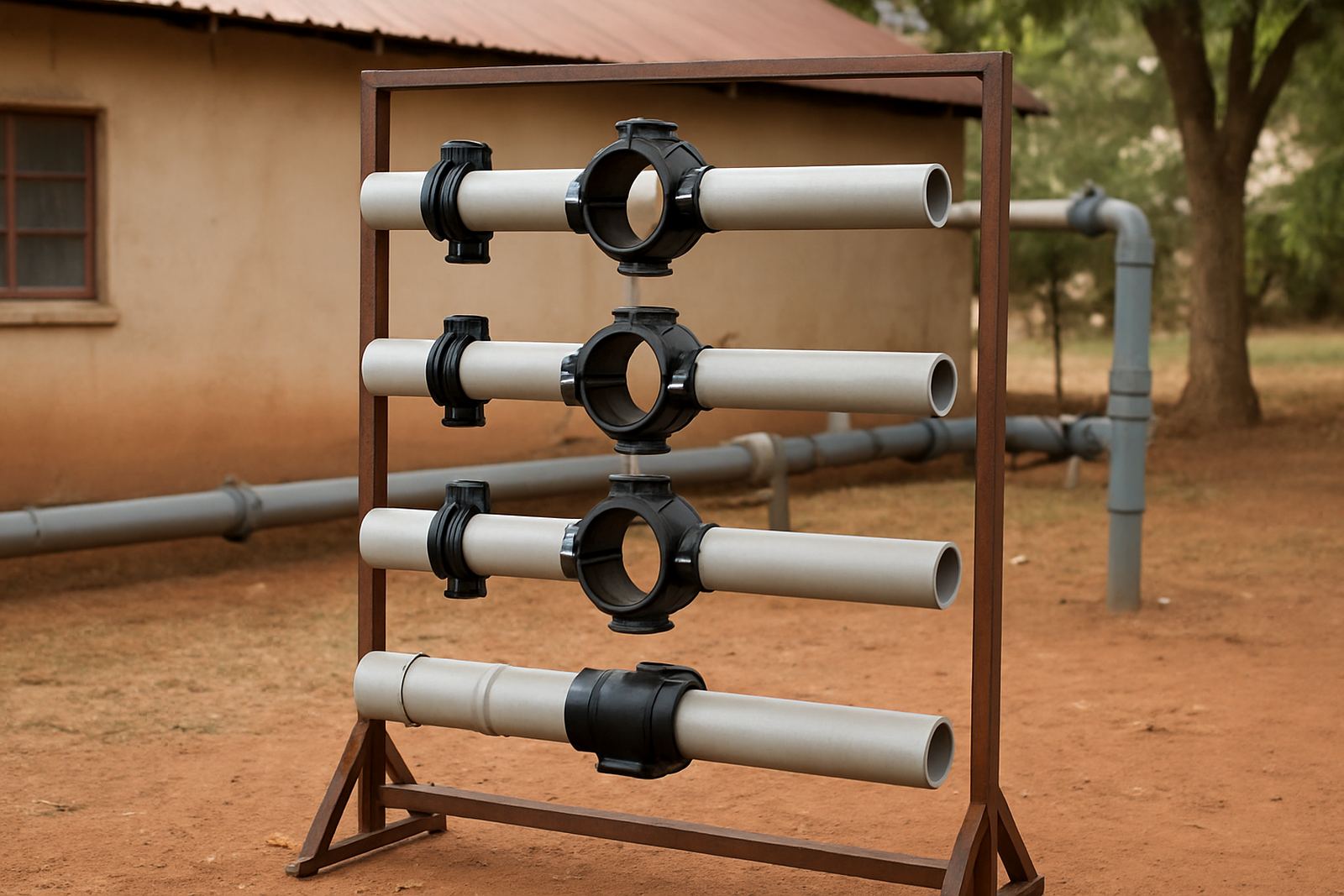
A saddle clamp is a two-piece fitting that sits around an existing pipe and creates a sealed outlet for a new branch line. It is used when you need to extend, split or add a take-off point without replacing the full mainline. That makes it useful on established irrigation systems where downtime must be kept low and water supply can not be interrupted for long.
In practical terms, the saddle clamps listed for irrigation work are suited to polyethylene and other compatible pressure lines, with a bolted or screw-tightened body that grips the pipe evenly. Once fitted correctly, the outlet can accept a threaded connection for valves, risers, micro irrigation or a small branch line. On farms and around estates in Limpopo, this is often the quickest way to expand a system without reworking the whole run.
The main benefit is control. You decide where the branch starts, and you keep the rest of the line in place. For contractors, that saves labour. For farmers, it helps when a block needs an extra line after planting or when a section of orchard has changed. The fitting also suits repairs where an older layout needs a new point of supply after municipal pressure changes or pump adjustments.
Sizes, Outlet Options and Pressure Suitability
Saddle clamps are normally selected by the outside diameter of the pipe they will sit on, then by the outlet size required for the new branch. A correct match is important because an undersized clamp will not seal properly, while an oversized one can shift under pressure. We help with product selection and quantity checks so you do not end up short on the wrong size.
- Common pipe sizes can include smaller domestic lines through to larger farm mainlines, depending on the fitting range available
- Outlet sizes are often chosen to suit standard threaded irrigation accessories and branch lines
- Some versions are designed for low to medium pressure take-offs, while others are better suited to heavier duty field use
- Material options are typically chosen for outdoor UV exposure and regular water contact
When you are ordering, the important measure is not only the nominal pipe size but the actual outside diameter of the line in millimetres. If the line has been in the sun for years, or if it comes from different suppliers, the diameter can vary slightly and that affects fit. For stock kept in Ladanna, we can help match the clamp to the pipe, valve and take-off point before it leaves the branch.
For irrigation around Polokwane, Tzaneen and Hoedspruit, customers often want fittings that can cope with heat, sun and occasional rough handling. In wetter coastal freight routes, packaging matters too because condensation and salt air can affect stored parts if they are left open. Good storage and correct selection go a long way.
Where Saddle Clamps Work Best
This fitting is best where you want a branch off an existing mainline, but you do not want to replace the pipe or install a full tee section. It suits orchards, vegetable blocks, garden centres, sports fields, nursery rows and contractor installations where the line is already in place. It is also useful on temporary layouts that may change from season to season.
Typical applications include adding a feeder line to a drip zone, connecting a valve for a new block, or creating a take-off for a line that runs across a boundary or along a trench. Because it mounts onto the existing pipe, it can be used in tighter spaces where cutting and rejoining would be awkward. That can matter when access is limited or the line runs close to a wall, pump house, fence or planted row.
On farms in Limpopo, saddle clamps are often used where pump schedules change with crop stage. In landscaping, they help when a site is upgraded and the irrigation plan is adjusted after planting. They are also practical where municipal water availability is limited and every connection needs to be placed carefully the first time.
Installation Notes and What You Need on Site
Installation is usually straightforward, but it must be done carefully. The pipe should be clean, dry and free from grit, algae and scale where the clamp will sit. Any dirt trapped under the sealing face can cause seepage later. Mark the exact spot before drilling the outlet so the take-off lands where you need it, not a few millimetres off line.
Most fittings of this type are installed with hand tools only. You do not need gas or powered heating for the clamp itself, though you may need a drill, spanner and suitable sealing tape or threaded connector depending on the outlet type. If the branch line will feed a valve, dripper manifold or riser, confirm the thread and adapter size before starting.
- Switch off or isolate pressure before fitting the clamp
- Clean the pipe surface and dry it fully
- Align the clamp evenly so the seal is seated all round
- Tighten the fasteners evenly, not one side fully before the other
- Test for leaks at low pressure first, then bring the line up to normal working pressure
On larger systems, it helps to plan the sequence so the branch is added during a scheduled shut-down. That reduces stress on the line and keeps the work neat. If the site uses a pump with variable pressure, check the pressure range before fitting. A clamp that is fine at one setting can weep if the line is pushed harder than expected.
Care, Servicing and Long-Term Use
Saddle clamps need very little servicing once fitted, but they should still be checked as part of routine irrigation maintenance. Inspect the joint after the first few days of operation, then again after a few weeks, especially if the line is exposed to heat or movement. Vibration from pumps, soil settling or accidental knocks can loosen a fitting over time.
Look for signs of moisture around the seal, stress marks on the pipe, or thread wear at the outlet. If the fitting is on a line that gets regular sun exposure, make sure the surrounding pipe remains supported and does not sag. A supported line puts less strain on the clamp and helps the seal last longer.
For seasonal farms, it is worth checking clamps before the main irrigation cycle starts. In winter or during quiet periods, some systems are left idle and then brought back under pressure later. That is the moment when a weak seal tends to show itself. A quick inspection then can save water and avoid crop stress later on.
Keep spare seals, matching adapters and a few correctly sized clamps on hand if you manage multiple blocks. That makes repeat order support easier and keeps downtime down when a branch must be added or replaced. No special servicing is needed beyond sensible inspection and correct pressure use.
What to Confirm Before You Order
Before placing an order, measure the outside diameter of the mainline and note the branch outlet size you need. If the pipe has printing that is still legible, use it as a guide, but do not rely on it alone. Always check the actual pipe size on site, because older lines and mixed stock can differ.
- Pipe outside diameter in millimetres
- Required outlet size and thread type
- Working pressure of the system
- Whether the line is PE, PVC or another compatible material
- Indoor, outdoor or buried installation conditions
- Quantity needed for the full block or section
If you are matching a saddle clamp to an existing line in the Ladanna area, or arranging delivery to Mokopane, Tzaneen, Thohoyandou, Hoedspruit or Lephalale, it helps to send the measurements with your enquiry form details. That lets us check the stock, reserve the right items and arrange the best dispatch method. For contractor accounts and farm order planning, the more exact the measurement the better the outcome. A small mismatch here can cause a leak or a wasted trip, so it pays to check once and check properly.
Key facts
| Product type | Two-piece saddle clamp for irrigation branch take-offs |
|---|---|
| Typical use | Adding a new outlet to an existing mainline without replacing the pipe run |
| Material | Outdoor-suitable polymer body with sealing face and fastening hardware |
| Pipe fit | Selected by mainline outside diameter in millimetres |
| Outlet | Threaded take-off for branch line, valve or adapter connection |
| Installation | Hand tools only, with pipe cleaned and pressure isolated before fitting |