
What thread seal tape does in an irrigation line
Thread seal tape is wrapped around male threaded fittings before assembly so the threads bed in more cleanly and the joint is less likely to weep. In irrigation work, that matters on pump outlets, filters, pressure regulators, manifolds, tank fittings and repair sections where plastic, brass or mixed components meet.
It is not a glue and it does not cure. The tape fills the small voids between threads and lets the fitting tighten to a firmer, more reliable seal. Used correctly, it helps reduce leaks that waste water and can cause pressure drop across the line. On systems running daily in Polokwane heat or Limpopo dust, that consistency is worth having.
This tape is handy for installers who need a clean, quick seal on threaded connections without waiting for curing time. It suits both new work and maintenance jobs where a fitting has to come apart later for cleaning or replacement.
Sizes and options for different joint types
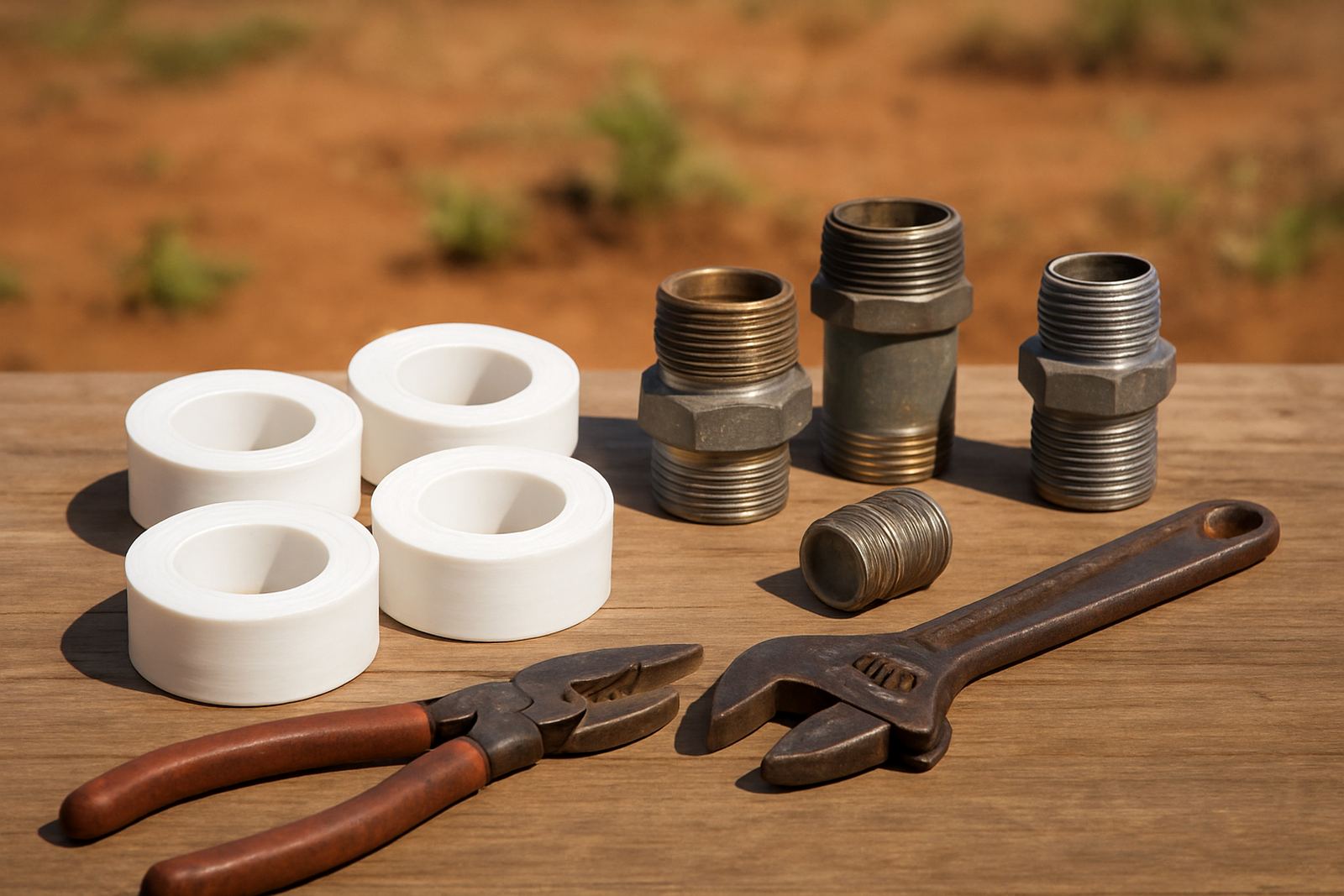
Thread seal tape is usually supplied in compact rolls that fit easily in a tool bag or ute cab. The most common option for irrigation work is the standard white tape used for general plumbing and light irrigation joints, while thicker grades are preferred where threads are a bit worn or where a stronger wrap is needed.
Depending on the job, you can choose a roll size that suits occasional repairs or high-volume contractor use. For crews doing farm installs or multiple service calls in a week, larger rolls are often better value and reduce stop-start loading. Smaller rolls are useful for stock kits, quick fixes and keeping in a spares box.
- Standard-width tape for most irrigation fittings
- Heavier-density tape for more demanding threaded joints
- Small rolls for service bags and home maintenance
- Larger rolls for contractors and farm order planning
Because irrigation systems often mix fittings from different materials, it helps to keep more than one tape grade in stock. That way you can match the wrap to the thread size and the pressure on site, without guesswork.
Where it suits best on farms, gardens and contractor work
This product suits threaded joints in low to medium pressure irrigation assemblies, especially where pipework has to be opened again later. It is commonly used on sprinkler lines, drip manifolds, filtration sets, valve assemblies, pump connections and tank outlet fittings. It also works well in landscaping installations where neat, serviceable joints are needed under paving edges or along boundary runs.
In Limpopo conditions, the tape is useful on systems exposed to sun, dust and seasonal temperature changes. Coastal humidity is less of a factor inland, but outdoor exposure still tests threaded joints over time. A properly wrapped joint helps the installer avoid the small leaks that can become bigger problems after a few pressure cycles.
It is not the right answer for every joint though. Smooth sockets, solvent-weld joints and compression fittings have their own method. Use thread seal tape only on threaded connections, and make sure the fitting type really calls for it. A quick check now saves a call-back later, and keeps the job moving.
How to install it correctly on site
Clean threads first. Remove dirt, old tape and any damaged material before wrapping. Hold the male thread facing you and wrap the tape in the direction of the thread so it tightens as the fitting goes in. Most jobs need a few neat wraps only, not a thick wad of tape that can split or stop the joint seating properly.
After wrapping, press the tape lightly into the thread with your fingers so it settles in. Screw the fitting together by hand first, then tighten to the usual fitting point with a spanner if needed. Do not over-tighten. Over-tightening can crack plastic fittings or distort threaded parts, which then leads to leaks anyway.
- Use on clean, dry threads only
- Wrap in the tightening direction
- Keep the wrap even and neat
- Do not cover the first thread fully
- Hand-tighten before using a tool
There is no power or gas requirement for installation. The job is fully manual, which makes it practical for field repairs, load-shedding downtime and remote service stops where you need a fast solution without extra equipment.
Care, storage and service life on the shelf
Thread seal tape has a long shelf life when stored properly. Keep rolls in a cool, dry place away from direct sun and dust. If a roll is left loose in the back of a vehicle for months, it can pick up grit and get harder to use cleanly. That might sound minor, but it makes a difference on small fittings.
For contractors and farm stores, it is worth keeping tape in sealed bins or service kits with other small consumables. On mobile jobs, keep it away from sharp tools and oil or chemical residue. The tape itself does not need maintenance, but the stock does need basic care so it is ready when needed.
If a roll becomes dirty, misshapen or starts tearing irregularly, replace it. On irrigation work, a few rand spent on fresh tape can be cheaper than spending time redoing a joint in the field. It is a small consumable, yet it plays a proper role in keeping the system tidy and serviceable.
What to check before you place an order
Before ordering, check the thread size, material type and pressure requirement for the joint. You should also know whether the fitting is plastic, brass or mixed, because the feel of the connection changes from one setup to another. If the job is a repair, take note of whether the old fitting has worn threads or surface damage.
It helps to know the project size too. A single household repair needs different stock from a contractor servicing a farm line across Ladanna, Polokwane or out toward Tzaneen and Mokopane. If you are planning a larger run, quantity checks and stock reserving can save time on collection or delivery.
- Thread size and fitting type
- Plastic, brass or mixed-material joint
- Expected water pressure
- Number of joints needed
- Whether the fitting will be opened again later
- Delivery area or courier requirement
If you are unsure, ask for product selection and jointing advice before ordering. It is easier to match the tape to the job at the start than to sort out seepage after installation.
Ordering support for Limpopo and nationwide deliveries
From our Ladanna base in Polokwane, orders move into the Polokwane supply area, with irrigation stock trucked across Limpopo and couriered nationwide. That includes Mokopane, Tzaneen, Hoedspruit, Lephalale and Thohoyandou coverage, with repeat order support for contractors and farms that need dependable replenishment.
We can help with stock reserving, regional delivery, courier dispatch and after sales support. If you are putting together a mixed order of fittings, tape and tools, we can check quantities and help you plan the right pack-out for the job. For bigger sites or scheduled maintenance, farm order planning makes the process simpler and keeps your crew on task.
Thread seal tape may be a small item, but it is one of those parts that must be on hand when the fitting is ready. Having the correct tape on site keeps the work moving and avoids delays when the pressure test starts, which can save a lot of back and forth.
Key facts
| Product type | Thread seal tape for threaded irrigation joints |
|---|---|
| Typical use | Leak-resistant sealing on male threaded fittings |
| Material | Non-hardening sealing tape for mechanical threaded assembly |
| Sizes | Supplied in standard rolls, with small and larger roll options |
| Installation | Manual application only, no power or gas needed |
| Best suited to | Sprinkler lines, filters, valves, tanks, pumps and repair fittings |