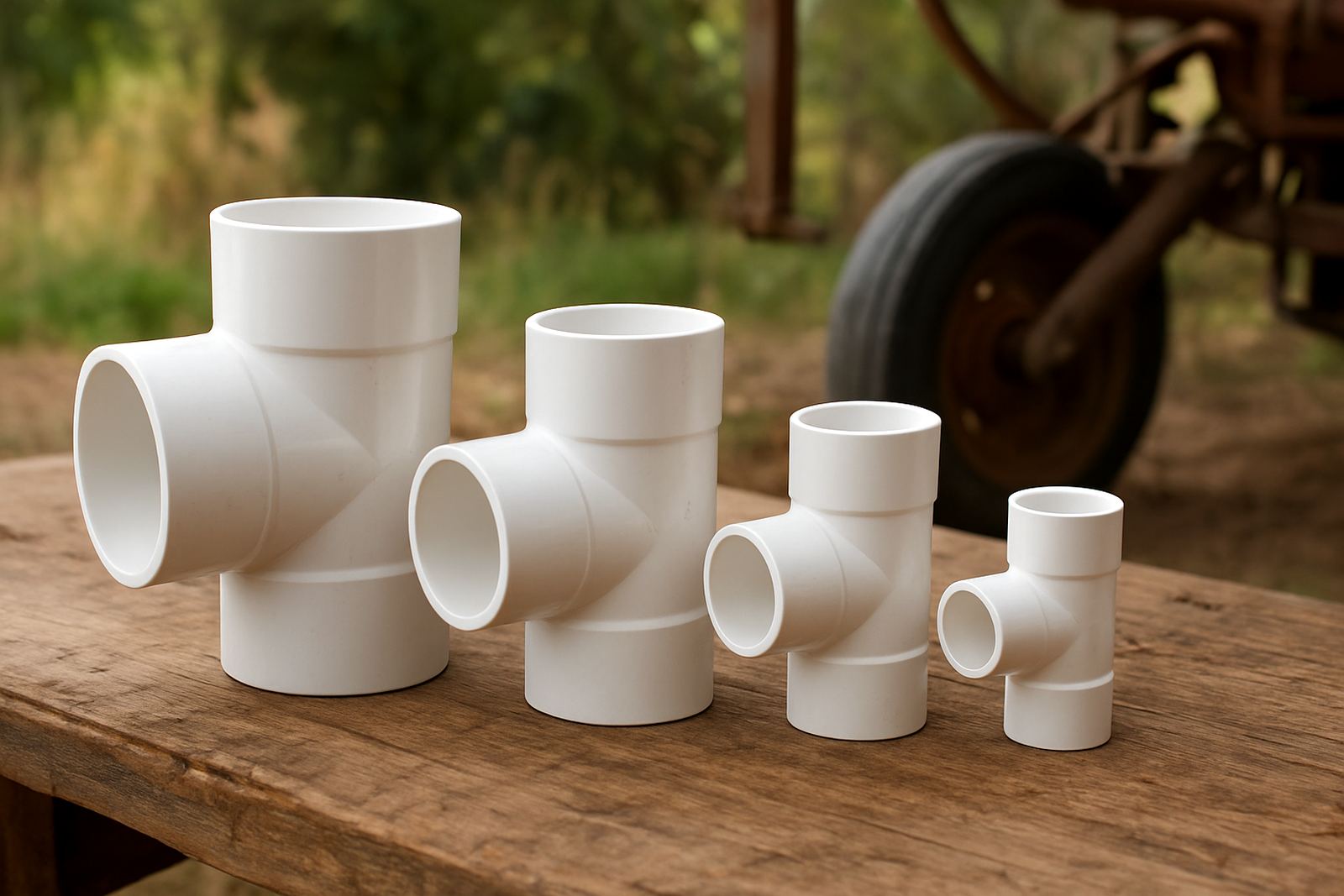
What a reducing tee does in an irrigation line
A reducing tee is used where one pipe size needs to split into two directions, with the branch taking a smaller diameter than the straight run. In irrigation work this helps you feed smaller laterals, valve branches or distribution lines without adding extra fittings than needed.
The main run carries water through the line while the branch outlet reduces to the required size. That makes it useful on farms, landscaped erven, nurseries and municipal-type watering systems where flow has to be divided neatly and pressure loss kept under control. When matched correctly to the pipe size, a reducing tee helps keep the system orderly and easier to service later.
- Main run and branch sizes are selected to suit the line design
- Used with solvent-weld PVC pressure pipe and fittings
- Suitable for permanent outdoor irrigation installations
Available sizes and fitment options
Reducing tees are supplied in common solvent-weld sizes used in South African irrigation systems, with a larger straight-through size and a smaller branch outlet. Typical combinations include 50 x 32 mm, 63 x 50 mm, 75 x 50 mm and 90 x 50 mm, depending on the line design. Larger custom combinations can be matched when you are planning a farm line or a main line run across several zones.
For best results, order the tee to match the exact outside diameter of the pipe and the branch size required by the next section of the system. A small mismatch can make jointing awkward and may lead to poor alignment, so it is worth checking before collection or courier dispatch. If you are building from a pump house to distant blocks, the branch size should also suit the flow needed at that point, not only what is on hand.
- Straight-through size plus stepped-down branch size
- Common use on 50 mm, 63 mm, 75 mm and 90 mm PVC lines
- Available for solvent-weld jointing on pressure pipe systems
Where reducing tees suit the job best
These fittings suit irrigation systems where one supply line feeds several areas at different demand levels. On vegetable farms near Polokwane, for example, a reducing tee may be used to feed a smaller section of drippers from a larger main line. In landscaped spaces around Hoedspruit or Tzaneen, it can reduce branch size to suit a garden zone or a smaller valve box layout.
They are also handy in booster line layouts, nursery benches, pump house distributions and split feeds to tanks or filter points. Because Limpopo conditions can include heat, dust and long sunny runs, a properly sized reducing tee helps limit unnecessary joints and keeps the line neat where access later may be limited. On coastal routes and humid areas further afield, the same principle applies, because a tidy installation is easier to inspect and maintain.
- Farm irrigation mains and sub mains
- Landscape watering and nursery distribution
- Tank fills, filter branches and smaller zone feeds
Installation notes for solvent-weld connections
Reducing tees are fitted by solvent welding, so the pipe ends must be clean, dry and cut square. Dry fit the line first to confirm the run, branch angle and spacing before applying primer and solvent cement. The branch should sit where the load on the pipe is low, because a tee under strain can pull out of alignment over time, especially where the line is buried or carries vibration from a pump.
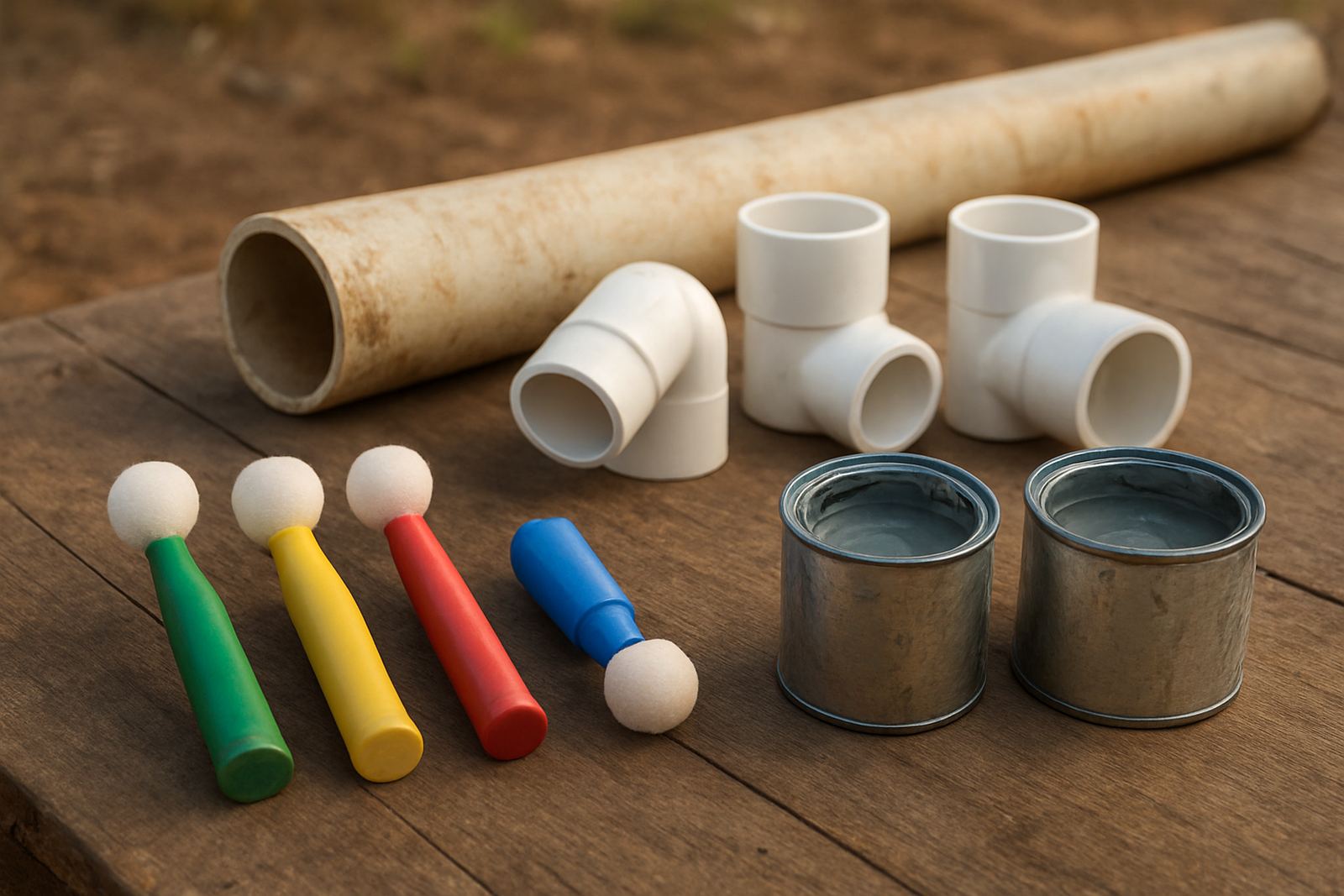
No power or gas is needed for the fitting itself. The only tools normally needed are a pipe cutter or fine saw, deburring tool, measuring tape, marker and the correct solvent-weld products for PVC pressure pipe. Let the joint cure for the period recommended for the pipe size and ambient temperature before pressurising. In warm Limpopo weather, curing can be faster, but do not rush it because a line full of water too soon can weaken the joint.
- Cut square, dry fit, then solvent weld
- Support the pipe so the tee is not carrying twist or sag
- Allow proper curing before pressure testing
Care, servicing and long-term use
PVC reducing tees need very little maintenance once installed, but the surrounding system still needs checking. Inspect exposed joints after the first pressure test, after heavy rain, and again when seasonal demand changes. Look for seepage, movement, or stress marks around the socket ends. If the line is buried, make sure there is no sinking soil or sharp rock pressing against the fitting.
For systems that are opened and closed often, such as contractor-managed farm blocks, keep an eye on repeated pressure surges from pumps and valves. A reducing tee will last well when the line is supported and the pressure rating is respected. If a section must be altered later, cut back to sound pipe rather than forcing a damaged socket. That saves time and avoids extra leaks down the line.
- Check joints after initial pressurising and after system changes
- Avoid impact, twisting and unnecessary strain on the branch outlet
- Replace any cracked or distorted fitting rather than patching it
What to confirm before you place an order
Before ordering, check the pipe size on the straight run, the branch size required, and the pressure class of the system. It also helps to know whether the tee will be used above ground or buried, how many units are needed, and whether the order is for stock reserve, farm planning or a courier drop. For repeat work on a large property, it is worth counting every tee by zone so the install team is not left short mid-job.
If you are not sure which size combination suits the layout, send through the line details with your enquiry form request and the team can help with product selection, quantity checks and jointing advice. That is especially useful for contractors working across Polokwane, Ladanna, Mokopane, Tzaneen, Hoedspruit, Lephalale or Thohoyandou where runs can differ from one site to the next. A quick check now avoids delays later, and it helps keep the delivery in one go instead of making a second trip.
- Confirm straight run size, branch size and pressure rating
- State whether the fitting is for burial, surface use or both
- Use the enquiry form for stock reserving and courier dispatch
Key facts
| Product type | PVC solvent-weld reducing tee |
|---|---|
| Use | Splits flow and steps down to a smaller branch line |
| Common sizes | 50 x 32 mm, 63 x 50 mm, 75 x 50 mm, 90 x 50 mm |
| Jointing method | Solvent weld on PVC pressure pipe |
| Typical application | Irrigation mains, sub mains, valve feeds and branch lines |
| Power or gas required | None for installation, only hand tools and solvent-weld consumables |