What an equal tee does in an irrigation line
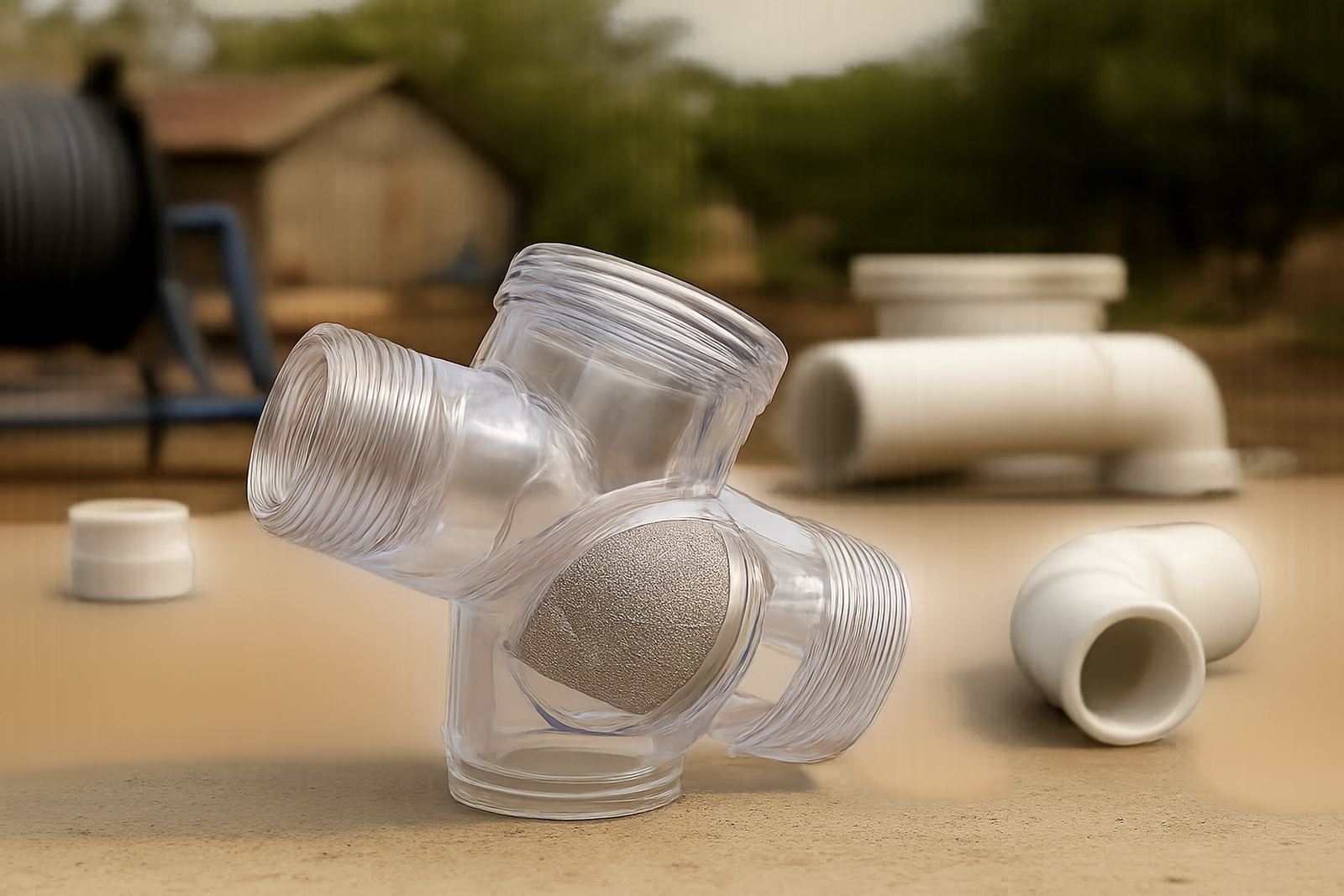
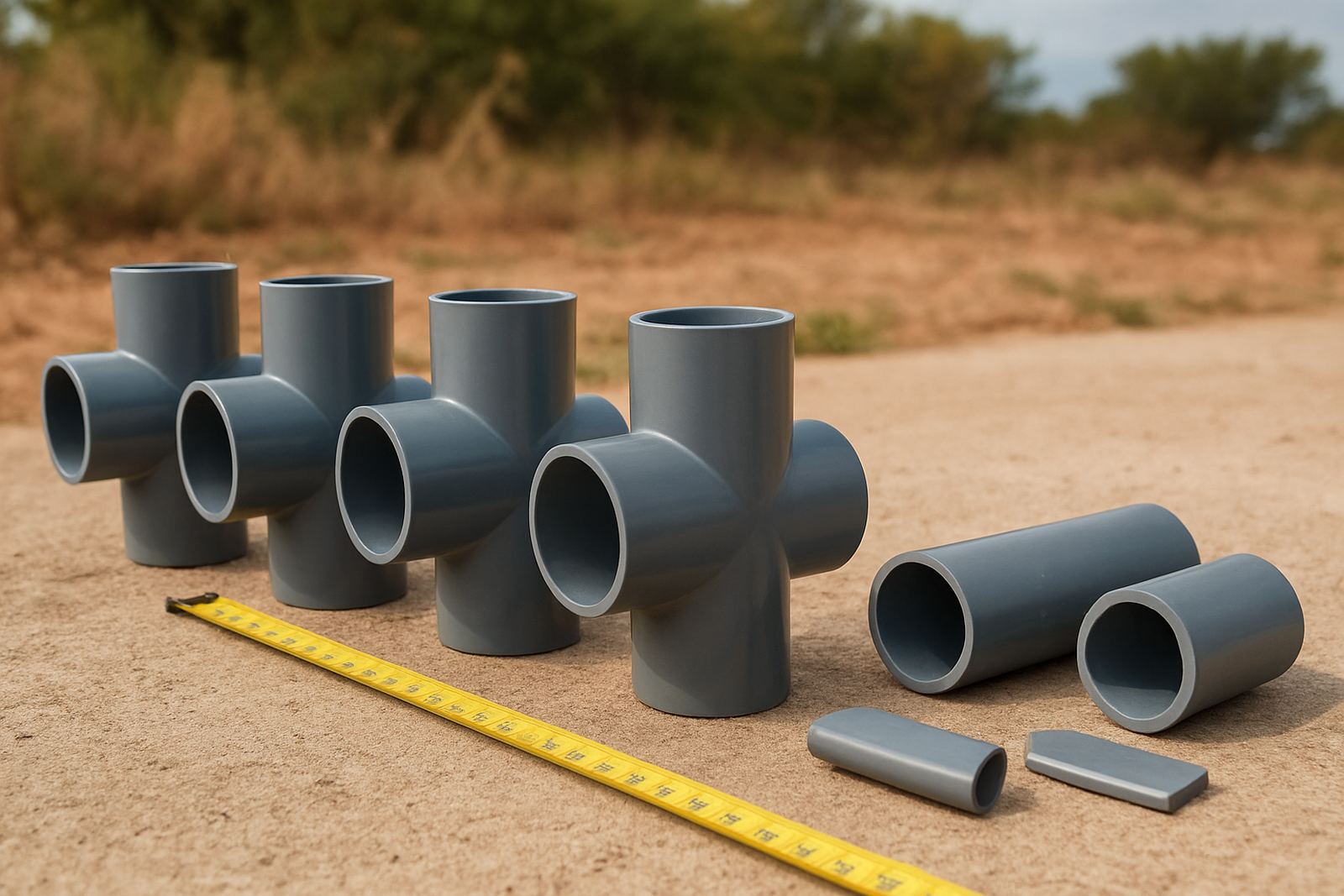
An equal tee is a three-way fitting with all three openings the same size. It lets water move from one pipe into two branches, or from two lines into one run, while keeping the pipe diameter consistent through each opening. In practical irrigation work that means fewer odd transitions and a neater layout, which helps when you are building a new system or adding a section onto an existing one.
These fittings are common on farm blocks, nursery lines, municipal-style garden layouts and contractor installs where a clean branch-off is needed. Because the branch and run match, flow is easier to manage and the connection is simple to plan. If you are working on a line that carries water under pressure, the correct tee size matters, along with good cutting and proper curing time after solvent welding.
Equal tees are not for changing from one pipe size to another. If the sizes differ, a reducing fitting is the better choice. For same-size branch lines, an equal tee is the straightforward option and it helps keep stock control simpler too because one fitting suits one pipe size throughout the joint.
Sizes, pressure use and fitting options
Equal tees are supplied in common irrigation pipe sizes so you can match the fitting to the pipe already on site. At PVC Welders, these fittings are selected for outdoor use and for line work that needs dependable solvent-weld joints in South African conditions, including sun, dust and coastal humidity.
- Available sizes commonly include 20 mm, 25 mm, 32 mm, 40 mm, 50 mm and larger irrigation sizes depending on stock
- Suitable for pressure irrigation lines where a solvent-weld PVC connection is required
- Used with compatible PVC pressure pipe and solvent cement
- Can be supplied for new installs, repairs, extensions and stock replacement orders
- Useful on main lines, sub-mains and branch runs in gardens, orchards and field systems
When you are ordering, it helps to know the pipe outside diameter, the working pressure of the line and whether the system is fed by a pump, gravity or a municipal supply. In hotter areas, some installers also allow for extra movement in the line so the fittings are not forced during installation. A correct fit is better than trying to make do with a near match.
Where equal tees suit farm and landscape work
Equal tees are used in a wide range of irrigation jobs. Farmers use them to split water to different blocks, rows or sections. Landscapers use them for garden zones, hedge runs and pressure-fed systems where each branch needs to stay the same size. Contractors also rely on them when building repeatable layouts on estates, schools, complexes and commercial sites.
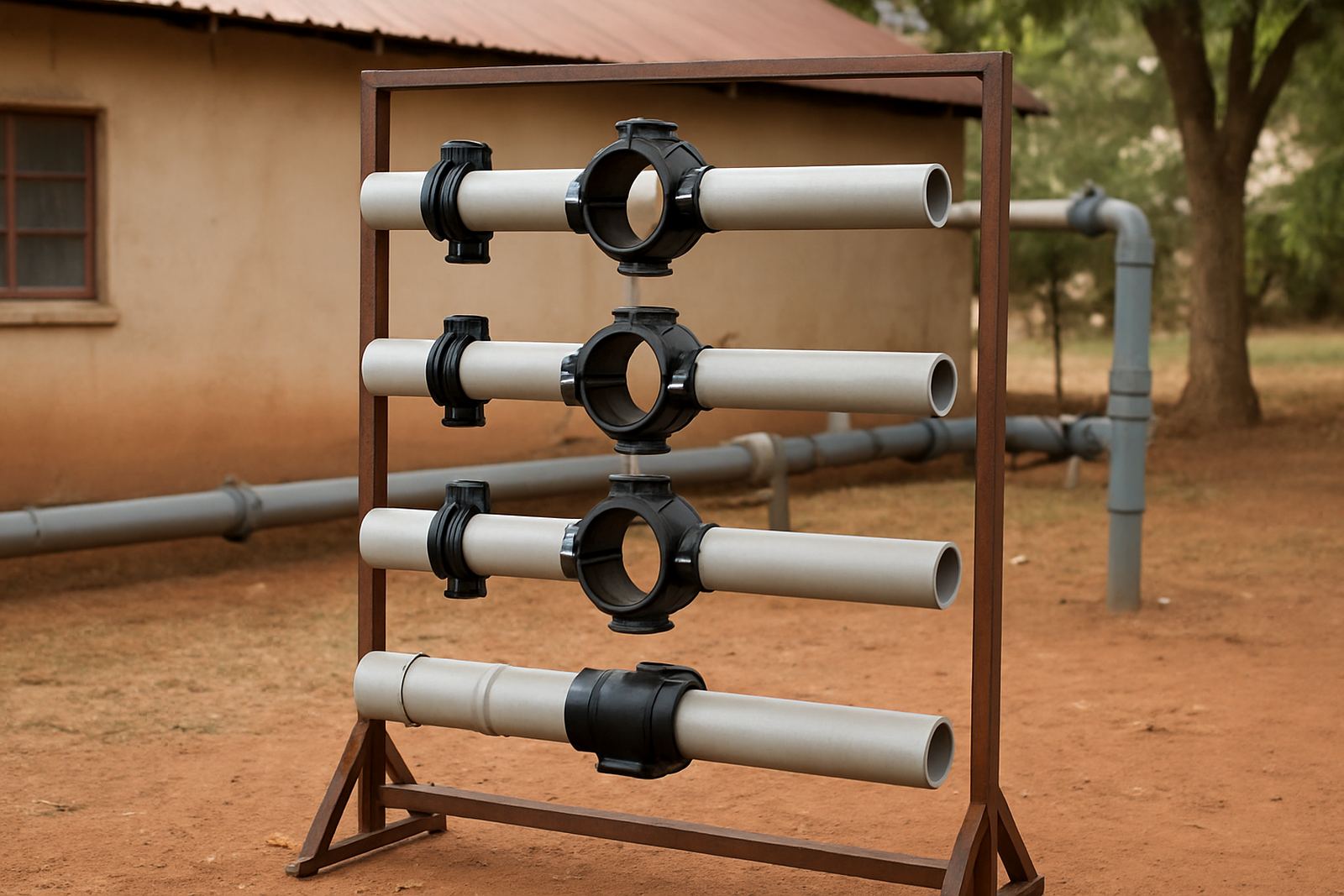
They are especially handy where pipework needs to stay tidy and easy to service later. A straight-through line with a matched branch can make future maintenance easier, because the layout is easier to read. That matters on properties where line changes happen over time and someone else may service the system later on.
- Farm irrigation and orchard rows
- Nurseries and shade-net areas
- Residential gardens and boundary watering
- Commercial landscapes and estates
- Pump-fed or gravity-fed branch lines
In areas with load-shedding, many irrigation teams plan around pumping windows and storage tanks. Equal tees help keep those installations organised, so when the water comes on you are not losing time on awkward fittings or unnecessary joints.
How to install an equal tee properly
Equal tees are installed with solvent welding. That means the pipe ends and fitting sockets must be clean, dry and cut square before the cement is applied. A proper dry fit first is worth the time because it shows you the line position and lets you check alignment before the joint is made permanent. If the pipe is dirty or poorly cut, the joint may not seat fully and that can cause leaks later.
There is no power or gas needed for the fitting itself. You only need the right tools for cutting, deburring and measuring, plus solvent cement and primer where required by the job spec. Most irrigation installations rely on manual preparation and careful handling rather than heat or flame. That also makes the work safer around dry grass, sheds and pump houses.
- Measure the pipe run before cutting
- Cut square and remove burrs
- Check that the tee sockets match the pipe size
- Apply solvent cement evenly and assemble without twisting too much
- Hold the joint steady for the set time recommended by the adhesive maker
For buried lines, give extra attention to bedding and backfill so the tee is not sitting under stress. In rocky soil or on farms with vehicle traffic, a badly supported joint can move and cause trouble later. A careful install now saves a lot of repair work in peak season.
Care, servicing and long-term use
Once installed, an equal tee does not need ongoing servicing in the usual sense, but the line around it should be checked from time to time. Look for seepage at the joints, signs of movement in the pipe, or pressure changes that suggest a blockage or poor join elsewhere in the system. In irrigation, the fitting is only one part of the whole line, so a fault can show up somewhere else first.
UV exposure, mechanical damage and poor support are the main causes of early failure on exposed runs. If a line sits in direct sun for long periods, keep an eye on the condition of the pipe and fittings. Where lines run along fences or across open ground, clamps and supports should be checked after wind or heavy water use. In coastal areas, salt air and humidity can also make poor storage practices show up faster.
For spare stock, keep fittings out of direct sunlight and away from dirt and fertiliser spills. Store them flat, in clean crates or boxes, so the sockets keep their shape. If a fitting has been dropped hard, inspect it before use, even if it looks fine at first glance. Small cracks are easy to miss and can become a problem once pressure is applied.
What to confirm before you order
Before placing an order, check the pipe size, the number of tees needed and whether the job calls for pressure line fittings or a different type of join. It also helps to know if the system is being expanded, repaired or built from scratch, because that affects the quantity and the supporting materials you may need. If you are matching an existing line, measure the pipe rather than guessing from memory.
PVC Welders assists with product selection, stock reserving, quantity checks and jointing advice for both small jobs and larger farm orders. Our team works from Ladanna in Polokwane and supplies irrigation stock across Limpopo, including Mokopane, Tzaneen, Hoedspruit, Lephalale and Thohoyandou, with courier dispatch nationwide. If you are planning a repeat order or a contractor account, it helps to send the full list in one go so the order can be checked properly.
- Pipe size and pressure class
- Number of branches required
- Whether the line is above ground or buried
- Type of water supply and pump pressure
- Delivery area and timing
If you are not sure which tee is right, send the measurements and a short note through the enquiry form on the contact page. It is quicker to match the right fitting at the start than to replace the wrong one later, especially when the team is working around planting time or irrigation schedules.
Key facts
| Product type | PVC solvent-weld equal tee for irrigation branch lines |
|---|---|
| Connection style | Three matching sockets for same-size pipe |
| Common sizes | 20 mm, 25 mm, 32 mm, 40 mm, 50 mm and larger sizes subject to stock |
| Use case | Branching a water line into two equal runs or joining same-size lines |
| Installation | Solvent cement jointing with square cuts, clean pipe ends and correct curing time |
| Supply area | Ladanna, Polokwane and across Limpopo, with nationwide courier dispatch |