
What a deburring tool does on PVC pipe
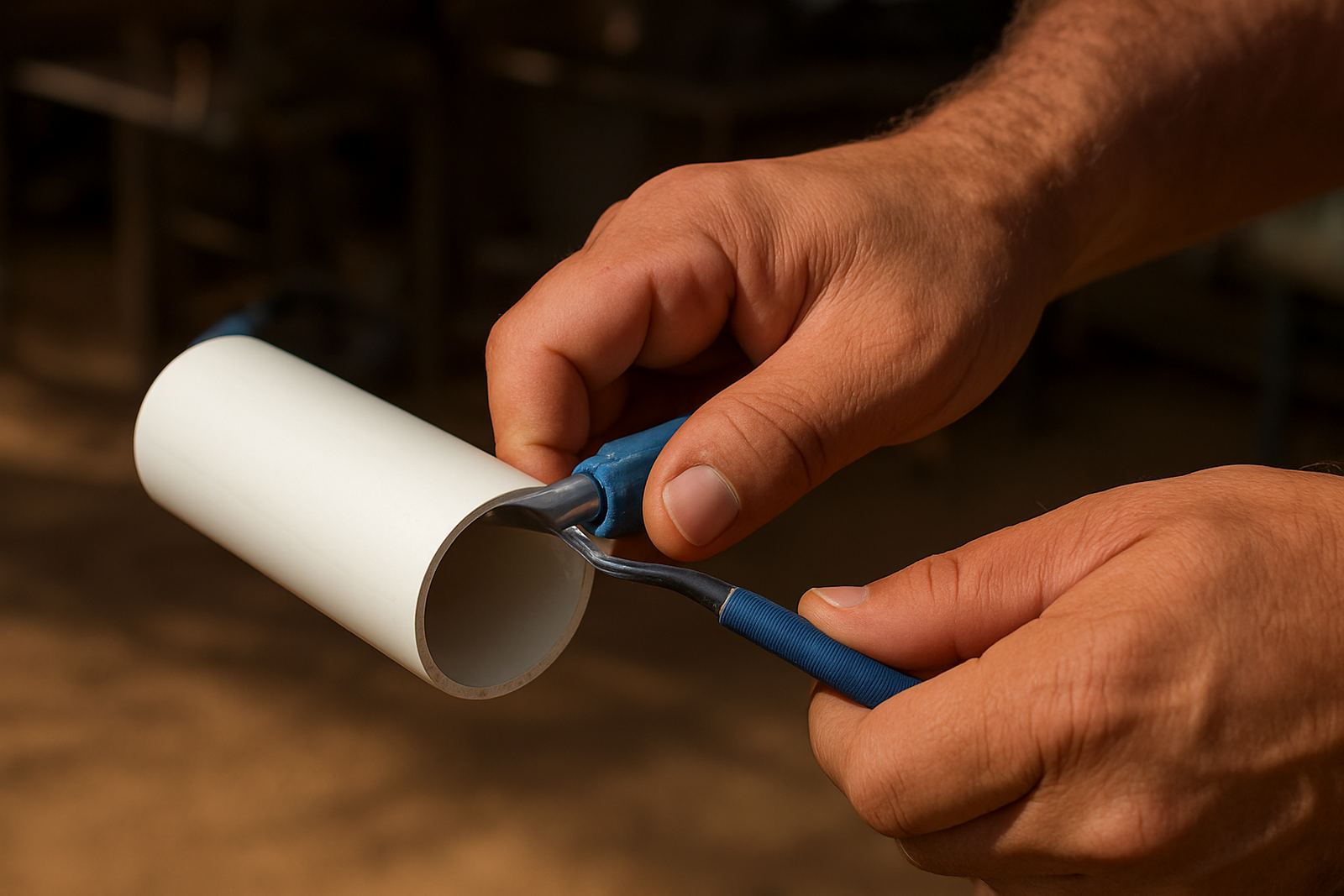
A deburring tool removes the rough lip left behind after cutting PVC pipe. That edge can stop a fitting from seating fully, trap shavings in the joint, or push solvent cement away from the contact area. On irrigation lines, especially where pipes are cut in batches, a clean edge makes jointing neater and far more reliable.
For farmers, landscapers, and contractors working with borehole lines, main runs, and valve connections, this is one of those small tools that gets used constantly. It is not just for appearance. Smooth ends help prevent turbulence at the joint and make it easier to get a proper solvent-weld bond before the glue starts to flash off in hot weather.
- Removes burrs, feathered edges, and light swarf after cutting
- Helps pipe sit squarely into couplers, elbows, tees, and valves
- Reduces the chance of debris entering the line during assembly
- Useful on hand-cut pipe and machine-cut pipe alike
Sizes and options for irrigation work
Deburring tools are usually selected to match the pipe sizes you work with most often. In irrigation, that means a tool that can handle the common small to medium diameters used on farm and garden systems, with a comfortable grip for repeated use. Some versions are compact and pocket sized, while others are made with a longer handle for better control on site.
For crews that do regular repairs, a single deburring tool often covers the everyday range. If you are preparing larger quantities of pipe for stock watering or mainline runs, it helps to keep one in the truck and another in the workshop so the tool is always close at hand, even when the field team is split up.
- Hand-held manual tools for everyday pipe prep
- Compact units for toolboxes and service kits
- Longer grip styles for better leverage and control
- Suitable for repeated use on irrigation pipe cut ends
Where it suits on farms and landscape jobs
This tool suits any place where PVC pipe is cut and joined on a regular basis. On irrigation jobs, that includes pump houses, filtration points, garden reticulation, orchards, tunnels, vegetable blocks, and livestock water lines. It is especially useful where pipework is done outdoors and dust can get onto the joint faces quickly.
In Limpopo conditions, the pipe ends can warm up fast in direct sun, and solvent welding needs to be done cleanly and without delay. A deburring tool helps keep the prep process tidy. It also supports better work in dusty rural yards and on municipal or estate jobs where the line has to be neat, signed off, and ready for inspection.
- Farm irrigation installations and maintenance repairs
- Landscaping and garden watering systems
- Contractor jobs with multiple joints in one day
- Retail and warehouse prep for pre-cut pipe sections
How to use it before solvent welding
After cutting the pipe, run the deburring tool lightly around the inside and outside edge until the sharp ridge is removed. The aim is not to shave away too much material, just to leave a clean, square end that will accept cleaner and cement properly. Once the edge is smooth, wipe the pipe and socket, dry fit the joint, then proceed with the correct cleaning and welding steps.
There is no power or gas requirement for this product. It is a manual hand tool, so it works anywhere from a truck tailgate to a farm store bench. That makes it handy during load-shedding, off-grid work, or quick callouts where you only need one or two joints sorted and no power supply is available.
- No electricity needed
- No gas, batteries, or charging required
- Can be used on site, in the yard, or in the workshop
- Best used immediately after cutting and before cleaning
Care, cleaning, and long-term use
Deburring tools last well if they are kept clean and dry. After use, tap out any plastic shavings and wipe the cutting surface before storing it. Do not leave it in wet grass, borehole splash, or on the back of a bakkie where fertiliser, moisture, and grit can get into the working edge. On coastal routes or in damp storage rooms, a light coat of oil on metal parts helps prevent corrosion.
If the tool begins to feel blunt or it leaves ragged edges behind, check whether debris has packed into the cutting area. In many cases, a proper clean will sort it out. If wear is visible on the edge, replace the tool so your pipe prep stays consistent. A tired deburring tool can slow the whole team down and make joints less tidy, so it is worth checking now and again.
- Keep the cutting edge free of swarf and dust
- Store in a dry bag, toolbox, or cabinet
- Inspect after heavy daily use
- Replace if the edge no longer smooths cleanly
What to check when ordering for your team
When ordering a deburring tool, think about the pipe sizes you use most, how often the team makes joints, and whether the tool will live in a workshop or travel from site to site. Contractors often need one that is easy to carry and quick to grab, while farm maintenance teams may prefer a sturdier tool that can stay with the irrigation kit. If you are ordering with fittings and cement, it helps to match the deburring tool to the same pipe range so nothing gets left out.
For larger orders, count the number of repair teams, the number of service vehicles, and the amount of repeat work planned for the month. That makes it easier to reserve the right quantity and avoid short stock when a line breaks. If you are not sure what fits your pipe range, ask for product selection support and system matching before you place the order.
- Pipe sizes used on the job
- Number of crews or service vehicles
- Expected repair frequency and batch prep work
- Whether the tool needs to travel or stay at base
Delivery from Ladanna to Limpopo and nationwide
Based in Ladanna, Polokwane, PVC Welders supports irrigation stock movement across Limpopo, including Mokopane, Tzaneen, Hoedspruit, Lephalale, and Thohoyandou, with courier dispatch available nationwide. That means contractors, farmers, and landscapers can source the tool with the fittings and prep items they need in one order, instead of making separate runs. Our team also assists with stock reserving, quantity checks, repeat order support, and after sales help when a job is moving fast and the timing matters.
If you are preparing a farm order, a contractor account, or a service run across several sites, the enquiry form on our contact page is the easiest way to get started. It keeps the order details together, and it helps us match the right tool to the right pipe work first time, without delays.
- Ladanna Base and Polokwane Supply Area
- Mokopane, Tzaneen, Hoedspruit, Lephalale, and Thohoyandou coverage
- Regional delivery and nationwide courier dispatch
- Support for repeat orders and planned irrigation work
Key facts
| Product type | Manual deburring tool for PVC pipe prep |
|---|---|
| Use | Removes burrs and sharp edges before cleaning and solvent welding |
| Power requirement | None, fully hand-operated |
| Suitable pipe work | Common irrigation PVC pipe sizes used on farms and landscape systems |
| Typical use | Inside and outside edge smoothing after cutting |
| Care | Wipe clean after use and store dry; light oil on metal parts if needed |