
Purpose-built storage for irrigation fittings
Fittings storage bins are simple but important on any irrigation site. They keep solvent-weld fittings separated by size and type, which cuts down on lost stock, mixed batches and time spent searching through boxes. For farmers, landscapers and contractors, that means better control over what is on hand for repairs, extensions and new line installations.
In a workshop, bin storage helps with daily issuing and repeat order planning. On a truck or bakkie, it keeps smaller parts from rolling around and getting damaged on gravel roads, especially where dust, vibration and rough loading are part of the day. For teams working across Limpopo, that kind of order saves time and reduces waste.
- Suitable for solvent-weld irrigation fittings and small accessory parts
- Helps separate stock by size, type or project
- Makes picking, packing and restocking quicker
- Useful for stationary stores and mobile service vehicles
Sizes and layout options for different stock rooms
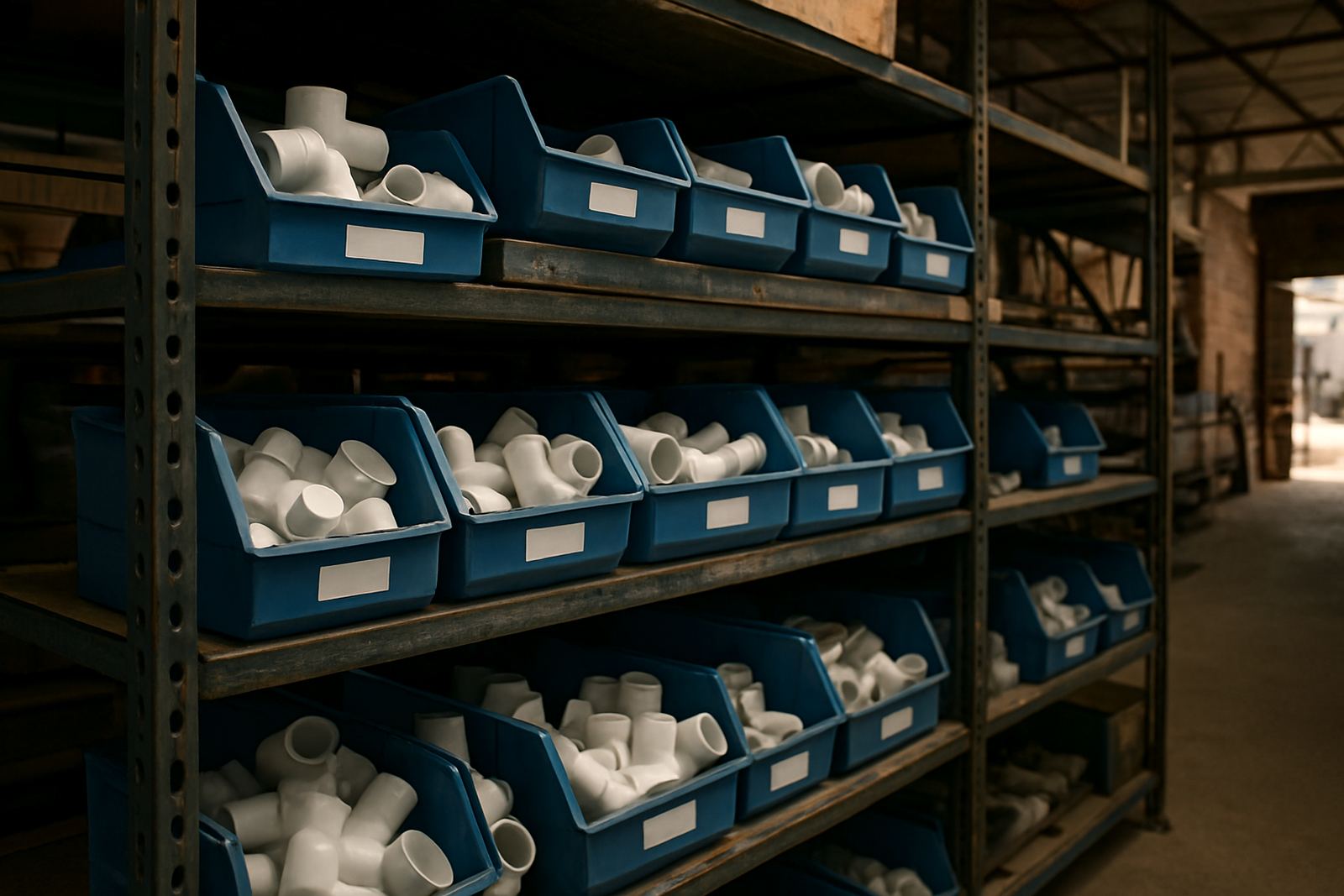
Storage bins are usually selected according to the quantity and type of fittings you keep. A small bin works well for fast-moving items like end caps or couplers, while larger bins suit elbows, tees and mixed project packs. Many buyers use a combination of bin sizes so each item has its own place and stock counts are easier to manage.
Options can include open-front bins for quick access, stackable designs for wall or shelf use, and deeper bins for bulk holding. Some sites prefer a colour-coded system so staff can identify product groups at a glance. If the store is shared by different teams, labelled bins make handover and re-ordering much easier.
- Small bins for high-turnover fittings
- Medium bins for common sizes and project stock
- Large bins for bulk holding or reserve stock
- Stackable or shelf-friendly layouts for compact stores
Where these bins work best on site
These bins suit irrigation depots, farm stores, contractor vehicles, maintenance workshops and municipal supply points. They are especially practical where many different fittings move through the same space. On farms around Polokwane, Mokopane and Tzaneen, bins are often used to keep emergency repair stock ready for pump rooms, line repairs and extension work.
They also help in coastal and high-humidity areas where packaging can soften or degrade if left open. While the bin itself does not replace proper dry storage, it does help keep fittings off the floor and in cleaner, better organised conditions. For teams that do stock checks after hours or during load-shedding, a clear bin system makes quick counts easier with a torch and a checklist.
- Ideal for irrigation stores and workshop counters
- Useful for mobile stock on service vehicles
- Helps protect fittings from dust and handling damage
- Supports quicker stock takes and job packing
Installation, mounting and power needs
Most fittings storage bins do not need power or gas. They are manual storage items and can be placed on shelving, in drawers, on pallet racking or in vehicle compartments. In some stores they are wall mounted using brackets or placed in a modular frame so stock can be expanded as the business grows. Installation is usually straightforward, but it should still be planned around access, weight and how often items are issued.
For a practical layout, heavier or slower-moving fittings should go lower down, with the fastest moving items at waist height. That reduces bending and speeds up picking. If bins are used in a truck or bakkie, make sure the setup is secured so it does not shift during transport on uneven roads. A little planning upfront prevents breakages and keeps everything tidy, even when the day gets busy.
Care, cleaning and long-term servicing
Storage bins need very little servicing, but a regular cleaning routine keeps them useful. Dust, sand and pipe shavings can collect in corners, especially on farms and construction sites. A simple wipe-down or rinse, depending on the bin material, helps prevent grime from building up. It also makes labels easier to read and helps staff see stock levels at a glance.
Check for cracks, bent lips, loose mounts or damaged labels during routine stock counts. In outdoor or semi-outdoor areas, direct sun and heat can make some plastics brittle over time, so it is worth placing bins under cover where possible. If bins are mounted in a vehicle, inspect the fixings after long trips or corrugated road use. That way the stock stays secure and the bin doesnt become another thing to replace.
- Clean out dust and loose debris regularly
- Keep bins under cover where possible
- Inspect mounts, labels and corners for wear
- Reassign damaged bins before they fail in service
What to confirm before you place an order
Before ordering, check what fittings you want to store, how many pieces move per week, and whether the bins will sit on shelves, in drawers or in a vehicle. It is also worth confirming the size of the smallest and largest fittings in the group so you do not end up with bins that are too shallow or too wide. The best choice is usually the one that suits the actual stock pattern, not just the available space.
Also check whether you need labels, colour groupings or stackable units. If the bins are part of contractor stock control, ask about reserving quantities for repeat jobs and farm order planning. For regional deliveries across Limpopo or courier dispatch nationwide, packaging and quantity checks are important so the order arrives in the right mix and count.
- Confirm fitting types and counts per bin
- Check available shelf, wall or vehicle space
- Decide if labels or colour coding are needed
- Plan for stock reserving and repeat orders
Key facts
| Product type | Storage bin for assorted irrigation fittings |
|---|---|
| Primary use | Workshop, store room and vehicle stock control |
| Typical capacity | Small, medium and large bin options for mixed fittings |
| Material options | Tough plastic storage formats suited to regular handling |
| Power or gas required | None |
| Supply area | Ladanna, Polokwane, Limpopo and nationwide courier dispatch |