
Project brief for a busy Tzaneen grower
The client was a vegetable producer in the Tzaneen area running a shade net operation with separate growing blocks, each needing dependable water delivery without constant hand adjustments. The brief was simple in wording but detailed in practice: organise the supply line, split flow cleanly to each section, and keep the system easy to service when the staff are under pressure during planting and harvesting.
This type of setup works best when the manifolds, branch fittings, joins and take-offs are planned properly from the start. The grower wanted a system that could handle daily use, afternoon heat, and the moisture that builds up under shade netting, while still being practical for farm staff to open, isolate or flush as needed.
Site conditions and the main constraints
The site had a few common Tzaneen challenges. Water had to travel across a broad area, the layout included several rows and access paths, and the fittings had to stay serviceable in a warm, humid environment. Shade net blocks can trap heat and condensation, so we selected components that are suited to outdoor use and regular handling, with a focus on clean solvent welding and secure jointing.
There were also practical site limits around timing. The farm could not afford long downtime, and installation had to fit around irrigation windows and labour availability. With load-shedding still affecting many farm routines in Limpopo, the system also needed to be straightforward to inspect and restart after pump interruptions without causing pressure surges or uneven watering.
- Controlled distribution across multiple vegetable bays
- Outdoor exposure under shade net and direct sun at the edges
- Need for simple isolation points for maintenance
- Pressure consistency over longer pipe runs
- Fast installation with minimal interruption to farm work
What we supplied and set up
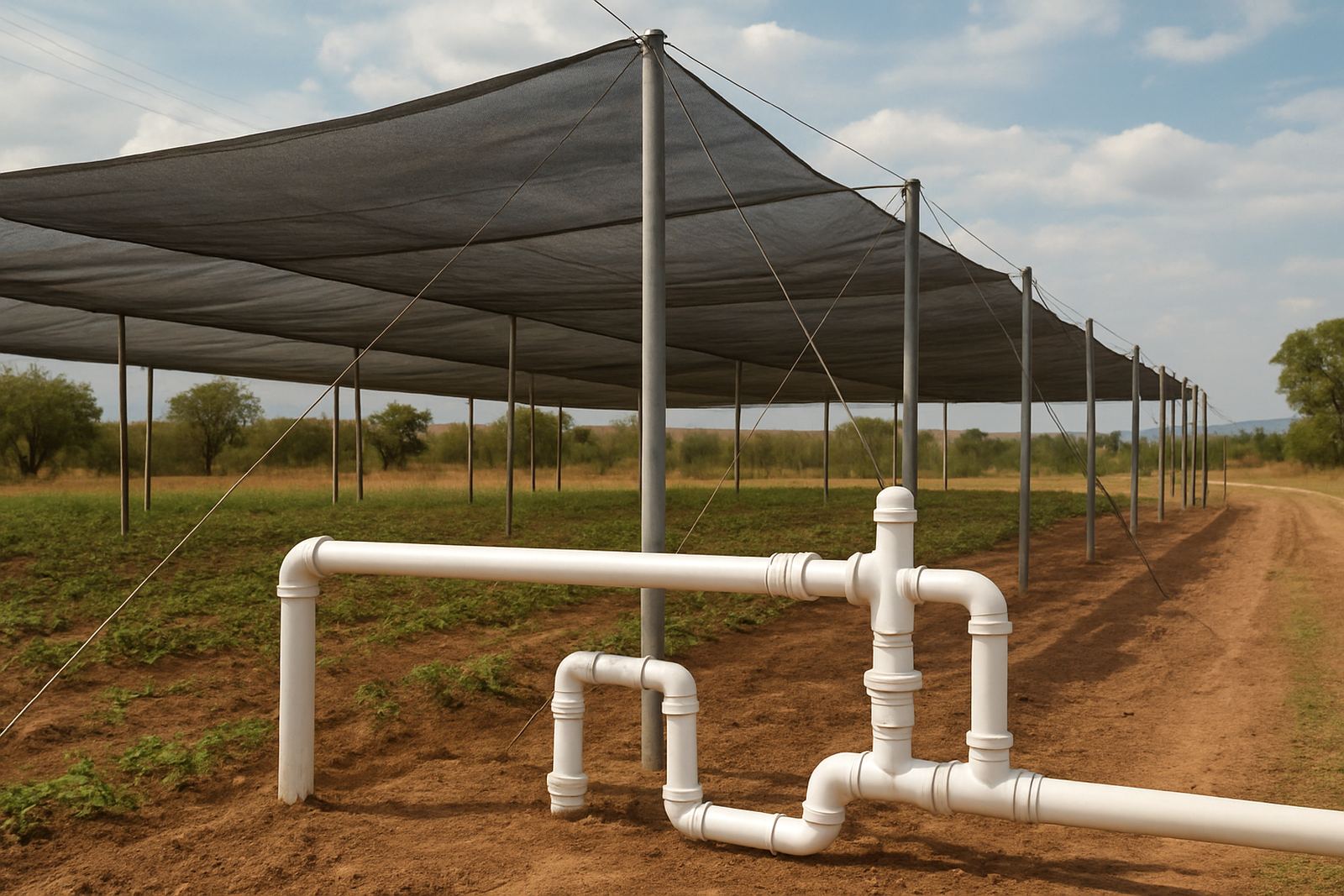
We supplied a PVC irrigation package built around organised manifolds, branch fittings and the right solvent-weld accessories for a neat, dependable layout. The system included pipe sections, tees, elbows, reducers, end caps, couplers, valves, joining solvent, and the hand tools needed for accurate cutting and fitting. The aim was to keep the line work tidy and reduce the chance of leaks at busy points where branches split off to individual growing areas.
The manifold arrangement allowed the grower to control sections separately instead of opening the whole site at once. That makes a real difference when different crops are at different stages, or when one area needs flushing while another must stay on feed. We also checked quantities carefully so the client had enough stock for the main install plus a small buffer for on-site adjustments, which saved a second run to source shortfall items.
- Manifolds arranged for section-by-section control
- Branch fittings sized to suit the layout and flow demand
- Solvent-weld joints for firm, permanent connections
- Tools supplied for cutting, deburring and assembly
- Extra stock allowed for site changes and repairs
Timeline from order to commissioning
The project moved through planning, stock selection and dispatch over a short working timeline of about three weeks. In week one, we worked through the layout and confirmed the main line sizes and branch requirements. Week two was used for reserving stock, checking joint sizes, and preparing the order for collection and delivery. By week three the goods were on site and the irrigation crew could start fitting out the manifolds and branch runs.
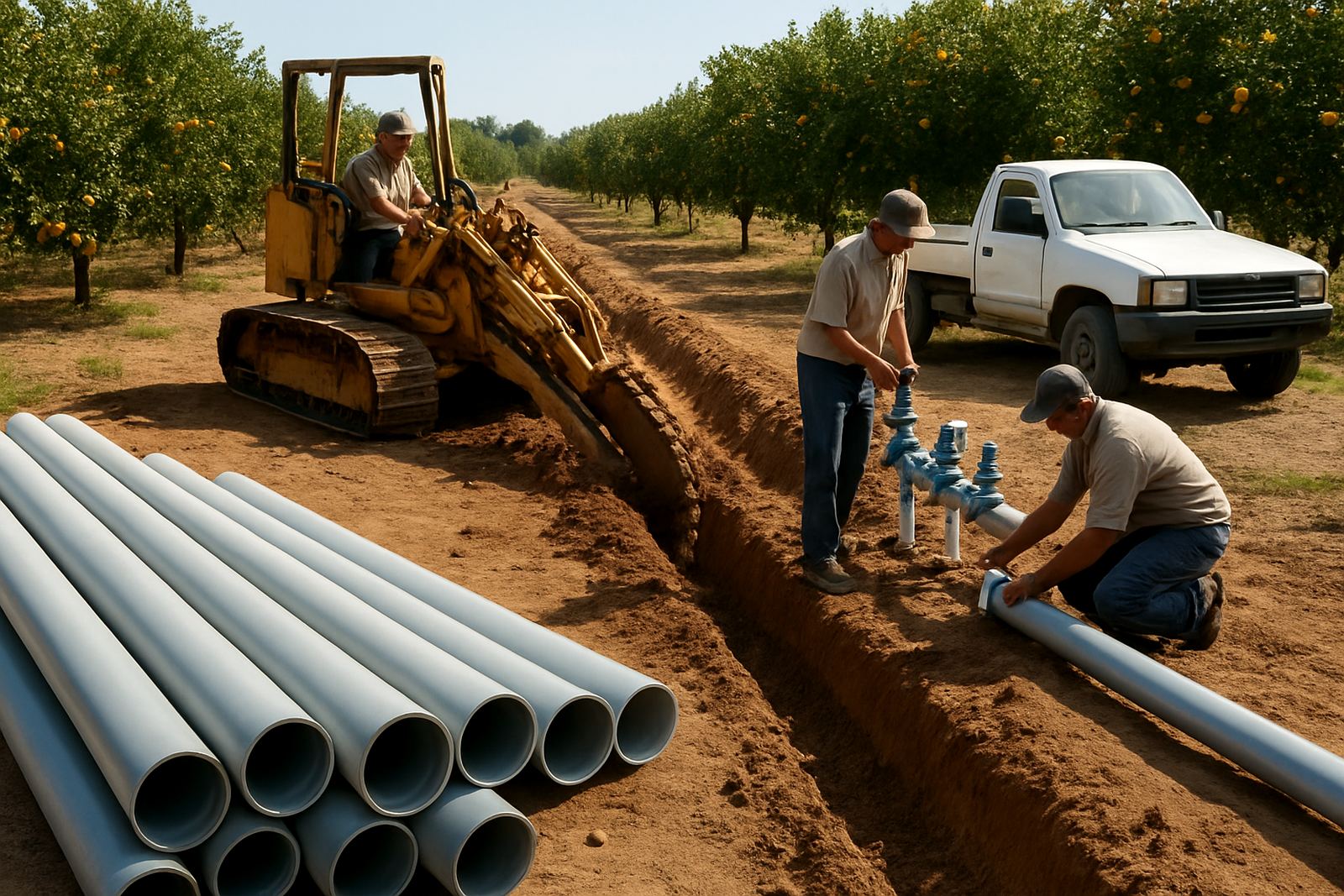
Because the pipework had to be put in without disrupting crop care, the staged approach mattered. The farm team could install one section at a time, test it, then move on to the next bay. That reduced the risk of mistakes and made the system easier to commission, especially where several valves and branch lines met at the main supply point.
Results on the shade net block
Once the system was in service, the grower had much better control over water delivery to each crop bay. The organised manifold layout made it easier to balance flow, isolate a section for maintenance, and check for issues without shutting down the entire site. That is important on a vegetable farm where a missed irrigation cycle can affect growth quickly.
The client also got a neater plant room and cleaner pipe routes, which reduces future maintenance time. Staff no longer had to work around a messy mix of improvised joins and uncertain branch points. In day to day use, the biggest benefit was consistency: the water went where it was meant to go, and the team could manage the system with less guesswork, even during busy production periods.
- Cleaner distribution across all shade net rows
- Better section control for crop planning
- Less time spent tracing joins and branch lines
- Improved maintenance access at the manifold points
What we would do again on a similar farm
For a similar shade net vegetable site, we would use the same practical approach: confirm the layout early, match the manifold sizes to the actual flow demand, and keep a small reserve of fittings on hand for changes during installation. That approach works well on farms because the final layout often shifts once the team starts laying pipe in the field.
We would also keep the joints simple and serviceable. In warm, wet growing areas, neat pipe routing and accurate solvent welding make a long-term difference. Good planning saves time later, and a properly organised manifold system is easier to expand if the farm adds another block or changes crop type. It sounds basic, but on a working site that makes all the difference and saves money too.
Our support did not end when the stock left Ladanna. The client could come back through the enquiry form for product selection, quantity checks, repeat orders and troubleshooting support if anything needed adjusting after installation. That kind of follow-up is often what keeps a farm system running well through the season.
Key facts
| Project type | Shade net vegetable irrigation supply |
|---|---|
| Town | Tzaneen, Limpopo |
| Main system layout | Organised manifolds with branch fittings |
| Timeline | About 3 weeks from planning to dispatch |
| Supply method | Regional delivery and courier support |
| Key outcome | Controlled flow to multiple crop bays |