Citrus Block Extension in Letaba, Kept Moving in Stages
- Project area: Letaba citrus block extension
- Client type: commercial fruit grower
- Supply method: staged stock delivery from Polokwane
- Support needed: jointing guidance and quantity control
What the Site Needed and Why the Spec Mattered
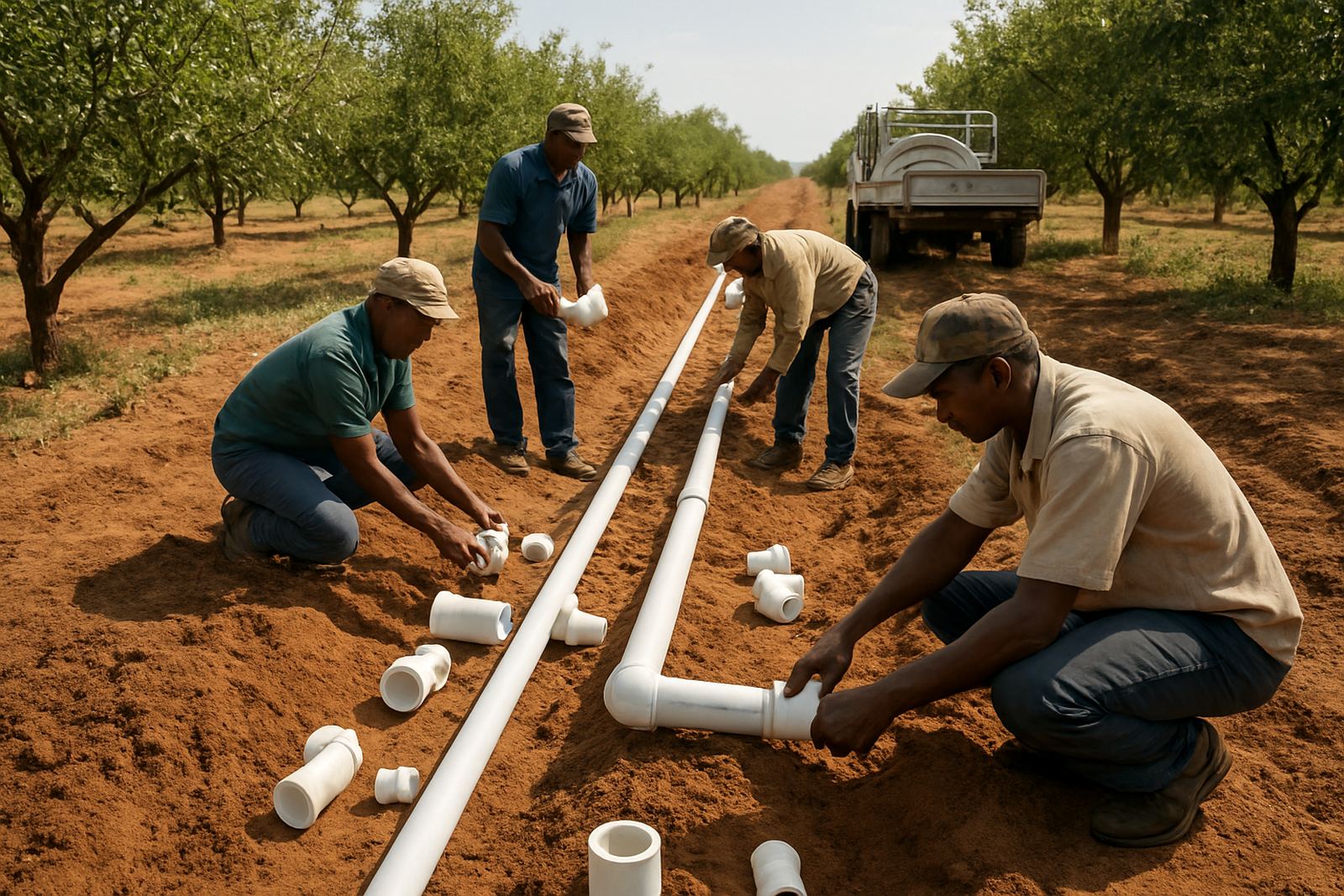
The irrigation design called for solvent-weld PVC components that could handle outdoor exposure, regular pressure cycling and long service life in Limpopo heat. The client wanted a clean jointing method for the mainline and distribution runs, with fittings that matched the pipe sizes already on site. Because the orchard sits in a hot, dusty area and sees strong sun for much of the day, the stock also had to be handled and stored properly before installation. Heat softens pipe ends quicker than most teams expect, so the crew needed clear timing on priming, curing and first pressure checks.
We matched the order to the layout rather than sending a generic box of parts. That meant checking the pipe diameters, confirming the number of branch points and allowing spare pieces for breaks and on-site changes. We also advised on the order of assembly so the crew could complete the longer runs first and leave the tricky junctions for when the team was fresh. It saved time and cut down on mistakes.
- Solvent-weld PVC fittings for irrigation lines
- Size matching to existing pipework on site
- Allowance for extra pieces on critical joints
- Advice for hot-weather handling and curing times
Stock Reserved, Loaded and Sent in the Right Order
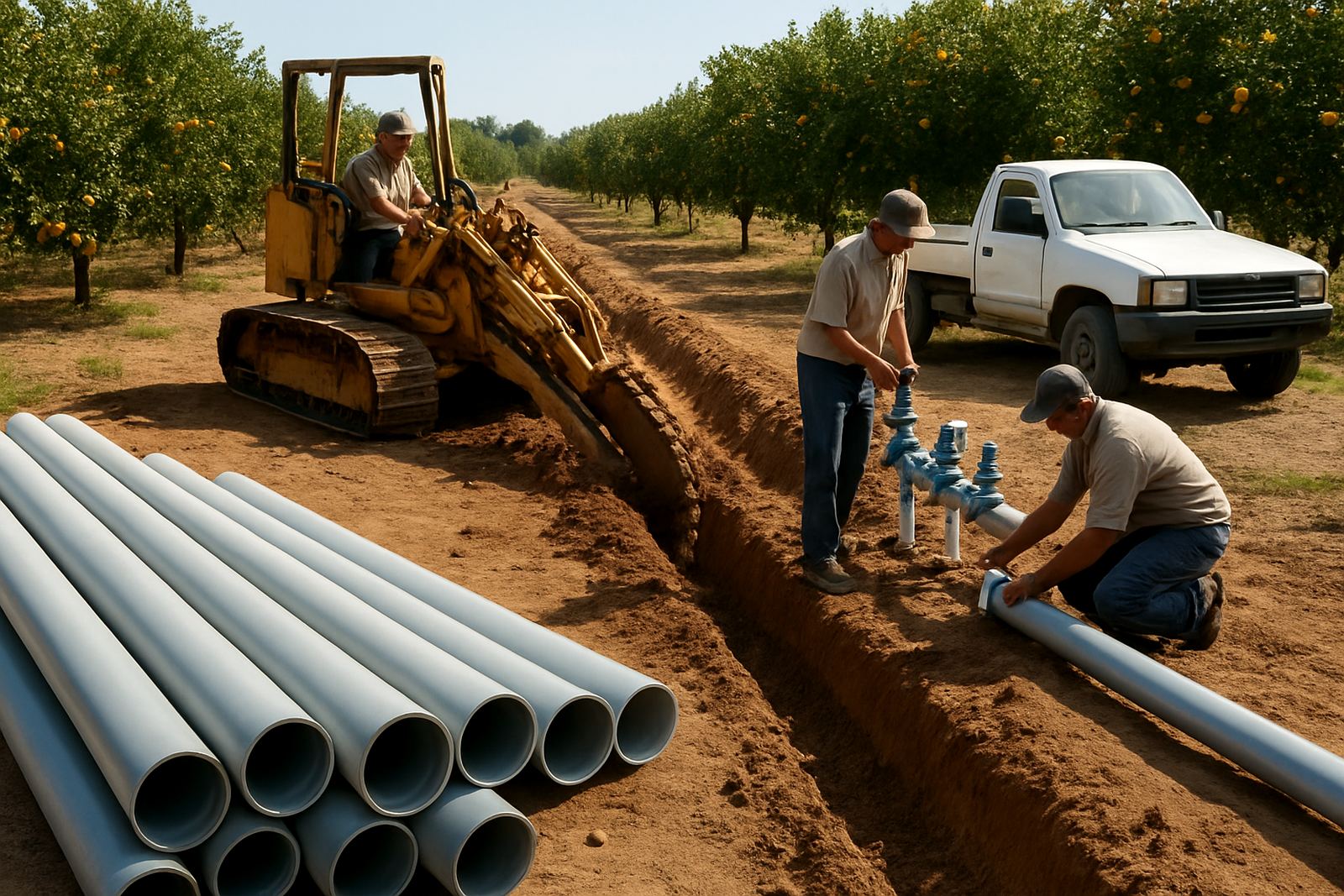
The timeline ran over three weeks. In week one, we confirmed the take-off list, checked the joint counts and reserved the stock from our Ladanna base. In week two, the first delivery moved out to Letaba with the main fittings and consumables for the initial line work. The second load followed later in the same week with the balance of fittings once the trench positions were finalised. Week three was for checking the last quantities, arranging replacement pieces and giving follow-up support when the crew started joining out the secondary lines.
For a project of this kind, the delivery order matters as much as the materials themselves. Early drops had to cover the longest runs, while later drops filled in the branch lines after the field layout was confirmed. That prevented overbuying and kept the cash tied up in stock as low as possible. It also reduced damage risk, since fittings were not left stacked on open ground for too long in the dust and sun.
- Week 1: take-off, stock reservation and order confirmation
- Week 2: first delivery and second staged supply run
- Week 3: quantity checks, extras and jointing follow-up
Jointing Advice That Helped the Crew Finish Cleanly
The practical side of the job was just as important as the supply. The client’s team asked for help with joint preparation, adhesive timing and how to handle a few tight bends without stressing the pipe. We walked them through the sequence and gave troubleshooting guidance for the joints that were likely to give trouble once the system was under pressure. That included checking for proper seating, making sure the pipe ends were clean, and allowing enough set time before the first water test.
On irrigation sites, especially where labour is spread across different tasks, small errors can creep in. A hurried cut, a missed clean-up step or a joint made before the pipe is ready can cause leaks later. We kept the advice practical and site-based, not theoretical. The crew needed to get on with the work, so the guidance had to be direct and easy to follow.
- Joint preparation and solvent-weld sequence
- Pressure-test readiness checks
- Troubleshooting for misaligned runs and leaks
- On-site advice without slowing the crew down
Results on the Orchard Floor
The extension moved ahead without the usual stop-start problems that come with incomplete stock or wrong sizes. The orchard team had the fittings they needed when they needed them, and the delivery plan kept the work flowing between trenching, assembly and testing. The irrigation lines were joined cleanly, the branch points were matched properly and the crew avoided repeat trips to source missing parts. That matters in Letaba, where the distances between supply points can cost a full day if a truck has to turn around for one small item.
By the end of the project, the block was ready for the next phase of orchard development and the client had a clearer order list for future expansion. The practical benefit was time saved. The financial benefit was less waste and fewer call-backs. The site team also had a better handle on the sequence for future blocks, which makes a big difference when citrus expansion happens in pieces rather than all at once.
- Fewer delays caused by missing fittings
- Cleaner pipe alignment and fewer leaks at first test
- Less wastage from incorrect quantities
- Better planning for the next block extension
What We Would Do Again on a Similar Farm Project
If we were called back for another citrus block in the same area, we would follow the same method: confirm the layout early, split the supply into sensible stages, and keep the jointing advice tied to the actual conditions on site. In hot weather, and especially on farms that are still active while the extension is happening, a single bulk drop is often less useful than two or three planned deliveries. It gives the client more control and keeps the stock safer.
We would also keep the extra attention on quantity checks. That step sounds basic, but it stops a lot of waste. A few minutes spent checking the order against the layout can save an hour of chasing parts later on. For growers and contractors working in Limpopo, that kind of practical support is often what keeps a project on schedule, not fancy extras or guesswork.
- Split deliveries instead of one large drop
- Check quantities against the block layout before loading
- Keep reserve stock for changes and breakages
- Support the crew through the first pressure test
Key facts
| Project type | Citrus block irrigation extension |
|---|---|
| Area served | Letaba, Limpopo |
| Delivery base | Ladanna, Polokwane |
| Timeline | 3 weeks from confirmation to final follow-up |
| Core supply | PVC solvent-weld irrigation fittings and jointing consumables |
| Support included | Product selection, stock reserving, quantity checks, jointing advice and troubleshooting help |